
GST cuts insurance tax rates in 2025: A year on, consumers still await the full benefit in premiums
With the GST Council set to meet on October 8, government sources say the effective tax rate on domestic taxable supplies has fallen to 13.13% from 14.55%, but insurance premiums have not declined commensurately
- Oct 7, 2026,
- Updated Oct 7, 2026 7:43 PM IST
Consumers, by and large, benefited from the rationalisation of goods and services tax rates last year, but insurance companies did not adequately pass on the benefit, government sources believe.
Overall, the government has been satisfied with the reduction in prices across commodities. Finance ministry sources say that consumption has held up and the tax base has widened. According to their calculations, the effective tax rate on domestic taxable supplies has fallen to 13.13% from 14.55%.
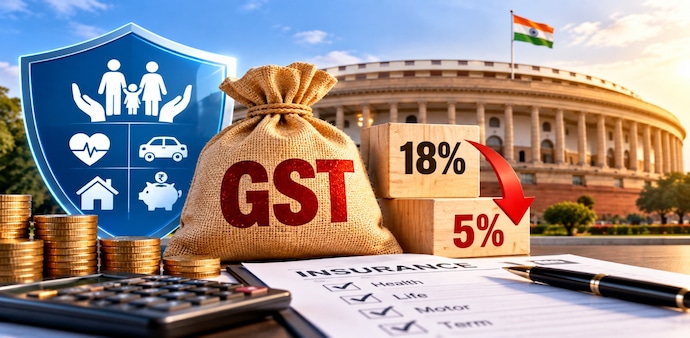
As part of last year’s rate rationalisation exercise, the GST Council, at its meeting in September 2025, exempted individual life and health insurance policies from GST. Previously, these policies attracted 18% GST. The objective was to make them more affordable for citizens and improve insurance coverage. However, sources noted that the insurance sector has been an exception, with premiums not falling in line with the rate cut.
“There have been issues in the insurance sector regarding reductions in premium amounts following last year’s GST rate cut. In many cases, premiums increased, and consumers did not adequately receive the benefit,” sources noted.
Industry experts, however, have said that the rise in health insurance premiums is due to a variety of factors, including medical inflation, which has led to higher prices. They also noted that premiums for individual life policies have declined.
Following the GST rate cuts that took effect on September 22, 2025, the Central Board of Indirect Taxes and Customs monitored the prices of 54 goods over the next six months. Additionally, to ensure that companies passed on the benefit of the rate cuts to consumers, the Department of Consumer Affairs enabled GST grievance redressal through the National Consumer Helpline.
Overall, the government has been satisfied with the reduction in prices across commodities.
Finance ministry sources say that consumption has held up and the tax base has widened. According to their calculations, the effective tax rate on domestic taxable supplies has fallen to 13.13% from 14.55%.
At its meeting on October 8, the GST Council is expected to take up further proposals to help expand insurance coverage. These include a proposal to permit employers to claim input tax credit for GST paid on insurance premiums for employees.
Consumers, by and large, benefited from the rationalisation of goods and services tax rates last year, but insurance companies did not adequately pass on the benefit, government sources believe.
Overall, the government has been satisfied with the reduction in prices across commodities. Finance ministry sources say that consumption has held up and the tax base has widened. According to their calculations, the effective tax rate on domestic taxable supplies has fallen to 13.13% from 14.55%.
As part of last year’s rate rationalisation exercise, the GST Council, at its meeting in September 2025, exempted individual life and health insurance policies from GST. Previously, these policies attracted 18% GST. The objective was to make them more affordable for citizens and improve insurance coverage. However, sources noted that the insurance sector has been an exception, with premiums not falling in line with the rate cut.
“There have been issues in the insurance sector regarding reductions in premium amounts following last year’s GST rate cut. In many cases, premiums increased, and consumers did not adequately receive the benefit,” sources noted.
Industry experts, however, have said that the rise in health insurance premiums is due to a variety of factors, including medical inflation, which has led to higher prices. They also noted that premiums for individual life policies have declined.
Following the GST rate cuts that took effect on September 22, 2025, the Central Board of Indirect Taxes and Customs monitored the prices of 54 goods over the next six months. Additionally, to ensure that companies passed on the benefit of the rate cuts to consumers, the Department of Consumer Affairs enabled GST grievance redressal through the National Consumer Helpline.
Overall, the government has been satisfied with the reduction in prices across commodities.
Finance ministry sources say that consumption has held up and the tax base has widened. According to their calculations, the effective tax rate on domestic taxable supplies has fallen to 13.13% from 14.55%.
At its meeting on October 8, the GST Council is expected to take up further proposals to help expand insurance coverage. These include a proposal to permit employers to claim input tax credit for GST paid on insurance premiums for employees.