
How Fischer Medical is targeting export-led growth by expanding medical technology pipeline
The company aims to build exports towards half its business while developing imaging and screening products and software.
- Oct 22, 2026,
- Updated Oct 22, 2026 12:18 PM IST
Fischer Medical Ventures Ltd aims to increase the share of exports to half its business over the long term, while developing its medical imaging and preventive healthcare portfolio.
The company plans to direct investment towards research and development, software, and new healthcare technologies rather than immediately increase manufacturing capacity, Svetlana Rao, Group Executive Director of Fischer Medical Ventures, told Business Today.
"Our strategy has never been simply to enter the market with a 'me-too' product. We want to address gaps that larger players have not fully addressed," Rao said.
Fischer has entered markets in Kenya and Tanzania and is targeting the Gulf Cooperation Council region and Southeast Asia, including the Philippines and Indonesia. It is also exploring opportunities in the US.
"Over time, we would like to move towards a 50:50 split between domestic and export business," Rao said.
She did not specify a timeline for achieving the target. Overseas sales could help improve margins in a competitive domestic medical equipment market.
"Medical imaging is a business in which expansion takes time. You cannot simply show a brochure and sell a machine; performance and reliability have to speak for themselves," Rao said, adding that Fischer would enter one region at a time.
New products, not just more capacity
Fischer is not planning an immediate increase in its existing MRI manufacturing capacity at Visakhapatnam. Rao said the current facilities were sufficient to meet the company's order book, with investment focused on product development and new applications.
"Our capex focus this year is on strengthening capabilities rather than expanding physical production capacity," she said.
The company is developing imaging solutions for screening and interventional radiology, alongside enhancements to its MRI platforms and preventive healthcare offerings. It is also pursuing computed tomography (CT) imaging and screening software.
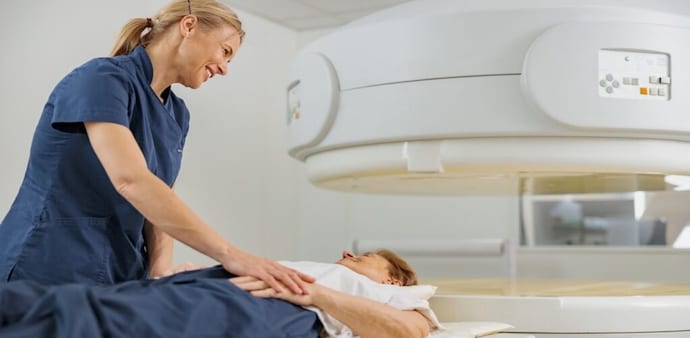
One area of focus is open MRI technology, which Rao said could offer a more comfortable experience for patients who feel claustrophobic in conventional scanners. The company is also working to reduce electricity consumption and maintenance costs.
The products will need to demonstrate reliability, cost-effectiveness and clinical utility to compete with established medical technology manufacturers.
Software becomes a growth lever
Fischer is also developing a business model that combines medical equipment with software and healthcare delivery platforms.
Its subsidiary, FlynnCare Health Innovations, develops clinical software, electronic health records and screening solutions that can be integrated with diagnostic equipment and preventive healthcare kiosks.
Rao said software could improve margins because it can scale without the same capital requirements as manufacturing.
"It is also where much of our margin improvement comes from, because software scales without the same capital intensity as manufacturing," she said.
Fischer is working with Nanyang Biologics on an AI-led drug-discovery platform designed to identify active molecules from herbs. The technology could be offered to pharmaceutical and nutraceutical businesses and research institutions, although its commercial contribution will depend on customer adoption and revenue-generating programmes.
Rao said the collaboration provides access to a platform developed by Nanyang Biologics, limiting Fischer's upfront development expenditure.
Government projects offer overseas opportunities
Government healthcare programmes are another potential source of revenue. Fischer wants to supply screening solutions combining devices with patient registration, testing, treatment tracking and follow-up.
In Indonesia, the company is working on a tuberculosis screening programme through its subsidiary, FMV Global Innovation. Rao said the project requires upfront working capital, operating expenditure and device procurement before payments are received.
The company has also allocated funding to its subsidiaries to support their operations and existing projects. The funding does not represent a newly announced contract.
"The biggest lever for us is government partnerships, both in India and abroad," Rao said.
Public healthcare programmes could create demand for diagnostic and screening technologies in regions where access to medical imaging remains limited. However, revenue from these projects will depend on execution, payment cycles and the conversion of the company's pipeline into contracts.
Fischer is also exploring acquisitions and partnerships to gain access to technologies it can develop further.
ends
Neetu Chandra
Siddharth Zarabi;Krishna Gopalan;
HL: Fischer Medical targets export-led growth, expands medical technology pipeline
Strap: The company aims to build exports towards half its business while developing imaging and screening products and software
By Neetu Chandra Sharma
New Delhi
Fischer Medical Ventures Ltd aims to increase the share of exports to half its business over the long term, while developing its medical imaging and preventive healthcare portfolio.
The company plans to direct investment towards research and development, software and new healthcare technologies rather than immediately increase manufacturing capacity, Svetlana Rao, Group Executive Director of Fischer Medical Ventures, told Business Today.
"Our strategy has never been simply to enter the market with a 'me-too' product. We want to address gaps that larger players have not fully addressed," Rao said.
Fischer has entered markets in Kenya and Tanzania and is targeting the Gulf Cooperation Council region and Southeast Asia, including the Philippines and Indonesia. It is also exploring opportunities in the US.
"Over time, we would like to move towards a 50:50 split between domestic and export business," Rao said.
She did not specify a timeline for achieving the target. Overseas sales could help improve margins in a competitive domestic medical equipment market.
"Medical imaging is a business in which expansion takes time. You cannot simply show a brochure and sell a machine; performance and reliability have to speak for themselves," Rao said, adding that Fischer would enter one region at a time.
New products, not just more capacity
Fischer is not planning an immediate increase in its existing MRI manufacturing capacity at Visakhapatnam. Rao said the current facilities were sufficient to meet the company's order book, with investment focused on product development and new applications.
"Our capex focus this year is on strengthening capabilities rather than expanding physical production capacity," she said.
The company is developing imaging solutions for screening and interventional radiology, alongside enhancements to its MRI platforms and preventive healthcare offerings. It is also pursuing computed tomography (CT) imaging and screening software.
One area of focus is open MRI technology, which Rao said could offer a more comfortable experience for patients who feel claustrophobic in conventional scanners. The company is also working to reduce electricity consumption and maintenance costs.
The products will need to demonstrate reliability, cost-effectiveness and clinical utility to compete with established medical technology manufacturers.
Software becomes a growth lever
Fischer is also developing a business model that combines medical equipment with software and healthcare delivery platforms.
Its subsidiary, FlynnCare Health Innovations, develops clinical software, electronic health records and screening solutions that can be integrated with diagnostic equipment and preventive healthcare kiosks.
Rao said software could improve margins because it can scale without the same capital requirements as manufacturing.
"It is also where much of our margin improvement comes from, because software scales without the same capital intensity as manufacturing," she said.
Fischer is working with Nanyang Biologics on an AI-led drug-discovery platform designed to identify active molecules from herbs. The technology could be offered to pharmaceutical and nutraceutical businesses and research institutions, although its commercial contribution will depend on customer adoption and revenue-generating programmes.
Rao said the collaboration provides access to a platform developed by Nanyang Biologics, limiting Fischer's upfront development expenditure.
Government projects offer overseas opportunities
Government healthcare programmes are another potential source of revenue. Fischer wants to supply screening solutions combining devices with patient registration, testing, treatment tracking and follow-up.
In Indonesia, the company is working on a tuberculosis screening programme through its subsidiary, FMV Global Innovation. Rao said the project requires upfront working capital, operating expenditure and device procurement before payments are received.
The company has also allocated funding to its subsidiaries to support their operations and existing projects. The funding does not represent a newly announced contract.
"The biggest lever for us is government partnerships, both in India and abroad," Rao said.
Public healthcare programmes could create demand for diagnostic and screening technologies in regions where access to medical imaging remains limited. However, revenue from these projects will depend on execution, payment cycles and the conversion of the company's pipeline into contracts.
Fischer is also exploring acquisitions and partnerships to gain access to technologies it can develop further.
Fischer Medical Ventures Ltd aims to increase the share of exports to half its business over the long term, while developing its medical imaging and preventive healthcare portfolio.
The company plans to direct investment towards research and development, software, and new healthcare technologies rather than immediately increase manufacturing capacity, Svetlana Rao, Group Executive Director of Fischer Medical Ventures, told Business Today.
"Our strategy has never been simply to enter the market with a 'me-too' product. We want to address gaps that larger players have not fully addressed," Rao said.
Fischer has entered markets in Kenya and Tanzania and is targeting the Gulf Cooperation Council region and Southeast Asia, including the Philippines and Indonesia. It is also exploring opportunities in the US.
"Over time, we would like to move towards a 50:50 split between domestic and export business," Rao said.
She did not specify a timeline for achieving the target. Overseas sales could help improve margins in a competitive domestic medical equipment market.
"Medical imaging is a business in which expansion takes time. You cannot simply show a brochure and sell a machine; performance and reliability have to speak for themselves," Rao said, adding that Fischer would enter one region at a time.
New products, not just more capacity
Fischer is not planning an immediate increase in its existing MRI manufacturing capacity at Visakhapatnam. Rao said the current facilities were sufficient to meet the company's order book, with investment focused on product development and new applications.
"Our capex focus this year is on strengthening capabilities rather than expanding physical production capacity," she said.
The company is developing imaging solutions for screening and interventional radiology, alongside enhancements to its MRI platforms and preventive healthcare offerings. It is also pursuing computed tomography (CT) imaging and screening software.
One area of focus is open MRI technology, which Rao said could offer a more comfortable experience for patients who feel claustrophobic in conventional scanners. The company is also working to reduce electricity consumption and maintenance costs.
The products will need to demonstrate reliability, cost-effectiveness and clinical utility to compete with established medical technology manufacturers.
Software becomes a growth lever
Fischer is also developing a business model that combines medical equipment with software and healthcare delivery platforms.
Its subsidiary, FlynnCare Health Innovations, develops clinical software, electronic health records and screening solutions that can be integrated with diagnostic equipment and preventive healthcare kiosks.
Rao said software could improve margins because it can scale without the same capital requirements as manufacturing.
"It is also where much of our margin improvement comes from, because software scales without the same capital intensity as manufacturing," she said.
Fischer is working with Nanyang Biologics on an AI-led drug-discovery platform designed to identify active molecules from herbs. The technology could be offered to pharmaceutical and nutraceutical businesses and research institutions, although its commercial contribution will depend on customer adoption and revenue-generating programmes.
Rao said the collaboration provides access to a platform developed by Nanyang Biologics, limiting Fischer's upfront development expenditure.
Government projects offer overseas opportunities
Government healthcare programmes are another potential source of revenue. Fischer wants to supply screening solutions combining devices with patient registration, testing, treatment tracking and follow-up.
In Indonesia, the company is working on a tuberculosis screening programme through its subsidiary, FMV Global Innovation. Rao said the project requires upfront working capital, operating expenditure and device procurement before payments are received.
The company has also allocated funding to its subsidiaries to support their operations and existing projects. The funding does not represent a newly announced contract.
"The biggest lever for us is government partnerships, both in India and abroad," Rao said.
Public healthcare programmes could create demand for diagnostic and screening technologies in regions where access to medical imaging remains limited. However, revenue from these projects will depend on execution, payment cycles and the conversion of the company's pipeline into contracts.
Fischer is also exploring acquisitions and partnerships to gain access to technologies it can develop further.
ends
Neetu Chandra
Siddharth Zarabi;Krishna Gopalan;
HL: Fischer Medical targets export-led growth, expands medical technology pipeline
Strap: The company aims to build exports towards half its business while developing imaging and screening products and software
By Neetu Chandra Sharma
New Delhi
Fischer Medical Ventures Ltd aims to increase the share of exports to half its business over the long term, while developing its medical imaging and preventive healthcare portfolio.
The company plans to direct investment towards research and development, software and new healthcare technologies rather than immediately increase manufacturing capacity, Svetlana Rao, Group Executive Director of Fischer Medical Ventures, told Business Today.
"Our strategy has never been simply to enter the market with a 'me-too' product. We want to address gaps that larger players have not fully addressed," Rao said.
Fischer has entered markets in Kenya and Tanzania and is targeting the Gulf Cooperation Council region and Southeast Asia, including the Philippines and Indonesia. It is also exploring opportunities in the US.
"Over time, we would like to move towards a 50:50 split between domestic and export business," Rao said.
She did not specify a timeline for achieving the target. Overseas sales could help improve margins in a competitive domestic medical equipment market.
"Medical imaging is a business in which expansion takes time. You cannot simply show a brochure and sell a machine; performance and reliability have to speak for themselves," Rao said, adding that Fischer would enter one region at a time.
New products, not just more capacity
Fischer is not planning an immediate increase in its existing MRI manufacturing capacity at Visakhapatnam. Rao said the current facilities were sufficient to meet the company's order book, with investment focused on product development and new applications.
"Our capex focus this year is on strengthening capabilities rather than expanding physical production capacity," she said.
The company is developing imaging solutions for screening and interventional radiology, alongside enhancements to its MRI platforms and preventive healthcare offerings. It is also pursuing computed tomography (CT) imaging and screening software.
One area of focus is open MRI technology, which Rao said could offer a more comfortable experience for patients who feel claustrophobic in conventional scanners. The company is also working to reduce electricity consumption and maintenance costs.
The products will need to demonstrate reliability, cost-effectiveness and clinical utility to compete with established medical technology manufacturers.
Software becomes a growth lever
Fischer is also developing a business model that combines medical equipment with software and healthcare delivery platforms.
Its subsidiary, FlynnCare Health Innovations, develops clinical software, electronic health records and screening solutions that can be integrated with diagnostic equipment and preventive healthcare kiosks.
Rao said software could improve margins because it can scale without the same capital requirements as manufacturing.
"It is also where much of our margin improvement comes from, because software scales without the same capital intensity as manufacturing," she said.
Fischer is working with Nanyang Biologics on an AI-led drug-discovery platform designed to identify active molecules from herbs. The technology could be offered to pharmaceutical and nutraceutical businesses and research institutions, although its commercial contribution will depend on customer adoption and revenue-generating programmes.
Rao said the collaboration provides access to a platform developed by Nanyang Biologics, limiting Fischer's upfront development expenditure.
Government projects offer overseas opportunities
Government healthcare programmes are another potential source of revenue. Fischer wants to supply screening solutions combining devices with patient registration, testing, treatment tracking and follow-up.
In Indonesia, the company is working on a tuberculosis screening programme through its subsidiary, FMV Global Innovation. Rao said the project requires upfront working capital, operating expenditure and device procurement before payments are received.
The company has also allocated funding to its subsidiaries to support their operations and existing projects. The funding does not represent a newly announced contract.
"The biggest lever for us is government partnerships, both in India and abroad," Rao said.
Public healthcare programmes could create demand for diagnostic and screening technologies in regions where access to medical imaging remains limited. However, revenue from these projects will depend on execution, payment cycles and the conversion of the company's pipeline into contracts.
Fischer is also exploring acquisitions and partnerships to gain access to technologies it can develop further.