
'More American tech work moving to India': Ex-HCL Tech CEO on US' green card programme curbs
On Thursday, US Labour Secretary Keith Sonderling announced that several major IT outsourcing firms have been suspended from the Program for Electronic Review Management (PERM) green card processing framework.
- Oct 9, 2026,
- Updated Oct 9, 2026 1:52 PM IST
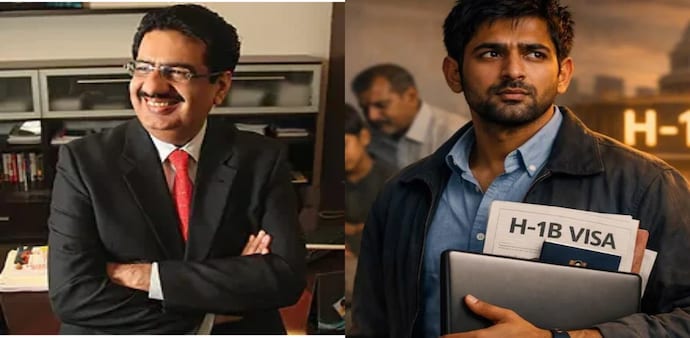
Vineet Nayar, the former CEO of HCL Technologies, on Friday said in a social media post that US President Donald Trump wants lesser Indian technology professionals moving to America, which might unintentionally lead to more American tech work moving to India. On Thursday, US Labour Secretary Keith Sonderling announced that several major IT outsourcing firms have been suspended from the Program for Electronic Review Management (PERM) green card processing framework.
"Trump wants fewer Indian technology professionals moving to America. The unintended consequence may be more American technology work moving to India," he wrote on X. Nayar said that he was not worried when he read reports about the US action restricting some large tech companies from using PERM.
The former HCL Tech CEO added, "One number explains why. Indian IT companies accounted for less than 1,400 of the 117,849 PERM certifications last year. Less than 2%. The direct impact may therefore be smaller than it first appears. But something more interesting is happening underneath."
MUST READ | Setback for IT giants: US suspends Microsoft, Infosys, TCS, Wipro, HCL from green card programme
He said that in the original IT model, if a customer in the US had important work, India sent its engineers there to do it. "Then we discovered that much of that work could be done from India. The onsite-offshore model was born. I lived that transition. We may be at the beginning of another one."
Furthermore, Nayar said that while US is making it difficult to move Indian talent there, tech is making it easier for smaller teams in India to take responsibility for increasingly sophisticated work.
"There is an irony here. In trying to reduce the movement of Indian talent to America, the US may accelerate the movement of American work to India. But I don’t mean another wave of coding and maintenance jobs."
According to Vineet Nayar, the opportunity lies in architecture, product engineering, cybersecurity, AI implementation, industry solutions as well as ownership of products and intellectual property (IP).
DON'T MISS | US PERM suspension: India slams US green card curbs, JD Vance's 'indentured servants' remark
He also had an advice for Indian professionals working with American clients and companies. "Indian teams should not merely receive specifications from New York. They should help decide what gets built. Not merely maintain a global bank’s technology platform, but help redesign the bank. Not just supply engineers to solve somebody else’s problem, but own the problem," Nayar noted.
He added that for around three decades, growth in Indian IT and Indian IT employment happened together since companies typically used to hire more engineers when they had more business.
This scenario, however, might change with artificial intelligence (AI). "As AI improves productivity, that relationship may weaken. Indian IT could win more sophisticated work and create more value without headcount growing at the same rate. So we need a different definition of success," he added.
In a warning for the industry, Nayar said that Indian IT competed largely at the cost of Indian talent for the past 30 years but the next 30 will depend on the capability of Indian talent.
"Can we create architects rather than only programmers? Build products and IP here? Move more global decision-making to India? Create more value per person and therefore pay our people far better? Those are much bigger questions than how many visas America issues. So worry not about the visa headlines. Trump may make it harder for Indian engineers to move to American work. The opportunity is to make American work move to Indian engineers," he signed off.
The IT firms suspended from PERM include Cognizant, Infosys, Tata Consultancy Services (TCS), Wipro, HCL and Capgemini. The Trump administration also suspended tech giants Microsoft and Adobe from the programme, citing multiple active federal investigations.
Speaking at a press conference, US Vice President JD Vance said that the use of H-1B visa by tech companies was intended to fill positions that couldn't be staffed by American workers.
"The H1-B visa program is meant to allow companies to bring in really the best of the best from outside the United States of America for positions that are completely impossible to fill with American workers. Unfortunately, the program has become rife with fraud," he said.
Responding to JD Vance's remarks, the Ministry of External Affairs (MEA) called description of H-1B visa holders as "indentured servants" as unwarranted and deeply offensive.
"We believe that such descriptions are unwarranted and ignore the fact that Indian professionals in the United States are highly educated and skilled contributors to its economy and innovation ecosystem," Ministry of External Affairs (MEA) said in a statement.
Highlighting the contributions of immigrants in shaping the US, the MEA said, "Indeed, the history of the United States itself has been shaped by generations of immigrants whose labour, enterprise and innovation have contributed to its growth and prosperity. Resorting to terminology that carries painful historical and colonial legacy connotations is deeply offensive."
Vineet Nayar, the former CEO of HCL Technologies, on Friday said in a social media post that US President Donald Trump wants lesser Indian technology professionals moving to America, which might unintentionally lead to more American tech work moving to India. On Thursday, US Labour Secretary Keith Sonderling announced that several major IT outsourcing firms have been suspended from the Program for Electronic Review Management (PERM) green card processing framework.
"Trump wants fewer Indian technology professionals moving to America. The unintended consequence may be more American technology work moving to India," he wrote on X. Nayar said that he was not worried when he read reports about the US action restricting some large tech companies from using PERM.
The former HCL Tech CEO added, "One number explains why. Indian IT companies accounted for less than 1,400 of the 117,849 PERM certifications last year. Less than 2%. The direct impact may therefore be smaller than it first appears. But something more interesting is happening underneath."
MUST READ | Setback for IT giants: US suspends Microsoft, Infosys, TCS, Wipro, HCL from green card programme
He said that in the original IT model, if a customer in the US had important work, India sent its engineers there to do it. "Then we discovered that much of that work could be done from India. The onsite-offshore model was born. I lived that transition. We may be at the beginning of another one."
Furthermore, Nayar said that while US is making it difficult to move Indian talent there, tech is making it easier for smaller teams in India to take responsibility for increasingly sophisticated work.
"There is an irony here. In trying to reduce the movement of Indian talent to America, the US may accelerate the movement of American work to India. But I don’t mean another wave of coding and maintenance jobs."
According to Vineet Nayar, the opportunity lies in architecture, product engineering, cybersecurity, AI implementation, industry solutions as well as ownership of products and intellectual property (IP).
DON'T MISS | US PERM suspension: India slams US green card curbs, JD Vance's 'indentured servants' remark
He also had an advice for Indian professionals working with American clients and companies. "Indian teams should not merely receive specifications from New York. They should help decide what gets built. Not merely maintain a global bank’s technology platform, but help redesign the bank. Not just supply engineers to solve somebody else’s problem, but own the problem," Nayar noted.
He added that for around three decades, growth in Indian IT and Indian IT employment happened together since companies typically used to hire more engineers when they had more business.
This scenario, however, might change with artificial intelligence (AI). "As AI improves productivity, that relationship may weaken. Indian IT could win more sophisticated work and create more value without headcount growing at the same rate. So we need a different definition of success," he added.
In a warning for the industry, Nayar said that Indian IT competed largely at the cost of Indian talent for the past 30 years but the next 30 will depend on the capability of Indian talent.
"Can we create architects rather than only programmers? Build products and IP here? Move more global decision-making to India? Create more value per person and therefore pay our people far better? Those are much bigger questions than how many visas America issues. So worry not about the visa headlines. Trump may make it harder for Indian engineers to move to American work. The opportunity is to make American work move to Indian engineers," he signed off.
The IT firms suspended from PERM include Cognizant, Infosys, Tata Consultancy Services (TCS), Wipro, HCL and Capgemini. The Trump administration also suspended tech giants Microsoft and Adobe from the programme, citing multiple active federal investigations.
Speaking at a press conference, US Vice President JD Vance said that the use of H-1B visa by tech companies was intended to fill positions that couldn't be staffed by American workers.
"The H1-B visa program is meant to allow companies to bring in really the best of the best from outside the United States of America for positions that are completely impossible to fill with American workers. Unfortunately, the program has become rife with fraud," he said.
Responding to JD Vance's remarks, the Ministry of External Affairs (MEA) called description of H-1B visa holders as "indentured servants" as unwarranted and deeply offensive.
"We believe that such descriptions are unwarranted and ignore the fact that Indian professionals in the United States are highly educated and skilled contributors to its economy and innovation ecosystem," Ministry of External Affairs (MEA) said in a statement.
Highlighting the contributions of immigrants in shaping the US, the MEA said, "Indeed, the history of the United States itself has been shaped by generations of immigrants whose labour, enterprise and innovation have contributed to its growth and prosperity. Resorting to terminology that carries painful historical and colonial legacy connotations is deeply offensive."