
Noel Tata evokes founding principles to guide Tata Trusts' new strategic shift
Asserting that measuring philanthropy strictly by people reached or money spent is no longer enough, Noel Tata emphasized that the Trusts must be judged on what changes as a result of their work.
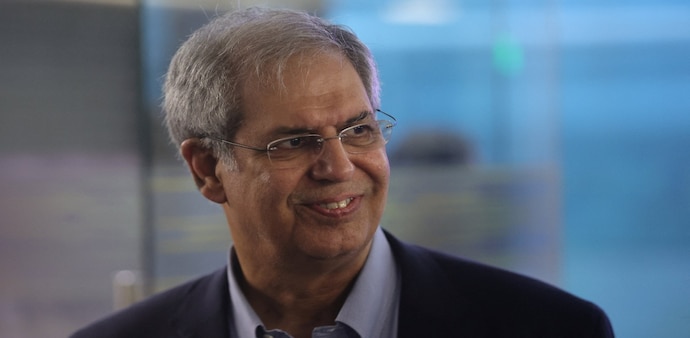
- Oct 18, 2026,
- Updated Oct 18, 2026 12:41 PM IST
Tata Trusts will put more weight on building institutions directly rather than only funding them, Chairman Noel Tata said, as the charitable body's differences with the Tata Sons board persist.
In the Trusts' FY26 annual report, Noel said the need was “not simply to support an existing effort, but to build institutions and models that can become enduring public assets in their own right”. While he did not directly refer to the governance and strategic differences between the Trusts and Tata Sons, the strategic redirection sets a clear tone for the philanthropic group's future.
India's largest philanthropic group disbursed ₹1,556.31 crore in the year to March 2026, funded by dividends drawn from Tata Sons. Institutional grants and direct project spending accounted for ₹1,353.32 crore of the total, while direct assistance to individuals stood at ₹202.99 crore.
Among sectors, rural upliftment received the largest share at ₹457.62 crore, followed by education (₹270.26 crore), cancer care (₹178.46 crore), institutions (₹169.31 crore), and healthcare (₹105.97 crore). Water and sanitation received ₹59.04 crore, while nutrition was allocated ₹57.64 crore. Individual grants were primarily directed toward medical needs (₹143.30 crore) and education (₹59.38 crore).
Central to this new phase is a plan to construct a network of 40 to 50 not-for-profit general hospitals across the country. Patients who can afford to pay will help fund care for those who cannot, though the annual report outlines no investment figure, locations, or timeline.
Alongside this network, the report sets out a health strategy for 2026–2031 covering approximately 75 blocks in core states and strengthening over 100 public health facilities across 35 high-priority districts. Key targets include reaching 25 lakh people, reducing under-five mortality in intervention areas from 32 to 25 per 1,000 live births, extending primary care to 10 lakh elderly citizens, and upskilling more than 20,000 frontline workers.
In FY26, the group's Cancer Care Programme recorded 1,06,626 outpatient consultations, 24,874 chemotherapy cycles, 2,879 surgeries, and provided radiotherapy to 29,638 patients, while treating 13,031 new patients.
Invoking the legacy of past group-founded landmarks, including the Indian Institute of Science in Bengaluru and Tata Hospital in Mumbai, Tata stressed that enterprise carries an intrinsic social duty.
Writing in the report, the Tata Trusts Chairman noted, “Our founders did not set out to build the largest group of companies. They believed that enterprise carried with it a responsibility to society, and that the true measure of progress was an improvement in the quality of people's lives”.
He pointed out that talented young Indians often leave to find opportunities unavailable at home, creating a need for domestic institutions capable of nurturing them.
Asserting that measuring philanthropy strictly by people reached or money spent is no longer enough, Noel Tata emphasized that the Trusts must be judged on what changes as a result of their work. Having incubated several institutions of national importance in the past, the group may seek out other philanthropies to partner with moving forward.
Concluding his message with a reflection that extends beyond traditional grant-making, he wrote, “Trying to become the biggest before becoming the best rarely ends well. Our responsibility is to remain focused on what matters, and to do what India needs, in a way that creates lasting value”.
(With inputs from PTI)
Tata Trusts will put more weight on building institutions directly rather than only funding them, Chairman Noel Tata said, as the charitable body's differences with the Tata Sons board persist.
In the Trusts' FY26 annual report, Noel said the need was “not simply to support an existing effort, but to build institutions and models that can become enduring public assets in their own right”. While he did not directly refer to the governance and strategic differences between the Trusts and Tata Sons, the strategic redirection sets a clear tone for the philanthropic group's future.
India's largest philanthropic group disbursed ₹1,556.31 crore in the year to March 2026, funded by dividends drawn from Tata Sons. Institutional grants and direct project spending accounted for ₹1,353.32 crore of the total, while direct assistance to individuals stood at ₹202.99 crore.
Among sectors, rural upliftment received the largest share at ₹457.62 crore, followed by education (₹270.26 crore), cancer care (₹178.46 crore), institutions (₹169.31 crore), and healthcare (₹105.97 crore). Water and sanitation received ₹59.04 crore, while nutrition was allocated ₹57.64 crore. Individual grants were primarily directed toward medical needs (₹143.30 crore) and education (₹59.38 crore).
Central to this new phase is a plan to construct a network of 40 to 50 not-for-profit general hospitals across the country. Patients who can afford to pay will help fund care for those who cannot, though the annual report outlines no investment figure, locations, or timeline.
Alongside this network, the report sets out a health strategy for 2026–2031 covering approximately 75 blocks in core states and strengthening over 100 public health facilities across 35 high-priority districts. Key targets include reaching 25 lakh people, reducing under-five mortality in intervention areas from 32 to 25 per 1,000 live births, extending primary care to 10 lakh elderly citizens, and upskilling more than 20,000 frontline workers.
In FY26, the group's Cancer Care Programme recorded 1,06,626 outpatient consultations, 24,874 chemotherapy cycles, 2,879 surgeries, and provided radiotherapy to 29,638 patients, while treating 13,031 new patients.
Invoking the legacy of past group-founded landmarks, including the Indian Institute of Science in Bengaluru and Tata Hospital in Mumbai, Tata stressed that enterprise carries an intrinsic social duty.
Writing in the report, the Tata Trusts Chairman noted, “Our founders did not set out to build the largest group of companies. They believed that enterprise carried with it a responsibility to society, and that the true measure of progress was an improvement in the quality of people's lives”.
He pointed out that talented young Indians often leave to find opportunities unavailable at home, creating a need for domestic institutions capable of nurturing them.
Asserting that measuring philanthropy strictly by people reached or money spent is no longer enough, Noel Tata emphasized that the Trusts must be judged on what changes as a result of their work. Having incubated several institutions of national importance in the past, the group may seek out other philanthropies to partner with moving forward.
Concluding his message with a reflection that extends beyond traditional grant-making, he wrote, “Trying to become the biggest before becoming the best rarely ends well. Our responsibility is to remain focused on what matters, and to do what India needs, in a way that creates lasting value”.
(With inputs from PTI)