
Rusan Pharma targets ₹20,000-25,000 crore addiction treatment market, to invest ₹200 crore in Kandla
Company expects addiction treatment and critical pain management to contribute to growth as it expands manufacturing capacity and overseas business.
- Sep 3, 2026,
- Updated Sep 3, 2026 12:16 PM IST
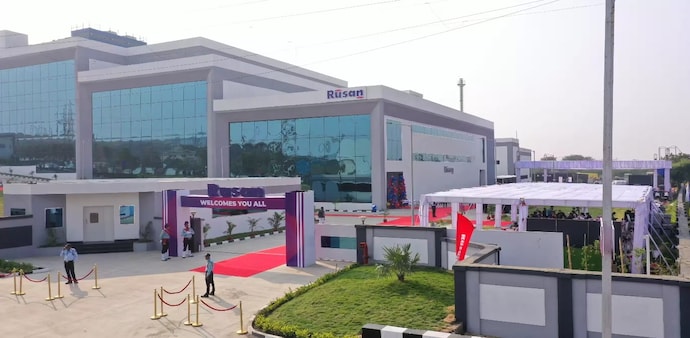
Rusan Pharma plans to invest ₹200 crore to expand tablet and injectable manufacturing capacity at its Kandla Unit 1 facility in Gujarat, as the drugmaker estimates and estimates a ₹20,000-25,000-crore addiction-treatment market over the next three to four years.
“The Government’s Nasha Mukt Bharat is a major initiative to address India’s growing addiction problem. It also presents a major growth opportunity for Rusan,” Dr Navin Saxena, Founder Chairman, Rusan Pharma, said.
Rusan has been working in addiction treatment since 1994 and distributes its products through government programmes and 240 private rehabilitation clinics. Each rehabilitation centre treats around 350-500 patients a day, according to the company. However, treatment currently reaches only 0.4% of drug patients seeking treatment, Rusan said.
The company has products covering the three major forms of addiction—drugs, alcohol and tobacco. These include Addnok, its buprenorphine product for drug addiction, while for alcohol addiction it has developed naltrexone tablets, long-acting injectables and implants. It also manufactures nicotine transdermal patches used in the national Nicotine Replacement Therapy programme. Rusan expects its group business to increase to ₹1,000 crore by 2027-28 from around ₹450 crore currently.
Critical pain management
Critical pain management is another area the company expects to drive growth. Rusan operates in the narcotic and psychotropic segment, with products including fentanyl, morphine, buprenorphine and nalbuphine, along with transdermal patches and long-acting injectables.
According to estimates cited by Rusan from leading oncologists, India needs 36 MT of morphine and similar opium-based essential painkillers, while current morphine consumption is around 480 kg.
“This significant demand-supply gap is due to the restrictive NDPS Act and the limited availability of key raw materials from government-controlled opium and alkaloid factories,” Saxena said.
The company said access to essential pain medicines remains a concern in Tier-3 cities and rural areas. “Terminal cancer patients continue to die in pain,” Saxena said.
Around 70% of Rusan’s turnover comes from narcotic and psychotropic products, according to the company. It said the stringent NDPS Act creates an entry barrier and provides protection from low-cost competition.
International markets
Rusan’s other major markets include the UK, European Union and US, where it has started supplying APIs and finished dosage forms after obtaining the necessary product approvals.
The group acquired a marketing company in South Africa in 2024 and has entered into selective out-licensing deals in the EU, Russia and Brazil. The company said it continues to receive interest from companies in various markets for licensing and strategic partnerships.
Rusan invests around 10-12% of group turnover in R&D at its API and finished-dosage research centre, NSRT, and its 104-bed clinical research facility.
Its manufacturing facilities include API plants at Ankleshwar in Gujarat, with a capacity of 50 MT, and Pithampur in Madhya Pradesh, with a capacity of 450 MT. It also has finished-dosage facilities at Kandla and Dehradun. The company plans to invest ₹200 crore at Kandla Unit 1 to expand tablet and injectable capacity.
Regulatory and approval delays remain a constraint, with Rusan citing longer timelines for factory audits and product approvals in various countries. The company also said obtaining new licences under the NDPS Act from the Department of Revenue, Ministry of Finance, can take time, including for export-oriented products.
Rusan said greater coordination between the Ministry of Health and Family Welfare and the Ministry of Home Affairs could help improve access to addiction treatment under the Nasha Mukt Bharat programme.
Rusan Pharma plans to invest ₹200 crore to expand tablet and injectable manufacturing capacity at its Kandla Unit 1 facility in Gujarat, as the drugmaker estimates and estimates a ₹20,000-25,000-crore addiction-treatment market over the next three to four years.
“The Government’s Nasha Mukt Bharat is a major initiative to address India’s growing addiction problem. It also presents a major growth opportunity for Rusan,” Dr Navin Saxena, Founder Chairman, Rusan Pharma, said.
Rusan has been working in addiction treatment since 1994 and distributes its products through government programmes and 240 private rehabilitation clinics. Each rehabilitation centre treats around 350-500 patients a day, according to the company. However, treatment currently reaches only 0.4% of drug patients seeking treatment, Rusan said.
The company has products covering the three major forms of addiction—drugs, alcohol and tobacco. These include Addnok, its buprenorphine product for drug addiction, while for alcohol addiction it has developed naltrexone tablets, long-acting injectables and implants. It also manufactures nicotine transdermal patches used in the national Nicotine Replacement Therapy programme. Rusan expects its group business to increase to ₹1,000 crore by 2027-28 from around ₹450 crore currently.
Critical pain management
Critical pain management is another area the company expects to drive growth. Rusan operates in the narcotic and psychotropic segment, with products including fentanyl, morphine, buprenorphine and nalbuphine, along with transdermal patches and long-acting injectables.
According to estimates cited by Rusan from leading oncologists, India needs 36 MT of morphine and similar opium-based essential painkillers, while current morphine consumption is around 480 kg.
“This significant demand-supply gap is due to the restrictive NDPS Act and the limited availability of key raw materials from government-controlled opium and alkaloid factories,” Saxena said.
The company said access to essential pain medicines remains a concern in Tier-3 cities and rural areas. “Terminal cancer patients continue to die in pain,” Saxena said.
Around 70% of Rusan’s turnover comes from narcotic and psychotropic products, according to the company. It said the stringent NDPS Act creates an entry barrier and provides protection from low-cost competition.
International markets
Rusan’s other major markets include the UK, European Union and US, where it has started supplying APIs and finished dosage forms after obtaining the necessary product approvals.
The group acquired a marketing company in South Africa in 2024 and has entered into selective out-licensing deals in the EU, Russia and Brazil. The company said it continues to receive interest from companies in various markets for licensing and strategic partnerships.
Rusan invests around 10-12% of group turnover in R&D at its API and finished-dosage research centre, NSRT, and its 104-bed clinical research facility.
Its manufacturing facilities include API plants at Ankleshwar in Gujarat, with a capacity of 50 MT, and Pithampur in Madhya Pradesh, with a capacity of 450 MT. It also has finished-dosage facilities at Kandla and Dehradun. The company plans to invest ₹200 crore at Kandla Unit 1 to expand tablet and injectable capacity.
Regulatory and approval delays remain a constraint, with Rusan citing longer timelines for factory audits and product approvals in various countries. The company also said obtaining new licences under the NDPS Act from the Department of Revenue, Ministry of Finance, can take time, including for export-oriented products.
Rusan said greater coordination between the Ministry of Health and Family Welfare and the Ministry of Home Affairs could help improve access to addiction treatment under the Nasha Mukt Bharat programme.