
Smaller cities are seeing higher purchases of watches: Timex Group India MD
Deepak Chhabra, Managing Director, Timex Group India, on being a youth brand, brand positioning in India, and more
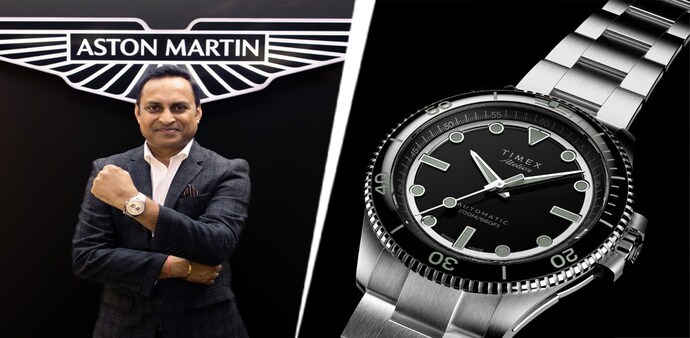
- Jul 22, 2026,
- Updated Jul 22, 2026 7:02 PM IST
Timex Group India Ltd (TGIL), part of the US-headquartered Timex Group, manages a portfolio of brands including Timex, Versace, Guess, Aston Martin, adidas, etc., in India. The company’s revenues increased from Rs 265 crore to Rs 800 crore, a growth of 32% CAGR over FY22–FY26.
In a freewheeling conversation with Business Today, Deepak Chhabra, Managing Director, Timex Group India, spoke about appealing to younger consumers, premiumisation, analog vs smartwatches and the company’s expansion plans.
Edited excerpts
Timex has a heritage spanning more than a century. How do you balance preserving that legacy while appealing to younger consumers?
Frankly, balancing legacy and heritage with being contemporary is a bit difficult. Legacy is built over a long period of time, and of course that's the backbone on which the brand is built. But with changing times, I believe there are 3-4 things which need to be done to remain relevant. First, of course, is the product. Today, watches have moved from being functional products to more of a fashion statement. Our product line today is way different from what we used to offer, say a decade back. We have evolved our product offering and made it more relevant for the younger generation.
Next is how the youth engages with the brand and how they purchase it. Almost half of our business comes from digital channels. We are available wherever the consumer is. We are present on all the top fashion portals; we have our own website, and we are also available through quick commerce. It’s very important to give the youth convenience and availability from where they shop.
And the last thing is how you market your product to the youth. So, a majority of our investment is digital. We also have a lot of influencer activation. We also get associated with fashion events. This is where the consumer lies, especially the youth. So, we are doing our bit in all the three larger pillars -- product, consumer communication and probably the channels from where they procure. We have seen a huge surge in adoption of our brand amongst the youth.
What percentage of your sales are coming from online?
40% of our business comes from online.
Are you primarily a youth brand?
Youth is defined differently by different people. Our core target group has been 25-35 years. But we have been making a conscious effort to gain a larger share between 18- 25 years. So we call it ‘youngification’ of the brand. Around 75% of our consumers are under 35.
What role does storytelling play in Timex's brand positioning in India?
While we have been doing reasonable business all this while, the perception of the brand was more on the legacy side when I moved in about four and a half years back. Whomsoever I spoke to said something to the effect that his/her dad had two Timex watches, or that it was gifted to him on graduation, etc. It was always in the past tense. Sounded like it was a great brand but wasn’t meant for them.
So, we developed campaigns which changed the perception over a period of time. All our collaborations, be it Superman, NASA, Harry Potter, etc., along with celebrity endorsements, our campaigns, and sporting associations have helped change the perception. We were part of IPL for two consecutive years, first with Gujarat Titans and then with the Punjab Kings. We have been part of all fashion events. All these are making us more relevant with the youth.
How do you decide which global Timex initiatives should be adapted for the Indian market?
Since we are a global brand, we have rights for all the collabs across the world. There's no incremental cost of activating them in the market. So, we bring all the collabs to India. We only differentiate on the kind of investment we do on marketing them, depending upon what is more popular here.
Could you outline the growth journey of Aston Martin Watches in India following its debut launch in December 2025?
This is a great addition to our portfolio. If you see our brand portfolio, we have about 15 brands, but there was a gap for an authentic sports brand in our portfolio. Formula One is becoming huge in India. From around 20-22 million followers in 2022, its followership has increased to 70 million in 2025. So, people are following Formula One big time. Keeping all this in mind, we were very sure that India is ready for a brand like Aston Martin. We launched in December and were sold out in about two months. We sold about 10,000 watches in the first launch itself, which was way beyond our expectations, especially since these are premium watches, priced at about Rs 45,000-50,000. And now we have come up with the spring-summer collection, which is also accepted so well. The response has been amazing, and we feel this could be one of the top-selling brands in our portfolio in the next two to three years.
How has the Indian watch market evolved over the last five years? What major shifts are you seeing in consumer preferences across age groups?
The market overall stands at about $3.4 billion, which is about Rs 30,000 crore, out of which two-thirds still remains with the analog and one-third goes to smartwatches. So smartwatches are about Rs 10,000 crore, and analog watches at about Rs 20,000 crore. The growth has been very different for both these subcategories. Analog watches historically have been growing at about 8%. But for the last three years, the growth has really picked up to about 13% in analog. And then smartwatches have gone through a very interesting curve. So smartwatches were zero in 2019. In 2023, smartwatches became huge. India consumed about $40 million, about Rs 4000 crore, of smartwatches in 2023 from zero smartwatch consumption in 2019. But then the reverse trend started. So, as we speak, that has come down to about, say $28 million, about Rs 2,800 crore. So there is a downward trend for smartwatches, but they still are quite sizable. As I said, they are about Rs 10,000 crore.
Why do you think that there has been a downtrend for smartwatches?
It was more of the timing, if you ask me. During COVID, nobody was going out. So analog watches took a hit. Analog watches do not serve a particular function. They are more of a fashion statement. At that point in time, smartwatches took a huge leap because everybody wanted to know their step count, their sleep pattern, etc. But as you know, COVID settled, and the requirement of measurement of key health parameters reduced. At the same time, analog watches have become fashion statements, and so you need multiple of them. So while there is still a market for smart watches, they are growing in single digits while analog watches are growing in double digits.
We also make smart watches. But analog watches will grow way faster, and premiumisation will lead to higher growth percentage in premium watches, which are beyond Rs 10,000 and go up to whatever. And smart watches will have slow growth.
Within the Timex portfolio, what percentage is smart watches?
Smart watches are very small. It doesn't even contribute 2%.
How important are tier 2 and tier 3 cities for Timex's growth strategy?
We have a pyramid of brands from Versace to Timex. So when it comes to our core brand, which is Timex, Tier 2, Tier 3 are amazingly important for us because those smaller cities are seeing higher purchases of watches and a lot of people are buying their first watch. The penetration of watches is still very low in India.
Only about 15-16% of Indians own a watch. So there are a lot of first time purchase which is happening, which is driving huge growth in Tier 2, Tier 3, and Tier 4. But when it comes to our premium brands like Guess or Aston Martin or Versace or Nautica, business still remains in the top 50 cities. And for the luxury brands, about 70% of business comes from the top eight cities.
Are you looking at expanding production capacity?
We have done two rounds of expansion of our manufacturing capacity. We have a huge world-class factory in Himachal Pradesh. We expanded our capacity from 3 million units to 6 million units a couple of years back, and as we speak, we are expanding it, and that should be ready by the coming January, to about 10 million.
What has been your growth like, and what is your expectation by the end of the decade?
While the industry is growing about 13%, we are growing at a CAGR of about 40%. We are growing way faster than the industry.
Business has doubled in the last four years. In the last financial year, we have grown at 48% in revenue. We feel what we have done in the last four years should be possible in the next four years also. So I should say we are looking at similar growth.
Timex Group India Ltd (TGIL), part of the US-headquartered Timex Group, manages a portfolio of brands including Timex, Versace, Guess, Aston Martin, adidas, etc., in India. The company’s revenues increased from Rs 265 crore to Rs 800 crore, a growth of 32% CAGR over FY22–FY26.
In a freewheeling conversation with Business Today, Deepak Chhabra, Managing Director, Timex Group India, spoke about appealing to younger consumers, premiumisation, analog vs smartwatches and the company’s expansion plans.
Edited excerpts
Timex has a heritage spanning more than a century. How do you balance preserving that legacy while appealing to younger consumers?
Frankly, balancing legacy and heritage with being contemporary is a bit difficult. Legacy is built over a long period of time, and of course that's the backbone on which the brand is built. But with changing times, I believe there are 3-4 things which need to be done to remain relevant. First, of course, is the product. Today, watches have moved from being functional products to more of a fashion statement. Our product line today is way different from what we used to offer, say a decade back. We have evolved our product offering and made it more relevant for the younger generation.
Next is how the youth engages with the brand and how they purchase it. Almost half of our business comes from digital channels. We are available wherever the consumer is. We are present on all the top fashion portals; we have our own website, and we are also available through quick commerce. It’s very important to give the youth convenience and availability from where they shop.
And the last thing is how you market your product to the youth. So, a majority of our investment is digital. We also have a lot of influencer activation. We also get associated with fashion events. This is where the consumer lies, especially the youth. So, we are doing our bit in all the three larger pillars -- product, consumer communication and probably the channels from where they procure. We have seen a huge surge in adoption of our brand amongst the youth.
What percentage of your sales are coming from online?
40% of our business comes from online.
Are you primarily a youth brand?
Youth is defined differently by different people. Our core target group has been 25-35 years. But we have been making a conscious effort to gain a larger share between 18- 25 years. So we call it ‘youngification’ of the brand. Around 75% of our consumers are under 35.
What role does storytelling play in Timex's brand positioning in India?
While we have been doing reasonable business all this while, the perception of the brand was more on the legacy side when I moved in about four and a half years back. Whomsoever I spoke to said something to the effect that his/her dad had two Timex watches, or that it was gifted to him on graduation, etc. It was always in the past tense. Sounded like it was a great brand but wasn’t meant for them.
So, we developed campaigns which changed the perception over a period of time. All our collaborations, be it Superman, NASA, Harry Potter, etc., along with celebrity endorsements, our campaigns, and sporting associations have helped change the perception. We were part of IPL for two consecutive years, first with Gujarat Titans and then with the Punjab Kings. We have been part of all fashion events. All these are making us more relevant with the youth.
How do you decide which global Timex initiatives should be adapted for the Indian market?
Since we are a global brand, we have rights for all the collabs across the world. There's no incremental cost of activating them in the market. So, we bring all the collabs to India. We only differentiate on the kind of investment we do on marketing them, depending upon what is more popular here.
Could you outline the growth journey of Aston Martin Watches in India following its debut launch in December 2025?
This is a great addition to our portfolio. If you see our brand portfolio, we have about 15 brands, but there was a gap for an authentic sports brand in our portfolio. Formula One is becoming huge in India. From around 20-22 million followers in 2022, its followership has increased to 70 million in 2025. So, people are following Formula One big time. Keeping all this in mind, we were very sure that India is ready for a brand like Aston Martin. We launched in December and were sold out in about two months. We sold about 10,000 watches in the first launch itself, which was way beyond our expectations, especially since these are premium watches, priced at about Rs 45,000-50,000. And now we have come up with the spring-summer collection, which is also accepted so well. The response has been amazing, and we feel this could be one of the top-selling brands in our portfolio in the next two to three years.
How has the Indian watch market evolved over the last five years? What major shifts are you seeing in consumer preferences across age groups?
The market overall stands at about $3.4 billion, which is about Rs 30,000 crore, out of which two-thirds still remains with the analog and one-third goes to smartwatches. So smartwatches are about Rs 10,000 crore, and analog watches at about Rs 20,000 crore. The growth has been very different for both these subcategories. Analog watches historically have been growing at about 8%. But for the last three years, the growth has really picked up to about 13% in analog. And then smartwatches have gone through a very interesting curve. So smartwatches were zero in 2019. In 2023, smartwatches became huge. India consumed about $40 million, about Rs 4000 crore, of smartwatches in 2023 from zero smartwatch consumption in 2019. But then the reverse trend started. So, as we speak, that has come down to about, say $28 million, about Rs 2,800 crore. So there is a downward trend for smartwatches, but they still are quite sizable. As I said, they are about Rs 10,000 crore.
Why do you think that there has been a downtrend for smartwatches?
It was more of the timing, if you ask me. During COVID, nobody was going out. So analog watches took a hit. Analog watches do not serve a particular function. They are more of a fashion statement. At that point in time, smartwatches took a huge leap because everybody wanted to know their step count, their sleep pattern, etc. But as you know, COVID settled, and the requirement of measurement of key health parameters reduced. At the same time, analog watches have become fashion statements, and so you need multiple of them. So while there is still a market for smart watches, they are growing in single digits while analog watches are growing in double digits.
We also make smart watches. But analog watches will grow way faster, and premiumisation will lead to higher growth percentage in premium watches, which are beyond Rs 10,000 and go up to whatever. And smart watches will have slow growth.
Within the Timex portfolio, what percentage is smart watches?
Smart watches are very small. It doesn't even contribute 2%.
How important are tier 2 and tier 3 cities for Timex's growth strategy?
We have a pyramid of brands from Versace to Timex. So when it comes to our core brand, which is Timex, Tier 2, Tier 3 are amazingly important for us because those smaller cities are seeing higher purchases of watches and a lot of people are buying their first watch. The penetration of watches is still very low in India.
Only about 15-16% of Indians own a watch. So there are a lot of first time purchase which is happening, which is driving huge growth in Tier 2, Tier 3, and Tier 4. But when it comes to our premium brands like Guess or Aston Martin or Versace or Nautica, business still remains in the top 50 cities. And for the luxury brands, about 70% of business comes from the top eight cities.
Are you looking at expanding production capacity?
We have done two rounds of expansion of our manufacturing capacity. We have a huge world-class factory in Himachal Pradesh. We expanded our capacity from 3 million units to 6 million units a couple of years back, and as we speak, we are expanding it, and that should be ready by the coming January, to about 10 million.
What has been your growth like, and what is your expectation by the end of the decade?
While the industry is growing about 13%, we are growing at a CAGR of about 40%. We are growing way faster than the industry.
Business has doubled in the last four years. In the last financial year, we have grown at 48% in revenue. We feel what we have done in the last four years should be possible in the next four years also. So I should say we are looking at similar growth.