
Spicejet crisis: FIP seeks urgent govt intervention; warns delayed salaries could cause financial anxiety, stress among pilots
FIP has asked the civil aviation ministry to order an immediate financial and safety review of SpiceJet. The intervention seeks to protect employees, operational reliability and aviation safety amid deepening financial stress.
- Nov 22, 2026,
- Updated Nov 22, 2026 9:01 PM IST
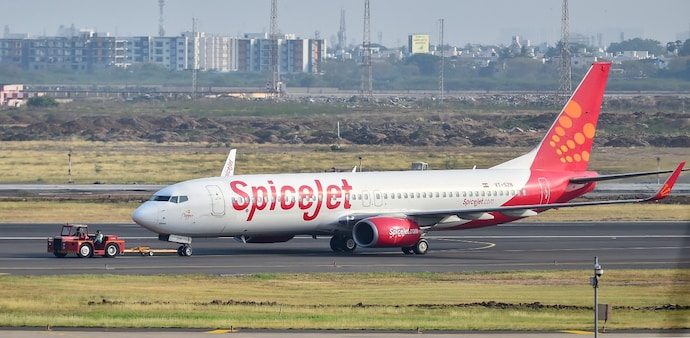
The Federation of Indian Pilots (FIP) on Sunday sought urgent government intervention over SpiceJet's worsening financial and operational condition, warning that prolonged distress could affect employee welfare, maintenance, operational reliability and aviation safety.
In a letter to the civil aviation minister, FIP president Captain C S Randhawa called for an immediate financial and safety assessment of the airline. The pilots' body also proposed stronger regulatory surveillance, quarterly monitoring of financially distressed carriers and measures to reduce aviation operating costs.
Immediate DGCA review sought
FIP asked the DGCA to assess SpiceJet's available cash and working capital, outstanding employee salaries, statutory and airport dues, fuel payments and liabilities to lessors. The review should also cover engine support, critical spares, aircraft insurance and other mandatory operational requirements.
The regulator should examine whether the airline had enough serviceable aircraft and crew to operate its approved schedule, comply with flight duty time limits and return grounded aircraft to service. FIP also sought verification of the source, timing and proposed use of the planned ₹5,500-crore fundraise.
If SpiceJet could not demonstrate the financial and operational capacity to run its approved schedule safely, its capacity should be regulated in the interests of passenger safety and operational reliability, the federation said.
Financial stress could affect operations
FIP attributed the crisis to weak working capital, lower fleet utilisation, continued fixed costs, accumulated dues and repeated dependence on fundraising. Dollar-denominated lease rentals, maintenance contracts, engine and component payments had also increased costs as the rupee depreciated.
The federation said aviation turbine fuel accounted for about 36% of SpiceJet's overall costs in FY 2024-25, citing CARE Ratings. High and varying state value-added tax rates on fuel, airport charges, competition, restricted airspace and longer routes had added to the pressure.
FIP warned that delayed salaries could cause financial anxiety, stress, fatigue and reduced concentration among pilots and other safety-critical employees. It said financial distress could also delay the purchase of aircraft components, maintenance services, engine support and defect rectification.
The federation stressed that financial constraints must not influence maintenance decisions, delay mandatory work or restrict access to spare parts and technical support. Employees should also be able to report fatigue, operational concerns and safety deficiencies without fear of retaliation, it said.
SpiceJet's market share falls to 0.6%
FIP said SpiceJet's domestic market share had fallen from about 21% in 2014 to nearly 0.6% in October 2026. The decline came amid persistent cash-flow problems, accumulated liabilities and difficulty in meeting daily financial commitments.
A substantial part of the airline's fleet remained grounded because of financial constraints, unpaid dues to lessors, maintenance issues and difficulties in arranging components and spare parts, the letter said. Salary payments to pilots and other employees had reportedly been delayed, with some dues outstanding for several months.
FIP also cited unpaid amounts owed to airport operators, oil companies, maintenance providers, aircraft lessors and other service providers. Some vendors had reportedly placed SpiceJet on cash-and-carry arrangements. The airline had also faced flight cancellations, delays and disruptions to published schedules.
The Directorate General of Civil Aviation issued a show-cause notice to SpiceJet on 17 November 2026 over operational disruptions, non-compliance, unpaid dues, grounded aircraft and the absence of a credible recovery plan, according to the letter. The airline was reportedly given seven days to respond.
SpiceJet's board has approved a proposal to raise up to ₹5,500 crore through permissible financial instruments. FIP said the timing, availability and use of the funds would be critical to the airline's revival. However, it argued that the problems appeared systemic and could not be resolved only through short-term fund infusions.
Quarterly monitoring and cost relief proposed
FIP recommended mandatory annual financial health and safety-risk assessments for every scheduled airline, with quarterly monitoring for carriers showing signs of distress. A dedicated team of aviation safety professionals, financial experts, chartered accountants and operational specialists should conduct the assessments.
It also proposed a centralised national monitoring system with early-warning indicators covering persistent losses, negative working capital, salary delays, unpaid airport and fuel dues, grounded aircraft and worsening operational performance. Employee remuneration should be treated as a priority operational obligation when an airline faces financial stress, it said.
To reduce industry costs, FIP called for lower and more uniform VAT on aviation turbine fuel and an examination of bringing the fuel under the goods and services tax framework. It also proposed temporary relief or deferral of landing, parking, navigation, ground-handling and other airport charges for financially distressed but viable airlines.
The federation suggested a structured working-capital support scheme for viable airlines facing temporary liquidity problems. Any assistance should require independent due diligence, promoter contribution, a time-bound revival plan and transparent monitoring. Funds should prioritise salaries, statutory dues, essential maintenance, insurance and safety-related obligations.
FIP said such support must not become an unconditional bailout or finance accumulated commercial losses indefinitely. It requested a stakeholder meeting involving the ministry, DGCA, Airports Authority of India, Airports Economic Regulatory Authority, airlines and FIP to discuss SpiceJet's condition and the financial sustainability of Indian aviation.