
'125% of GDP kept in frozen savings of gold, silver': Kotak's Nilesh Shah flags India's growth hurdle
India is a current account surplus economy if we remove gold imports, but our greed or love for gold results in our capital going abroad, says Nilesh Shah
- Sep 2, 2026,
- Updated Sep 2, 2026 8:55 PM IST
India is on the right growth trajectory but needs to take tougher decisions to accelerate it, Nilesh Shah, Managing Director of Kotak Mahindra Asset Management, said during a panel discussion on India Today TV.
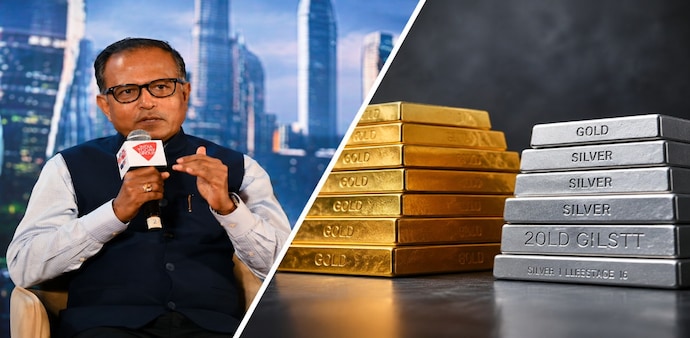
He pointed to the large amount of household wealth locked in gold and silver as one of the hurdles to faster growth. "We are the only country in the world where 125% of GDP is kept in frozen savings of gold and silver," Shah said. "India is a current account surplus economy if we remove gold imports, but our greed or love for gold results in our capital going abroad. If we are a net exporter of capital, how are we going to grow?"
Must Read: 'Faking GDP growth is very difficult': Arvind Panagariya explains why numbers are hard to manipulate
India’s Long-Term Growth Trajectory
When asked whether the latest GDP numbers should be viewed cautiously because of the base effect and weaker-than-expected nominal growth, Shah said: "My prism is slightly narrow. I see on a longer-term basis. In 2014, we were the 10th largest economy. Today, we are the fifth largest. That's a slope which is worth accelerating and staying on."
Shah said India should focus on overtaking Japan and Germany over the next few years. He also pointed to corporate earnings as evidence that the economy was holding up despite a difficult external environment.
India's economy grew 7.8% in the first quarter of 2026-27, surpassing expectations. However, some economists questioned the headline numbers, pointing to the base effect and weaker-than-expected nominal GDP growth.
Nilesh Shah defended the performance. "If I look at the profitability of Indian companies, they have delivered exceptionally good results both in the March and June 26 quarters. So, listed India is doing very well by posting double-digit earnings growth. More importantly, when we evaluate this performance in the backdrop of oil price uncertainty, supply chain disruption, rupee depreciation, and monsoon-related shortages, then this performance is reasonably good."
"Are there weaknesses in this performance? Undoubtedly, there are certain things that we have to work upon. But if our trajectory is taking us from the 10th largest to the fifth largest economy, whatever we are doing is right. We should continue to do that. And whatever corrections we can take to accelerate it further, we should be open to it."
Don't Miss: 'No serious economist will complain': PM's advisor Sanjeev Sanyal defends India's 7.8% GDP growth
Production And Consumption
Asked whether the economy was showing signs of a K-shaped recovery, with corporate profits improving while lower-income and rural households continued to struggle, Shah suggested the picture was more nuanced.
He then cited production figures across the economy. "Between FY14 and FY26, cement production in India went up from 256 million tonnes to 479 million tonnes. That growth is real. Steel moved from 74 to 164 million tonnes. Aluminum from 1.4 to 4 million tonnes. Passenger vehicles from 25 lakhs to 47 lakhs. Commercial vehicle from 6 lakh to 10 lakh. Tractors from 6 lakh to 12 lakh. Mobile phones from 6 crore to 15 crore. And food grain production from 265 million tonnes to 377 million tonnes," he said.
Shah further said that between 2004 and 2014, India remained the 10th largest economy. The upward trajectory, he added, only happened after 2014, when India moved from 10th to 5th.
On whether global uncertainty could create bumps for India, the Kotak Asset Management MD said that there would undoubtedly be bumps. "The land reform, the labor reform, the capital market reform, those are all the questions which we have to address if we have to go to 10%. But at the same time, whatever we are doing is good enough to keep us in 5-6-7% growth trajectory."
India is on the right growth trajectory but needs to take tougher decisions to accelerate it, Nilesh Shah, Managing Director of Kotak Mahindra Asset Management, said during a panel discussion on India Today TV.
He pointed to the large amount of household wealth locked in gold and silver as one of the hurdles to faster growth. "We are the only country in the world where 125% of GDP is kept in frozen savings of gold and silver," Shah said. "India is a current account surplus economy if we remove gold imports, but our greed or love for gold results in our capital going abroad. If we are a net exporter of capital, how are we going to grow?"
Must Read: 'Faking GDP growth is very difficult': Arvind Panagariya explains why numbers are hard to manipulate
India’s Long-Term Growth Trajectory
When asked whether the latest GDP numbers should be viewed cautiously because of the base effect and weaker-than-expected nominal growth, Shah said: "My prism is slightly narrow. I see on a longer-term basis. In 2014, we were the 10th largest economy. Today, we are the fifth largest. That's a slope which is worth accelerating and staying on."
Shah said India should focus on overtaking Japan and Germany over the next few years. He also pointed to corporate earnings as evidence that the economy was holding up despite a difficult external environment.
India's economy grew 7.8% in the first quarter of 2026-27, surpassing expectations. However, some economists questioned the headline numbers, pointing to the base effect and weaker-than-expected nominal GDP growth.
Nilesh Shah defended the performance. "If I look at the profitability of Indian companies, they have delivered exceptionally good results both in the March and June 26 quarters. So, listed India is doing very well by posting double-digit earnings growth. More importantly, when we evaluate this performance in the backdrop of oil price uncertainty, supply chain disruption, rupee depreciation, and monsoon-related shortages, then this performance is reasonably good."
"Are there weaknesses in this performance? Undoubtedly, there are certain things that we have to work upon. But if our trajectory is taking us from the 10th largest to the fifth largest economy, whatever we are doing is right. We should continue to do that. And whatever corrections we can take to accelerate it further, we should be open to it."
Don't Miss: 'No serious economist will complain': PM's advisor Sanjeev Sanyal defends India's 7.8% GDP growth
Production And Consumption
Asked whether the economy was showing signs of a K-shaped recovery, with corporate profits improving while lower-income and rural households continued to struggle, Shah suggested the picture was more nuanced.
He then cited production figures across the economy. "Between FY14 and FY26, cement production in India went up from 256 million tonnes to 479 million tonnes. That growth is real. Steel moved from 74 to 164 million tonnes. Aluminum from 1.4 to 4 million tonnes. Passenger vehicles from 25 lakhs to 47 lakhs. Commercial vehicle from 6 lakh to 10 lakh. Tractors from 6 lakh to 12 lakh. Mobile phones from 6 crore to 15 crore. And food grain production from 265 million tonnes to 377 million tonnes," he said.
Shah further said that between 2004 and 2014, India remained the 10th largest economy. The upward trajectory, he added, only happened after 2014, when India moved from 10th to 5th.
On whether global uncertainty could create bumps for India, the Kotak Asset Management MD said that there would undoubtedly be bumps. "The land reform, the labor reform, the capital market reform, those are all the questions which we have to address if we have to go to 10%. But at the same time, whatever we are doing is good enough to keep us in 5-6-7% growth trajectory."