
Apple wanted to bring their Chinese vendors: Ex-NITI Aayog VC makes case for more China FDI
India could learn from China's own approach to foreign investment. They had the largest investment from countries with whom they fought wars, says Rajiv Kumar
- Sep 6, 2026,
- Updated Sep 6, 2026 5:26 PM IST
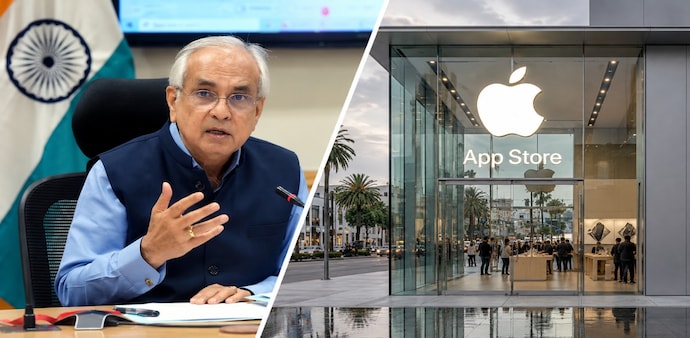
Apple wanted to bring its Chinese vendors to India when it was looking to expand beyond China, and the government agreed to the move despite an initial pushback, economist and former NITI Aayog Vice Chairman Rajiv Kumar said.
Speaking to Govindraj Ethiraj for The Core, Kumar said India needs to become more open to foreign direct investment from China and adopt a more promotional approach towards investors.
Kumar served as the second vice-chairman of the NITI Aayog from September 2017 to April 2022. It was during his tenure that talks with Apple began.
He said the Apple discussions began around 2018, after Japan's then-Prime Minister Shinzo Abe announced $2 billion to help Japanese companies diversify away from China.
Don't Miss: Xi Jinping likely to visit India after 7 years for BRICS summit, may bring 400-member delegation
Standard Chartered Bank, which Kumar said was a principal banker to Apple in China, approached him and helped set up a meeting with Apple's team in Delhi. "We had a day-long meeting with them. And then started talking," Kumar said.
Apple outlined what it needed to establish its operations in India.
"One of the things that they wanted was the flexibility to bring in their Chinese vendors to begin with," Kumar said. "There was a push back, but we accepted that and they brought them in. That's how they established."
The economist said India should use a similar approach to attract large investors across sectors. "For each one of the PLI sectors, if you can target two, three, four (foreign companies). Go for them. Bring them in. Make a person in that ministry responsible for it," he said.
Must Watch: Modi, Putin, Xi, Pezeshkian At SCO: Is Trump Facing A New Anti-U.S. Power Bloc?
'Promotional State' For Investors
When asked what India should do to attract more FDIs, Kumar said New Delhi should move from being primarily a regulatory state to a "private sector promotional state". "An entrepreneur or the foreign investor should feel welcome at the office when he's going to do something."
Such a state, he said, would trust the private sector, academia, and civil society instead of trying to control them because of mistrust.
According to the economist, India should also rethink how it approaches foreign investors. Instead of waiting for companies to approach the government, officials should identify potential "anchor investors" and ask what they need to set up in India.
"So you go out, and you target people and say, 'What can I do for you?' rather than saying, 'Come, we are waiting, and we'll tell you what not to do," he said.
India Should Open Up More To China
The former Niti Aayog VC also argued that India needs to be more open to Chinese investment while continuing to protect national security.
"The message still in the system is that China is a security risk, and whenever you whisper the word national security, everything else becomes secondary," he said. "I'm not for a minute saying that you should lower your guard on national security."
But he said India could learn from China's own approach to foreign investment. "They had the largest investment in their country from countries with whom they fought wars. Japan and the US, for example," Kumar said. "Our big war (with China) was more than 60 years ago. So it's time now to change that."
The eminent economist said that China has surplus capital and India could benefit from attracting some of it. "They've got $250 billion outgoing FDI from China. And they've been willing," he said, adding that their own domestic demand will not fuel their growth. "So they need a market for their products, and India can offer that. In that sense, it's a win-win.
Great Wall Motor Example
Kumar cited Great Wall Motor as an example of a Chinese company that had shown interest in investing in India. The Shanghai-based automaker took over Ford's facility in Maharashtra after Ford exited, Kumar said. He said the company met him three times as it tried to establish itself in India.
"I tried my best. They packed their bags and went because you wouldn't allow visas for their corporate people. They have demonstrated their intent to come and invest here. Why not let them do that?"
Apple wanted to bring its Chinese vendors to India when it was looking to expand beyond China, and the government agreed to the move despite an initial pushback, economist and former NITI Aayog Vice Chairman Rajiv Kumar said.
Speaking to Govindraj Ethiraj for The Core, Kumar said India needs to become more open to foreign direct investment from China and adopt a more promotional approach towards investors.
Kumar served as the second vice-chairman of the NITI Aayog from September 2017 to April 2022. It was during his tenure that talks with Apple began.
He said the Apple discussions began around 2018, after Japan's then-Prime Minister Shinzo Abe announced $2 billion to help Japanese companies diversify away from China.
Don't Miss: Xi Jinping likely to visit India after 7 years for BRICS summit, may bring 400-member delegation
Standard Chartered Bank, which Kumar said was a principal banker to Apple in China, approached him and helped set up a meeting with Apple's team in Delhi. "We had a day-long meeting with them. And then started talking," Kumar said.
Apple outlined what it needed to establish its operations in India.
"One of the things that they wanted was the flexibility to bring in their Chinese vendors to begin with," Kumar said. "There was a push back, but we accepted that and they brought them in. That's how they established."
The economist said India should use a similar approach to attract large investors across sectors. "For each one of the PLI sectors, if you can target two, three, four (foreign companies). Go for them. Bring them in. Make a person in that ministry responsible for it," he said.
Must Watch: Modi, Putin, Xi, Pezeshkian At SCO: Is Trump Facing A New Anti-U.S. Power Bloc?
'Promotional State' For Investors
When asked what India should do to attract more FDIs, Kumar said New Delhi should move from being primarily a regulatory state to a "private sector promotional state". "An entrepreneur or the foreign investor should feel welcome at the office when he's going to do something."
Such a state, he said, would trust the private sector, academia, and civil society instead of trying to control them because of mistrust.
According to the economist, India should also rethink how it approaches foreign investors. Instead of waiting for companies to approach the government, officials should identify potential "anchor investors" and ask what they need to set up in India.
"So you go out, and you target people and say, 'What can I do for you?' rather than saying, 'Come, we are waiting, and we'll tell you what not to do," he said.
India Should Open Up More To China
The former Niti Aayog VC also argued that India needs to be more open to Chinese investment while continuing to protect national security.
"The message still in the system is that China is a security risk, and whenever you whisper the word national security, everything else becomes secondary," he said. "I'm not for a minute saying that you should lower your guard on national security."
But he said India could learn from China's own approach to foreign investment. "They had the largest investment in their country from countries with whom they fought wars. Japan and the US, for example," Kumar said. "Our big war (with China) was more than 60 years ago. So it's time now to change that."
The eminent economist said that China has surplus capital and India could benefit from attracting some of it. "They've got $250 billion outgoing FDI from China. And they've been willing," he said, adding that their own domestic demand will not fuel their growth. "So they need a market for their products, and India can offer that. In that sense, it's a win-win.
Great Wall Motor Example
Kumar cited Great Wall Motor as an example of a Chinese company that had shown interest in investing in India. The Shanghai-based automaker took over Ford's facility in Maharashtra after Ford exited, Kumar said. He said the company met him three times as it tried to establish itself in India.
"I tried my best. They packed their bags and went because you wouldn't allow visas for their corporate people. They have demonstrated their intent to come and invest here. Why not let them do that?"