
China and India power BRICS trade expansion as intra-bloc commerce gains momentum: Report
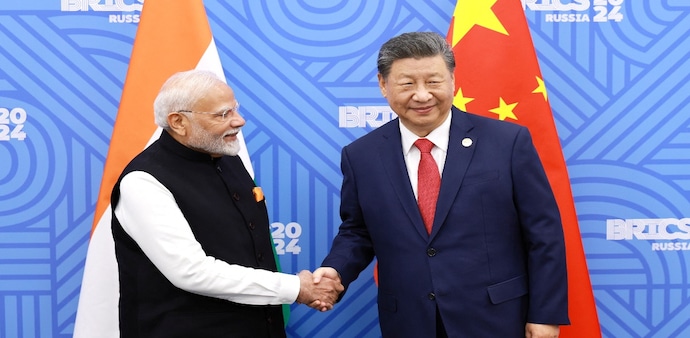
China and India are driving BRICS’ expanding trade footprint, with rising intra-bloc commerce increasing the grouping’s influence in global trade. The growth is also strengthening the case for deeper economic integration and payment mechanisms that facilitate trade in local currencies.
- Sep 10, 2026,
- Updated Sep 10, 2026 4:56 PM IST
China and India are emerging as the key economic engines behind the expanding BRICS trade network, with rising intra-bloc commerce strengthening the case for deeper economic integration and alternative cross-border payment mechanisms, The Hindu reported.
BRICS countries accounted for about 25% of global merchandise exports in 2025, underscoring the growing weight of the grouping in international trade, according to data cited in the report. The bloc, which initially comprised Brazil, Russia, India, China and South Africa, has expanded to include Egypt, Ethiopia, Indonesia, Iran and the UAE.
China remains the largest economy in the grouping, with its 2025 GDP estimated at about $19.63 trillion, ranking second globally. India’s economy was valued at about $3.92 trillion, making it the seventh-largest economy, the report said.
Russia, Brazil and Indonesia also contribute significant economic capacity, with 2025 GDP estimated at about $2.59 trillion, $2.28 trillion and $1.45 trillion, respectively. The combined economic scale gives BRICS a broad trading footprint across Asia, Europe, the Middle East, Africa and Latin America.
Intra-BRICS trade gathers pace
Trade within the bloc has increased substantially over the past decade. Intra-BRICS exports have quadrupled, according to the data cited by The Hindu. China alone exported more than $500 billion to other BRICS members in 2024.
India, Indonesia, Russia and the UAE also recorded sizeable exports to fellow BRICS countries, with individual trade flows ranging from about $80 billion to $180 billion, the report said.
The expansion indicates that BRICS economies are becoming increasingly interconnected through trade, creating opportunities for closer cooperation in supply chains, investment and financial settlements.
The report also highlighted the growing dependence of several members on fellow BRICS economies for imports. Iran depends on BRICS countries for more than 65% of its imports, while Ethiopia’s dependence is close to 45%.
BRICS economies: GDP and global ranking
| Country | 2025 GDP (current prices, $ billion) | Global rank |
|---|---|---|
| China | 19,626.247 | 2 |
| India | 3,916.312 | 7 |
| Russian Federation | 2,587.938 | 9 |
| Brazil | 2,279.918 | 12 |
| Indonesia | 1,445.642 | 18 |
| United Arab Emirates | 671.643 | 32 |
| South Africa | 427.141 | 43 |
| Iran | 371.196 | 46 |
| Egypt | 364.647 | 47 |
| Ethiopia | 109.109 | 74 |
Source: International Monetary Fund (IMF)
Push for alternative payment mechanisms
The increase in intra-BRICS commerce is also adding urgency to discussions around reducing dependence on the U.S. dollar for cross-border transactions.
MUST READ | BRICS vs G7: Who has the edge in population, economy, energy & military power in 2026?
At present, trade between countries often involves correspondent banks and multiple currency conversions, with the dollar frequently serving as an intermediary currency. A cross-border payments system capable of facilitating transactions in national currencies could potentially reduce conversion costs and simplify settlements.
Russia provides an example of how geopolitical developments are reshaping these trade flows. Its imports from BRICS countries rose sharply between 2020 and 2023, following the invasion of Ukraine and the subsequent Western sanctions, according to the report.
With China and India providing much of the bloc’s economic heft and trade between members continuing to grow, BRICS is gaining greater significance not only in global merchandise trade but also in discussions over the future architecture of international payments, the report stated.
China and India are emerging as the key economic engines behind the expanding BRICS trade network, with rising intra-bloc commerce strengthening the case for deeper economic integration and alternative cross-border payment mechanisms, The Hindu reported.
BRICS countries accounted for about 25% of global merchandise exports in 2025, underscoring the growing weight of the grouping in international trade, according to data cited in the report. The bloc, which initially comprised Brazil, Russia, India, China and South Africa, has expanded to include Egypt, Ethiopia, Indonesia, Iran and the UAE.
China remains the largest economy in the grouping, with its 2025 GDP estimated at about $19.63 trillion, ranking second globally. India’s economy was valued at about $3.92 trillion, making it the seventh-largest economy, the report said.
Russia, Brazil and Indonesia also contribute significant economic capacity, with 2025 GDP estimated at about $2.59 trillion, $2.28 trillion and $1.45 trillion, respectively. The combined economic scale gives BRICS a broad trading footprint across Asia, Europe, the Middle East, Africa and Latin America.
Intra-BRICS trade gathers pace
Trade within the bloc has increased substantially over the past decade. Intra-BRICS exports have quadrupled, according to the data cited by The Hindu. China alone exported more than $500 billion to other BRICS members in 2024.
India, Indonesia, Russia and the UAE also recorded sizeable exports to fellow BRICS countries, with individual trade flows ranging from about $80 billion to $180 billion, the report said.
The expansion indicates that BRICS economies are becoming increasingly interconnected through trade, creating opportunities for closer cooperation in supply chains, investment and financial settlements.
The report also highlighted the growing dependence of several members on fellow BRICS economies for imports. Iran depends on BRICS countries for more than 65% of its imports, while Ethiopia’s dependence is close to 45%.
BRICS economies: GDP and global ranking
| Country | 2025 GDP (current prices, $ billion) | Global rank |
|---|---|---|
| China | 19,626.247 | 2 |
| India | 3,916.312 | 7 |
| Russian Federation | 2,587.938 | 9 |
| Brazil | 2,279.918 | 12 |
| Indonesia | 1,445.642 | 18 |
| United Arab Emirates | 671.643 | 32 |
| South Africa | 427.141 | 43 |
| Iran | 371.196 | 46 |
| Egypt | 364.647 | 47 |
| Ethiopia | 109.109 | 74 |
Source: International Monetary Fund (IMF)
Push for alternative payment mechanisms
The increase in intra-BRICS commerce is also adding urgency to discussions around reducing dependence on the U.S. dollar for cross-border transactions.
MUST READ | BRICS vs G7: Who has the edge in population, economy, energy & military power in 2026?
At present, trade between countries often involves correspondent banks and multiple currency conversions, with the dollar frequently serving as an intermediary currency. A cross-border payments system capable of facilitating transactions in national currencies could potentially reduce conversion costs and simplify settlements.
Russia provides an example of how geopolitical developments are reshaping these trade flows. Its imports from BRICS countries rose sharply between 2020 and 2023, following the invasion of Ukraine and the subsequent Western sanctions, according to the report.
With China and India providing much of the bloc’s economic heft and trade between members continuing to grow, BRICS is gaining greater significance not only in global merchandise trade but also in discussions over the future architecture of international payments, the report stated.