
'Clear winners are NRIs and FPIs': ISB professor flags risks from RBI's $136 billion dollar strategy
India's liquidity surplus has now reached about ₹11.6 lakh crore, or roughly 3% of GDP, says ISB professor Prasanna Tantri. Barely a fortnight earlier, it was around ₹2–3 lakh crore.
- Sep 8, 2026,
- Updated Sep 8, 2026 3:01 PM IST
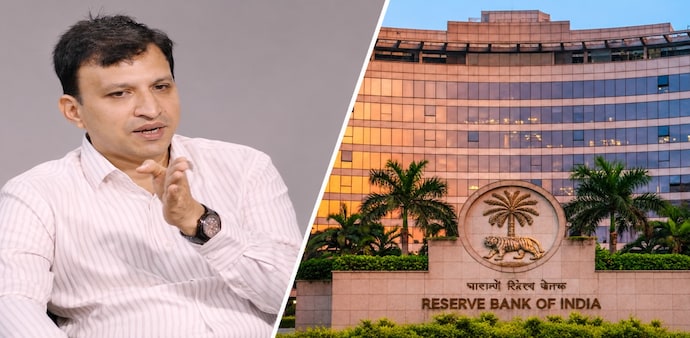
The Reserve Bank of India's effort to attract dollars through foreign-currency deposits has created a new problem: a massive pile-up of rupees in the banking system.
Prasanna Tantri, Associate Professor of Finance at the Indian School of Business (ISB), has warned that the RBI now needs to absorb the excess liquidity carefully. He also questioned whether the policy effectively amounts to an indirect subsidy for foreign investors.
Must Read: Are FCNR-B deposits really an expensive source of funding?
In a series of posts on Tuesday, Tantri asked: "If the objective was to make Indian assets more attractive to foreign investors, why not simply cut capital-gains taxes?"
He said such a move would have been a "transparent subsidy with a clear fiscal cost", rather than the "complicated and indirect subsidy" created by the current approach.
India's liquidity surplus has now reached about ₹11.6 lakh crore, or roughly 3% of GDP, Tantri said. Barely a fortnight earlier, it was around ₹2–3 lakh crore.
The surge followed the RBI's measures to attract foreign currency through fresh FCNR(B) deposits.
In June this year, the RBI introduced a special USD-rupee swap facility for fresh FCNR(B) deposits with maturities of three to five years. Banks could raise dollar deposits from NRIs and swap those dollars with the RBI. Eligible fresh FCNR(B) deposits were also exempted from CRR and SLR requirements.
By August 31, total forex mobilisation under the broader concessional swap facility had reached about $136.4 billion. FCNR(B) deposits alone accounted for roughly $127.2 billion.
The inflow of dollars, however, has released a large amount of rupees into the banking system.
The professor said the RBI must now absorb those rupees or risk weakening its control over short-term interest rates and potentially inflation.
Don't Miss: ‘Intellectual poseurs peddling rancorous story’: SBI Ecowrap defends 7.8% GDP growth
'I See No Costless Solution'
Tantri argued that the RBI should use a durable mechanism to absorb the surplus rather than treating it as a temporary liquidity problem.
His preferred option is the Market Stabilisation Scheme, under which securities are issued and the proceeds remain impounded.
"Yes, this has an interest cost. That is the cost of sterilising liquidity created by the policy intervention," he said.
If the MSS is not used, the RBI would need another durable instrument that pays banks enough to voluntarily park their surplus funds, he said, adding: "I see no costless solution."
The ISB professor also opposed using the cash reserve ratio to force banks to absorb the liquidity. Banks, he noted, earn nothing on CRR.
Tantri said banks had already shown little appetite for short-duration absorption. A 30-day operation was heavily undersubscribed, suggesting that banks were not willing to lock up large amounts of money at the prevailing rate.
"Banks are effectively saying that 5.24% is not sufficient compensation for locking up this amount of money for longer. That is a price signal, not a credibility problem," he said.
FPI Selling Could Drain Liquidity
Tantri said there is another way the excess liquidity could disappear: foreign portfolio investors withdrawing money.
FPIs have withdrawn roughly ₹15,000 crore since September 1, he said. With the rupee at around ₹94.5 to the dollar instead of ₹97 or ₹98, foreign investors get more dollars for the same rupee proceeds.
He argued that RBI support for the rupee allows FPIs to sell without substantially worsening their own exit price.
If the RBI supplies dollars to meet the demand, banks surrender rupee reserves to the central bank. That reduces excess liquidity and inflation risks, but also drains the RBI's foreign-exchange reserves.
The finance professor said this could leave India with "roughly the same rupee, roughly the same forex reserves and $136 billion of additional, exchange-rate-protected external liabilities."
"The immediate liquidity problem disappears. All the risks are merely shifted to tomorrow," he said.
'The Clear Winners Are NRIs And FPIs'
Tantri said NRIs and FPIs stand to benefit from the arrangement. "The clear winners are NRIs and FPIs," he said. NRIs receive unusually high returns with exchange-rate protection, while FPIs can exit at a stronger rupee without their selling substantially weakening the currency.
"The public balance sheet absorbs the costs and future risks," he said.
The ISB professor warned that forcing banks to lend their excess cash would not solve the problem either. He said there was not enough bankable demand to absorb ₹30–40 lakh crore of additional lending quickly.
He also cautioned against repeating the aggressive lending model used before the global financial crisis. "The dangerous way to make banks lend is the 2008 model," he said, warning that today's liquidity problem could become tomorrow’s bad-loan problem.
The RBI, he added, should instead offer a durable instrument at a price banks are willing to accept. "If handled well, this could be a minor problem that everyone forgets in six months. If handled badly, it can linger, become embedded in bank balance sheets, and create much larger problems later," he said.
The Reserve Bank of India's effort to attract dollars through foreign-currency deposits has created a new problem: a massive pile-up of rupees in the banking system.
Prasanna Tantri, Associate Professor of Finance at the Indian School of Business (ISB), has warned that the RBI now needs to absorb the excess liquidity carefully. He also questioned whether the policy effectively amounts to an indirect subsidy for foreign investors.
Must Read: Are FCNR-B deposits really an expensive source of funding?
In a series of posts on Tuesday, Tantri asked: "If the objective was to make Indian assets more attractive to foreign investors, why not simply cut capital-gains taxes?"
He said such a move would have been a "transparent subsidy with a clear fiscal cost", rather than the "complicated and indirect subsidy" created by the current approach.
India's liquidity surplus has now reached about ₹11.6 lakh crore, or roughly 3% of GDP, Tantri said. Barely a fortnight earlier, it was around ₹2–3 lakh crore.
The surge followed the RBI's measures to attract foreign currency through fresh FCNR(B) deposits.
In June this year, the RBI introduced a special USD-rupee swap facility for fresh FCNR(B) deposits with maturities of three to five years. Banks could raise dollar deposits from NRIs and swap those dollars with the RBI. Eligible fresh FCNR(B) deposits were also exempted from CRR and SLR requirements.
By August 31, total forex mobilisation under the broader concessional swap facility had reached about $136.4 billion. FCNR(B) deposits alone accounted for roughly $127.2 billion.
The inflow of dollars, however, has released a large amount of rupees into the banking system.
The professor said the RBI must now absorb those rupees or risk weakening its control over short-term interest rates and potentially inflation.
Don't Miss: ‘Intellectual poseurs peddling rancorous story’: SBI Ecowrap defends 7.8% GDP growth
'I See No Costless Solution'
Tantri argued that the RBI should use a durable mechanism to absorb the surplus rather than treating it as a temporary liquidity problem.
His preferred option is the Market Stabilisation Scheme, under which securities are issued and the proceeds remain impounded.
"Yes, this has an interest cost. That is the cost of sterilising liquidity created by the policy intervention," he said.
If the MSS is not used, the RBI would need another durable instrument that pays banks enough to voluntarily park their surplus funds, he said, adding: "I see no costless solution."
The ISB professor also opposed using the cash reserve ratio to force banks to absorb the liquidity. Banks, he noted, earn nothing on CRR.
Tantri said banks had already shown little appetite for short-duration absorption. A 30-day operation was heavily undersubscribed, suggesting that banks were not willing to lock up large amounts of money at the prevailing rate.
"Banks are effectively saying that 5.24% is not sufficient compensation for locking up this amount of money for longer. That is a price signal, not a credibility problem," he said.
FPI Selling Could Drain Liquidity
Tantri said there is another way the excess liquidity could disappear: foreign portfolio investors withdrawing money.
FPIs have withdrawn roughly ₹15,000 crore since September 1, he said. With the rupee at around ₹94.5 to the dollar instead of ₹97 or ₹98, foreign investors get more dollars for the same rupee proceeds.
He argued that RBI support for the rupee allows FPIs to sell without substantially worsening their own exit price.
If the RBI supplies dollars to meet the demand, banks surrender rupee reserves to the central bank. That reduces excess liquidity and inflation risks, but also drains the RBI's foreign-exchange reserves.
The finance professor said this could leave India with "roughly the same rupee, roughly the same forex reserves and $136 billion of additional, exchange-rate-protected external liabilities."
"The immediate liquidity problem disappears. All the risks are merely shifted to tomorrow," he said.
'The Clear Winners Are NRIs And FPIs'
Tantri said NRIs and FPIs stand to benefit from the arrangement. "The clear winners are NRIs and FPIs," he said. NRIs receive unusually high returns with exchange-rate protection, while FPIs can exit at a stronger rupee without their selling substantially weakening the currency.
"The public balance sheet absorbs the costs and future risks," he said.
The ISB professor warned that forcing banks to lend their excess cash would not solve the problem either. He said there was not enough bankable demand to absorb ₹30–40 lakh crore of additional lending quickly.
He also cautioned against repeating the aggressive lending model used before the global financial crisis. "The dangerous way to make banks lend is the 2008 model," he said, warning that today's liquidity problem could become tomorrow’s bad-loan problem.
The RBI, he added, should instead offer a durable instrument at a price banks are willing to accept. "If handled well, this could be a minor problem that everyone forgets in six months. If handled badly, it can linger, become embedded in bank balance sheets, and create much larger problems later," he said.