
Congress opposes UPI charges now. But 5 of its MPs backed Finance panel's MDR push
Five Congress MPs - P Chidambaram, Manish Tewari, Gaurav Gogoi, Kishori Lal, and K Gopinath - were present when the committee's report was adopted on August 12
- Sep 16, 2026,
- Updated Sep 16, 2026 10:48 PM IST
The Congress is opposing the government's new UPI charges, but five Congress MPs were present when the Parliamentary Standing Committee on Finance backed a tiered revenue model for UPI.
Five Congress MPs - P Chidambaram, Manish Tewari, Gaurav Gogoi, Kishori Lal, and K Gopinath - were present when the committee's report was adopted on August 12, with no dissent recorded in the published minutes.
The committee had pressed for a tiered MDR and revenue framework for UPI and said it should be notified and operationalised without delay.
"The Department of Financial Services must concurrently explore a self-reliant, tiered revenue model. The Committee would like to emphasize that establishing a viable revenue mechanism is critical to ensuring the UPI ecosystem achieves financial sustainability without perpetually straining the Government exchequer," the committee said.
Don't Miss: UPI MDR: No rollback of 0.4% fee above Rs 2,000; govt says move will make UPI self-sustainable
MDR Now Notified
The government has now notified the MDR framework. From October 15, a 0.4% charge will apply to person-to-merchant UPI payments above Rs 2,000. The charge will be paid by merchants, not consumers, and will be capped at Rs 300 for transactions of Rs 75,000 or more.
UPI had so far operated under a zero-MDR regime.
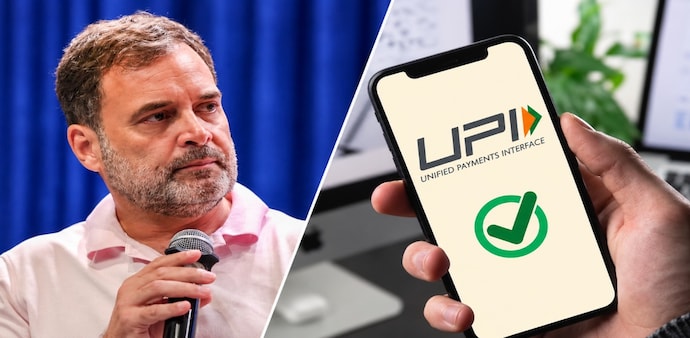
The Congress has opposed the move. Leader of the Opposition Rahul Gandhi, in a video message on Wednesday, said the charge amounted to a tax on Indians and alleged that it would divert money to the United States.
"He (PM Modi) has put a tax on every single Indian person by taxing UPI and giving a huge amount of money to the United States. Modiji please stop lying down in front of the United States. Have a spine. Stand up and roll back the UPI tax."
In Case You Missed It: Will MDR strengthen the UPI ecosystem?
Why NPCI Says MDR Is Needed
The National Payments Corporation of India (NPCI), which operates UPI, said that an annual government incentive, while helpful in accelerating early digital adoption, was designed as short-term bridge funding rather than a permanent measure to compensate the cost incurred by the payment industry.
Industry estimates indicate that maintaining UPI payment operations, server bandwidth, fraud prevention systems, and bank technical support costs around Rs 20,000 crore annually, it added. "Relying solely on fiscal budget allocations creates funding uncertainty and limits long-term technology investments by banks and fintech. Transitioning to a commercial, threshold-based model provides reliable capital for continuous technological innovation."
The Congress is opposing the government's new UPI charges, but five Congress MPs were present when the Parliamentary Standing Committee on Finance backed a tiered revenue model for UPI.
Five Congress MPs - P Chidambaram, Manish Tewari, Gaurav Gogoi, Kishori Lal, and K Gopinath - were present when the committee's report was adopted on August 12, with no dissent recorded in the published minutes.
The committee had pressed for a tiered MDR and revenue framework for UPI and said it should be notified and operationalised without delay.
"The Department of Financial Services must concurrently explore a self-reliant, tiered revenue model. The Committee would like to emphasize that establishing a viable revenue mechanism is critical to ensuring the UPI ecosystem achieves financial sustainability without perpetually straining the Government exchequer," the committee said.
Don't Miss: UPI MDR: No rollback of 0.4% fee above Rs 2,000; govt says move will make UPI self-sustainable
MDR Now Notified
The government has now notified the MDR framework. From October 15, a 0.4% charge will apply to person-to-merchant UPI payments above Rs 2,000. The charge will be paid by merchants, not consumers, and will be capped at Rs 300 for transactions of Rs 75,000 or more.
UPI had so far operated under a zero-MDR regime.
The Congress has opposed the move. Leader of the Opposition Rahul Gandhi, in a video message on Wednesday, said the charge amounted to a tax on Indians and alleged that it would divert money to the United States.
"He (PM Modi) has put a tax on every single Indian person by taxing UPI and giving a huge amount of money to the United States. Modiji please stop lying down in front of the United States. Have a spine. Stand up and roll back the UPI tax."
In Case You Missed It: Will MDR strengthen the UPI ecosystem?
Why NPCI Says MDR Is Needed
The National Payments Corporation of India (NPCI), which operates UPI, said that an annual government incentive, while helpful in accelerating early digital adoption, was designed as short-term bridge funding rather than a permanent measure to compensate the cost incurred by the payment industry.
Industry estimates indicate that maintaining UPI payment operations, server bandwidth, fraud prevention systems, and bank technical support costs around Rs 20,000 crore annually, it added. "Relying solely on fiscal budget allocations creates funding uncertainty and limits long-term technology investments by banks and fintech. Transitioning to a commercial, threshold-based model provides reliable capital for continuous technological innovation."