
'Control inflation, stop defending ₹100 to dollar': ISB professor to policymakers as WPI hits 11.39%
I still believe we have a window before higher inflation becomes entrenched in expectations, says Prasanna Tantri
- Oct 14, 2026,
- Updated Oct 14, 2026 2:20 PM IST
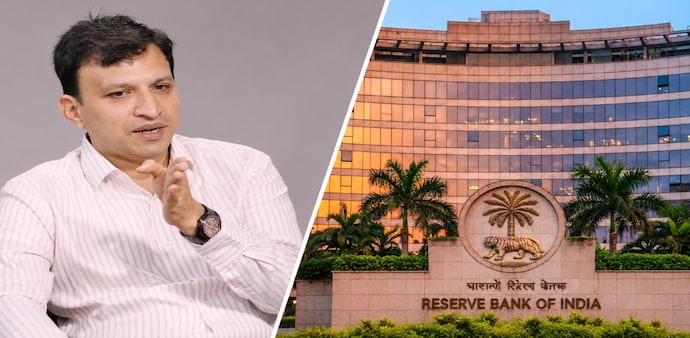
Indian School of Business (ISB) Professor Prasanna Tantri on Wednesday warned that India risks allowing inflation to become entrenched if policymakers continue focusing on defending the rupee rather than controlling rising prices.
His warning came as wholesale inflation climbed to 11.39% in September, while retail inflation rose to 5.54%.
"Our priority should be controlling inflation, yet policy seems preoccupied with defending ₹100 to the dollar. Blaming external factors is no substitute for action," Tantri, a professor of finance at ISB, said.
India's wholesale price inflation accelerated to 11.39% year-on-year in September 2026 from 9.92% in August, according to data released by the Ministry of Commerce and Industry.
"Wholesale inflation has reached 11.39%, with manufactured-product inflation outpacing food. Retail inflation has risen to 5.54%. Both are accelerating," Tantri said.
Warning against delayed action
The finance professor cautioned that policymakers still have time to prevent higher inflation from becoming embedded in the economy, but delaying action could make the problem harder to address.
"I still believe we have a window before higher inflation becomes entrenched in expectations. Once it feeds into wage demands, rents and school fees, it can become self-reinforcing and far more costly to contain," he said.
Tantri also pointed to the delayed impact of monetary policy, citing economist Milton Friedman's observation that policy works with "long and variable lags."
"There is no button that delivers instant disinflation. Waiting for the data to deteriorate further risks a much more painful adjustment," he said.
Calling for an end to negative real interest rates, he warned against repeating the inflationary experience of the early 2010s.
"We need forward-looking action now, starting with an end to negative real interest rates. The early 2010s taught us the costs of tolerating inflation. We should at least learn from our own history," he said.
Sanyal warns against sacrificing stability for growth
On Tuesday, Sanjeev Sanyal, a member of the Prime Minister's Economic Advisory Council, said that India should avoid pursuing faster economic growth at the cost of inflation and macroeconomic stability.
Sanyal's comments came after the International Monetary Fund raised India's growth forecast for 2026-27 to 7%, compared with a projected 4.5% expansion for China.
"Not only is India now unequivocally the fastest-growing major economy, the gap between India and China is similar to the lead China enjoyed 1990-2020. The game is to maintain this for next 30 years. This is a marathon; not a sprint," Sanyal wrote.
He cautioned that pushing growth significantly beyond 7% under current conditions could send inflation above the Reserve Bank of India's upper tolerance limit of 6%. "In my judgement, a GDP growth rate of much more than 7 per cent under current circumstances will push inflation past the 6 per cent bound. MPC is correct in sounding cautious. Never sacrifice macro-stability," he said.
Sanyal urged policymakers to remain patient rather than pursue higher growth regardless of global economic conditions. "Good times too will come but we have to be around unscathed in order to take advantage of it."
Indian School of Business (ISB) Professor Prasanna Tantri on Wednesday warned that India risks allowing inflation to become entrenched if policymakers continue focusing on defending the rupee rather than controlling rising prices.
His warning came as wholesale inflation climbed to 11.39% in September, while retail inflation rose to 5.54%.
"Our priority should be controlling inflation, yet policy seems preoccupied with defending ₹100 to the dollar. Blaming external factors is no substitute for action," Tantri, a professor of finance at ISB, said.
India's wholesale price inflation accelerated to 11.39% year-on-year in September 2026 from 9.92% in August, according to data released by the Ministry of Commerce and Industry.
"Wholesale inflation has reached 11.39%, with manufactured-product inflation outpacing food. Retail inflation has risen to 5.54%. Both are accelerating," Tantri said.
Warning against delayed action
The finance professor cautioned that policymakers still have time to prevent higher inflation from becoming embedded in the economy, but delaying action could make the problem harder to address.
"I still believe we have a window before higher inflation becomes entrenched in expectations. Once it feeds into wage demands, rents and school fees, it can become self-reinforcing and far more costly to contain," he said.
Tantri also pointed to the delayed impact of monetary policy, citing economist Milton Friedman's observation that policy works with "long and variable lags."
"There is no button that delivers instant disinflation. Waiting for the data to deteriorate further risks a much more painful adjustment," he said.
Calling for an end to negative real interest rates, he warned against repeating the inflationary experience of the early 2010s.
"We need forward-looking action now, starting with an end to negative real interest rates. The early 2010s taught us the costs of tolerating inflation. We should at least learn from our own history," he said.
Sanyal warns against sacrificing stability for growth
On Tuesday, Sanjeev Sanyal, a member of the Prime Minister's Economic Advisory Council, said that India should avoid pursuing faster economic growth at the cost of inflation and macroeconomic stability.
Sanyal's comments came after the International Monetary Fund raised India's growth forecast for 2026-27 to 7%, compared with a projected 4.5% expansion for China.
"Not only is India now unequivocally the fastest-growing major economy, the gap between India and China is similar to the lead China enjoyed 1990-2020. The game is to maintain this for next 30 years. This is a marathon; not a sprint," Sanyal wrote.
He cautioned that pushing growth significantly beyond 7% under current conditions could send inflation above the Reserve Bank of India's upper tolerance limit of 6%. "In my judgement, a GDP growth rate of much more than 7 per cent under current circumstances will push inflation past the 6 per cent bound. MPC is correct in sounding cautious. Never sacrifice macro-stability," he said.
Sanyal urged policymakers to remain patient rather than pursue higher growth regardless of global economic conditions. "Good times too will come but we have to be around unscathed in order to take advantage of it."