
'Development and climate action are now the same story': N K Singh says green transition must move from promises to delivery
Climate action has entered a new phase where the focus must shift from ambitious pledges to mobilising finance and delivering results, N.K. Singh said at London Climate Action Week. He stressed that affordable capital and stronger global cooperation will be critical to accelerating the green transition in emerging economies.
- Jun 27, 2026,
- Updated Jun 27, 2026 10:10 AM IST
Quite literally, this last week Britain has been melting. As it sweltered through one of its hottest weeks of the year, the timing of London Climate Action Week could not have felt more apt. While outside, the scorching temperatures were doing what a thousand policy papers couldn't—making climate change feel real—inside the London School of Economics, another question was taking centre stage: how will the world actually pay for the green transition?
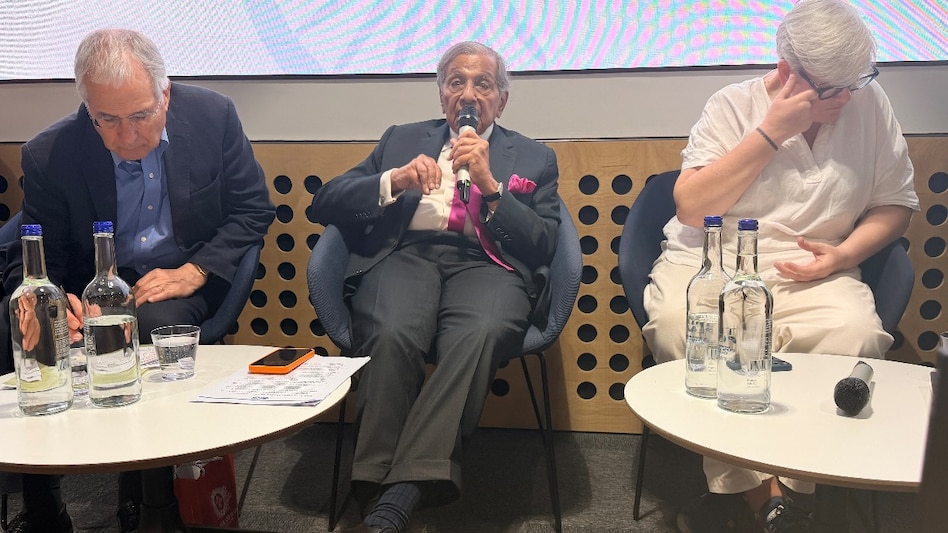
That was the challenge at the heart of a high-level discussion on "Scaling the Green Transition," where N.K. Singh, President of the Institute of Economic Growth and Chairman of the High-Level Empowered Board on Green Transition, led a panel bringing together some of the world's leading voices on climate finance and policy.
"Development and climate action are no longer separate. They are the same story," Singh said in his opening remarks, arguing that the global climate conversation has moved beyond setting ambitious targets to the far harder task of financing and delivering them. For emerging economies such as India, he said, the next challenge is mobilising affordable capital at scale while overcoming the high borrowing costs that continue to slow investment in clean energy and resilient infrastructure. He also criticised what he described as the "prejudices and predilections" of international institutions that keep the cost of capital artificially high for developing countries.
MUST READ: India is on track for net zero well before 2070, says N K Singh
The discussion followed the inaugural meeting of the High-Level Empowered Board on Green Transition, an initiative of the Observer Research Foundation (ORF) that aims to help shape India's green transition while contributing to the wider debate on climate action across emerging economies. It formed part of the official programme of London Climate Action Week 2026.
Joining Singh on the panel were Ambassador André Corrêa do Lago, President of COP30; Lord Nicholas Stern, Chair of the Grantham Research Institute at LSE; Masood Ahmed, President Emeritus of the Centre for Global Development; and Rachel Kyte, the UK's Special Representative for Climate. Together, the discussion reflected a growing consensus that the next phase of climate action will be judged not by new pledges but by implementation.
That theme was echoed by COP30 President Ambassador André Corrêa do Lago, who argued that the climate process must now move from negotiation to implementation. Delivering the proposed $1.3 trillion climate finance agenda, he said, will require coalitions capable of turning political commitments into practical investment, with India playing a central role in that effort.
Lord Nicholas Stern described the green transition as "the growth and development story of the twenty-first century," arguing that climate action should be viewed not as a cost but as an economic opportunity capable of driving productivity, resilience and innovation.
Drawing on his experience in international development finance, Masood Ahmed said attitudes had shifted dramatically over the past decade. While many developing countries were once concerned that climate finance might constrain growth, today many are actively seeking renewable investment because it has become the cheapest source of energy. The challenge now, he argued, is lowering the cost of capital so more clean-energy projects become financially viable. Development banks should focus less on protecting their own balance sheets and more on originating projects that can attract private investors. Ahmed also noted that countries facing major crises should not be viewed differently simply because they require emergency support. "It's not the first country exposed to a shock," he said, arguing that the international community needs to think more seriously about providing appropriate "shock financing" to help countries respond to extraordinary events while staying on track with long-term development and climate goals.
Rachel Kyte, the UK's Special Representative for Climate, struck an optimistic note despite what she described as today's "constellation of wars and conflicts." She argued that even amid geopolitical instability, there remains enormous scope to expand carbon markets and unlock private finance. Better transparency, data and analytics, particularly in the age of artificial intelligence, could help create new financing models and even what she described as a "global humanitarian utility," bringing renewable energy solutions to humanitarian settings. She also stressed the need for greater participation by pension funds, sovereign wealth funds and other long-term investors in financing the green transition, particularly in emerging economies.
MUST READ: India’s green transition needs policy reset and private capital push, says N K Singh
During the discussion, India Today asked the panel whether countries could realistically stay committed to their climate goals at a time when the United States has stepped back from parts of the global climate framework and the conflict involving Iran has once again heightened concerns over global energy security.
Responding in his closing remarks, Singh remained optimistic.
"The exit of the world's largest emitter from the Paris Agreement and the UNFCCC does not diminish the urgent compulsions driving the coalitions of the willing," he said. "We are in no way disabled."
He argued that the future of climate action would increasingly depend on countries working together through flexible partnerships, calling it the "coalition of the willing," rather than waiting for universal consensus. Many multilateral development banks, he noted, are not constrained by US shareholding and therefore remain capable of taking decisions that can shape the future of development and climate finance. Green coalitions, he suggested, can continue driving progress even in an increasingly fragmented geopolitical landscape.
For a discussion taking place during one of London's hottest weeks, the conclusion was perhaps fitting. The debate is no longer centred on whether climate action is necessary. The challenge now is whether the world's financial architecture can move quickly enough to deliver it.
Quite literally, this last week Britain has been melting. As it sweltered through one of its hottest weeks of the year, the timing of London Climate Action Week could not have felt more apt. While outside, the scorching temperatures were doing what a thousand policy papers couldn't—making climate change feel real—inside the London School of Economics, another question was taking centre stage: how will the world actually pay for the green transition?
That was the challenge at the heart of a high-level discussion on "Scaling the Green Transition," where N.K. Singh, President of the Institute of Economic Growth and Chairman of the High-Level Empowered Board on Green Transition, led a panel bringing together some of the world's leading voices on climate finance and policy.
"Development and climate action are no longer separate. They are the same story," Singh said in his opening remarks, arguing that the global climate conversation has moved beyond setting ambitious targets to the far harder task of financing and delivering them. For emerging economies such as India, he said, the next challenge is mobilising affordable capital at scale while overcoming the high borrowing costs that continue to slow investment in clean energy and resilient infrastructure. He also criticised what he described as the "prejudices and predilections" of international institutions that keep the cost of capital artificially high for developing countries.
MUST READ: India is on track for net zero well before 2070, says N K Singh
The discussion followed the inaugural meeting of the High-Level Empowered Board on Green Transition, an initiative of the Observer Research Foundation (ORF) that aims to help shape India's green transition while contributing to the wider debate on climate action across emerging economies. It formed part of the official programme of London Climate Action Week 2026.
Joining Singh on the panel were Ambassador André Corrêa do Lago, President of COP30; Lord Nicholas Stern, Chair of the Grantham Research Institute at LSE; Masood Ahmed, President Emeritus of the Centre for Global Development; and Rachel Kyte, the UK's Special Representative for Climate. Together, the discussion reflected a growing consensus that the next phase of climate action will be judged not by new pledges but by implementation.
That theme was echoed by COP30 President Ambassador André Corrêa do Lago, who argued that the climate process must now move from negotiation to implementation. Delivering the proposed $1.3 trillion climate finance agenda, he said, will require coalitions capable of turning political commitments into practical investment, with India playing a central role in that effort.
Lord Nicholas Stern described the green transition as "the growth and development story of the twenty-first century," arguing that climate action should be viewed not as a cost but as an economic opportunity capable of driving productivity, resilience and innovation.
Drawing on his experience in international development finance, Masood Ahmed said attitudes had shifted dramatically over the past decade. While many developing countries were once concerned that climate finance might constrain growth, today many are actively seeking renewable investment because it has become the cheapest source of energy. The challenge now, he argued, is lowering the cost of capital so more clean-energy projects become financially viable. Development banks should focus less on protecting their own balance sheets and more on originating projects that can attract private investors. Ahmed also noted that countries facing major crises should not be viewed differently simply because they require emergency support. "It's not the first country exposed to a shock," he said, arguing that the international community needs to think more seriously about providing appropriate "shock financing" to help countries respond to extraordinary events while staying on track with long-term development and climate goals.
Rachel Kyte, the UK's Special Representative for Climate, struck an optimistic note despite what she described as today's "constellation of wars and conflicts." She argued that even amid geopolitical instability, there remains enormous scope to expand carbon markets and unlock private finance. Better transparency, data and analytics, particularly in the age of artificial intelligence, could help create new financing models and even what she described as a "global humanitarian utility," bringing renewable energy solutions to humanitarian settings. She also stressed the need for greater participation by pension funds, sovereign wealth funds and other long-term investors in financing the green transition, particularly in emerging economies.
MUST READ: India’s green transition needs policy reset and private capital push, says N K Singh
During the discussion, India Today asked the panel whether countries could realistically stay committed to their climate goals at a time when the United States has stepped back from parts of the global climate framework and the conflict involving Iran has once again heightened concerns over global energy security.
Responding in his closing remarks, Singh remained optimistic.
"The exit of the world's largest emitter from the Paris Agreement and the UNFCCC does not diminish the urgent compulsions driving the coalitions of the willing," he said. "We are in no way disabled."
He argued that the future of climate action would increasingly depend on countries working together through flexible partnerships, calling it the "coalition of the willing," rather than waiting for universal consensus. Many multilateral development banks, he noted, are not constrained by US shareholding and therefore remain capable of taking decisions that can shape the future of development and climate finance. Green coalitions, he suggested, can continue driving progress even in an increasingly fragmented geopolitical landscape.
For a discussion taking place during one of London's hottest weeks, the conclusion was perhaps fitting. The debate is no longer centred on whether climate action is necessary. The challenge now is whether the world's financial architecture can move quickly enough to deliver it.