
'Focus on renewables to ensure energy independence': PM Modi tells CCS amid Hormuz tensions
The Cabinet Secretary briefed the CCS on the geopolitical situation and the steps taken by various ministries and departments to ensure uninterrupted supplies of petroleum products, including LNG, LPG and fertilisers
- Jul 30, 2026,
- Updated Jul 30, 2026 7:48 PM IST
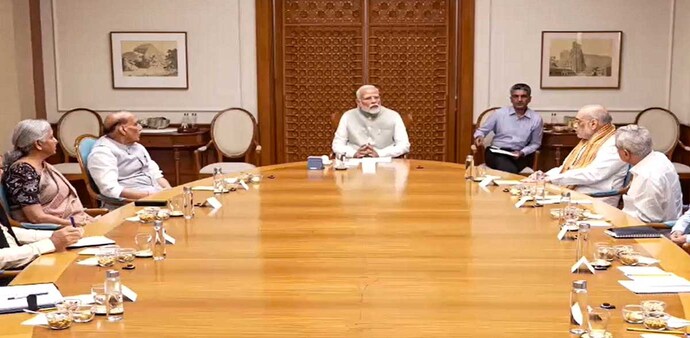
Prime Minister Narendra Modi on Thursday chaired a meeting of the Cabinet Committee on Security (CCS) to review the evolving situation arising from the ongoing conflict in West Asia. The discussions focused on India's energy security, fertiliser availability, the safety of Indian seafarers and citizens, and coordinated government measures to mitigate the impact of the crisis.
This was the 4th special CCS meeting on the West Asia crisis.
According to the Prime Minister's Office (PMO), the Cabinet Secretary briefed the CCS on the geopolitical situation and the steps taken by various ministries and departments to ensure uninterrupted supplies of petroleum products, including LNG, LPG and fertilisers.
The meeting comes as renewed fighting between Iran and the US has again disrupted shipping through the Strait of Hormuz, a key global energy corridor through which India imports a significant share of its crude oil and LNG.
Must Read: Beyond Strait of Hormuz & Red Sea: This Asian waterway is the world's most critical trade chokepoint
FUEL, LPG SUPPLIES UNDER REVIEW
The Cabinet Secretary told the CCS that India has already diversified its sources of LPG procurement and that stocks and supplies of major petroleum products remain adequate.
The PMO said adequate crude oil availability has enabled Central Public Sector Enterprise refineries to operate at utilisation levels exceeding 100%, ensuring continued production of petrol, diesel and other petroleum products.
The government also reviewed measures to expand Piped Natural Gas (PNG) connections and industrial substitution of LPG through the expansion of the National Gas Grid, augmentation of LNG import and regasification infrastructure, expansion of City Gas Distribution networks, and time-bound approvals for pipelines and last-mile connectivity under the Pipeline Infrastructure Order, 2026.
Don't Miss: US-Iran war: Red Sea shipping traffic falls, Hormuz traffic remains low amid security concerns
FERTILISER SUPPLY FOR RABI SEASON
The CCS also assessed fertiliser requirements for the upcoming Rabi season and discussed alternate procurement sources. The Prime Minister directed that "all measures be taken for ensuring uninterrupted supply of fertilisers."
SAFETY OF SEAFARERS, INDIAN DIASPORA
The safety of Indian seafarers serving on domestic and foreign-flagged vessels operating in conflict zones also came up for discussion.
The Prime Minister directed officials to establish a mechanism to provide timely information, emergency assistance and counselling to seafarers and their families. "All efforts must be made to safeguard the citizens as well as the Indian Diaspora from the impact of this conflict," he said.
PUSH FOR ENERGY SECURITY
The Prime Minister stressed the need to reduce dependence on imported fossil fuels by accelerating renewable energy.
According to the PMO, Modi said greater emphasis should be placed on renewable energy, including solar power and other non-fossil-fuel-based sources, to strengthen India's energy independence.
He also called for a "whole of government approach" to address challenges arising from the crisis and directed that a unified coordination mechanism be established for regular monitoring and swift implementation of measures to safeguard citizens' interests.
HORMUZ TENSIONS
In recent weeks, Iran has targeted multiple commercial vessels transiting Hormuz, affecting maritime traffic.
India has strongly condemned the attacks on commercial shipping. Addressing the UN Security Council earlier this week, India's Permanent Representative to the UN, Ambassador Parvathaneni Harish, called for an immediate de-escalation and restoration of free navigation.
"The targeting of commercial shipping and civilian infrastructure in the region must end, and free and unimpeded navigation and commerce through the international waterways in the region, in keeping with international law, must be restored," Harish said.
He also noted that several Indian citizens were injured in the attacks, one Indian national was killed, and another remains missing.
According to the UN, daily vessel transits through the Strait of Hormuz exceeded 100 before the conflict began. However, that number fell to as low as 8-15 vessels a day by mid-July after Iran declared the waterway closed again on July 11.
Prime Minister Narendra Modi on Thursday chaired a meeting of the Cabinet Committee on Security (CCS) to review the evolving situation arising from the ongoing conflict in West Asia. The discussions focused on India's energy security, fertiliser availability, the safety of Indian seafarers and citizens, and coordinated government measures to mitigate the impact of the crisis.
This was the 4th special CCS meeting on the West Asia crisis.
According to the Prime Minister's Office (PMO), the Cabinet Secretary briefed the CCS on the geopolitical situation and the steps taken by various ministries and departments to ensure uninterrupted supplies of petroleum products, including LNG, LPG and fertilisers.
The meeting comes as renewed fighting between Iran and the US has again disrupted shipping through the Strait of Hormuz, a key global energy corridor through which India imports a significant share of its crude oil and LNG.
Must Read: Beyond Strait of Hormuz & Red Sea: This Asian waterway is the world's most critical trade chokepoint
FUEL, LPG SUPPLIES UNDER REVIEW
The Cabinet Secretary told the CCS that India has already diversified its sources of LPG procurement and that stocks and supplies of major petroleum products remain adequate.
The PMO said adequate crude oil availability has enabled Central Public Sector Enterprise refineries to operate at utilisation levels exceeding 100%, ensuring continued production of petrol, diesel and other petroleum products.
The government also reviewed measures to expand Piped Natural Gas (PNG) connections and industrial substitution of LPG through the expansion of the National Gas Grid, augmentation of LNG import and regasification infrastructure, expansion of City Gas Distribution networks, and time-bound approvals for pipelines and last-mile connectivity under the Pipeline Infrastructure Order, 2026.
Don't Miss: US-Iran war: Red Sea shipping traffic falls, Hormuz traffic remains low amid security concerns
FERTILISER SUPPLY FOR RABI SEASON
The CCS also assessed fertiliser requirements for the upcoming Rabi season and discussed alternate procurement sources. The Prime Minister directed that "all measures be taken for ensuring uninterrupted supply of fertilisers."
SAFETY OF SEAFARERS, INDIAN DIASPORA
The safety of Indian seafarers serving on domestic and foreign-flagged vessels operating in conflict zones also came up for discussion.
The Prime Minister directed officials to establish a mechanism to provide timely information, emergency assistance and counselling to seafarers and their families. "All efforts must be made to safeguard the citizens as well as the Indian Diaspora from the impact of this conflict," he said.
PUSH FOR ENERGY SECURITY
The Prime Minister stressed the need to reduce dependence on imported fossil fuels by accelerating renewable energy.
According to the PMO, Modi said greater emphasis should be placed on renewable energy, including solar power and other non-fossil-fuel-based sources, to strengthen India's energy independence.
He also called for a "whole of government approach" to address challenges arising from the crisis and directed that a unified coordination mechanism be established for regular monitoring and swift implementation of measures to safeguard citizens' interests.
HORMUZ TENSIONS
In recent weeks, Iran has targeted multiple commercial vessels transiting Hormuz, affecting maritime traffic.
India has strongly condemned the attacks on commercial shipping. Addressing the UN Security Council earlier this week, India's Permanent Representative to the UN, Ambassador Parvathaneni Harish, called for an immediate de-escalation and restoration of free navigation.
"The targeting of commercial shipping and civilian infrastructure in the region must end, and free and unimpeded navigation and commerce through the international waterways in the region, in keeping with international law, must be restored," Harish said.
He also noted that several Indian citizens were injured in the attacks, one Indian national was killed, and another remains missing.
According to the UN, daily vessel transits through the Strait of Hormuz exceeded 100 before the conflict began. However, that number fell to as low as 8-15 vessels a day by mid-July after Iran declared the waterway closed again on July 11.