
GST Council shields genuine taxpayers from ITC loss; small e-commerce sellers get interstate relief
Addressing the press briefing after the 57th GST Council meeting, FM Sitharaman said the Council had an agenda to amend Section 162C of the CGST Act to address situations where credit reaching a genuine taxpayer was blocked or reversed because of a supplier’s failure to deposit tax or alleged passing of fake ITC.
- Oct 8, 2026,
- Updated Oct 8, 2026 5:59 PM IST
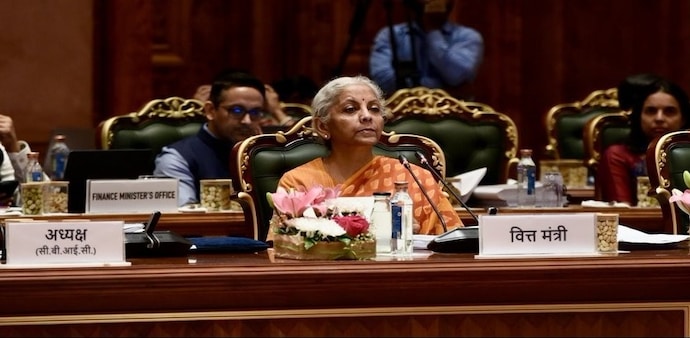
The GST Council has moved to protect genuine taxpayers from losing input tax credit (ITC) because of defaults or alleged fake credit by suppliers elsewhere in the value chain, Finance Minister Nirmala Sitharaman said on Thursday.
Addressing the press briefing after the 57th GST Council meeting, Sitharaman said the Council had an agenda to amend Section 162C of the CGST Act to address situations where credit reaching a genuine taxpayer was blocked or reversed because of a supplier’s failure to deposit tax or alleged passing of fake ITC.
“There was an agenda on amending Section 162C of the CGST Act, where the ITC passed on to the final genuine taxpayer was blocked or reversed when any one of the suppliers in the value chain allegedly failed to deposit the ITC accrued or passed fake ITC.”
The proposed change is aimed at protecting bona fide taxpayers who have complied with their obligations from being penalised for defaults higher up the supply chain.
The Council also announced relief for small sellers using e-commerce platforms, allowing them to sell across states without having to establish a separate place of business in every state.
MUST READ: No UPI MDR discussion at GST Council meet; rates unchanged, ITC protection among key takeaways
Under the proposed mechanism, a small seller will be able to declare the warehouse of an electronic commerce operator in another state as its principal place of business there, with the operator’s consent. The consent will be provided automatically through the system.
The seller will still need a physical presence in at least one state, which will remain its home state. The registration in another state will be limited to supplies made through the platform.
The measure is aimed at reducing one of the barriers that prevents smaller sellers from expanding beyond their home states through e-commerce platforms.
Other key announcements from the 57th GST Council meeting
- GST rates unchanged: No rates were changed at the meeting. The Finance Ministry said the rate structure is now settled, with the Council shifting its focus to improving the way GST works day to day.
- Faster GST refunds: The acknowledgement period for refund claims will be reduced from 15 days to 10 days. If neither an acknowledgement nor deficiency memo is issued within 10 days, the claim will be treated as acknowledged.
- 90% refunds to be system-sanctioned: The system will sanction 90% of refund claims based on risk assessment, with orders issued within three working days of acknowledgement, compared with seven days currently.
- Automatic cash-ledger refunds: Refund of excess balances in the GST cash ledger will become fully automatic, with no officer involvement.
- Refunds for exporters and inverted-duty businesses: 65% of refund claims relate to exports or an inverted rate structure, while 55% of these are already classified as low risk.
- More ITC for businesses: ITC will be available on health and life insurance for employees, telecom towers, pipelines outside factories, free samples and certain stock written off after expiry.
- Committee on genuine buyers: A Committee of Officers will examine safeguards for a genuine buyer who has a proper invoice, has received the goods and has paid the supplier in full.
ALSO READ: GST cuts insurance tax rates in 2025: A year on, consumers still await the full benefit in premiums
- Faster registration: Low-risk applicants can receive GST registration within three working days without officer involvement. The automated route already accounts for 61% of registrations.
- Simpler compliance for small taxpayers: An optional scheme has been approved in principle for taxpayers with turnover up to ₹5 crore who supply only to consumers. They can file returns annually while paying tax quarterly.
- Fewer checks on goods in transit: Vehicles can be stopped only on specific intelligence and with prior authorisation. States along the route will no longer be able to routinely stop consignments.
- GST enforcement eased: The power of arrest will be removed, the prosecution threshold will rise from ₹1 crore to ₹5 crore, and the general penalty will fall from ₹25,000 to ₹10,000.
- Export services get wider treatment: Work performed in India on goods belonging to foreign clients will qualify as an export of service. Indian firms serving overseas clients through their own foreign branches will also get export benefits.
- Annual rate review: GST rate matters will be taken up once a year at a meeting dedicated exclusively to rates, rather than being part of the wider compliance-focused agenda.
ALSO READ: India’s GST revenue growth has lost momentum: What the post-2025 data shows
The GST Council has moved to protect genuine taxpayers from losing input tax credit (ITC) because of defaults or alleged fake credit by suppliers elsewhere in the value chain, Finance Minister Nirmala Sitharaman said on Thursday.
Addressing the press briefing after the 57th GST Council meeting, Sitharaman said the Council had an agenda to amend Section 162C of the CGST Act to address situations where credit reaching a genuine taxpayer was blocked or reversed because of a supplier’s failure to deposit tax or alleged passing of fake ITC.
“There was an agenda on amending Section 162C of the CGST Act, where the ITC passed on to the final genuine taxpayer was blocked or reversed when any one of the suppliers in the value chain allegedly failed to deposit the ITC accrued or passed fake ITC.”
The proposed change is aimed at protecting bona fide taxpayers who have complied with their obligations from being penalised for defaults higher up the supply chain.
The Council also announced relief for small sellers using e-commerce platforms, allowing them to sell across states without having to establish a separate place of business in every state.
MUST READ: No UPI MDR discussion at GST Council meet; rates unchanged, ITC protection among key takeaways
Under the proposed mechanism, a small seller will be able to declare the warehouse of an electronic commerce operator in another state as its principal place of business there, with the operator’s consent. The consent will be provided automatically through the system.
The seller will still need a physical presence in at least one state, which will remain its home state. The registration in another state will be limited to supplies made through the platform.
The measure is aimed at reducing one of the barriers that prevents smaller sellers from expanding beyond their home states through e-commerce platforms.
Other key announcements from the 57th GST Council meeting
- GST rates unchanged: No rates were changed at the meeting. The Finance Ministry said the rate structure is now settled, with the Council shifting its focus to improving the way GST works day to day.
- Faster GST refunds: The acknowledgement period for refund claims will be reduced from 15 days to 10 days. If neither an acknowledgement nor deficiency memo is issued within 10 days, the claim will be treated as acknowledged.
- 90% refunds to be system-sanctioned: The system will sanction 90% of refund claims based on risk assessment, with orders issued within three working days of acknowledgement, compared with seven days currently.
- Automatic cash-ledger refunds: Refund of excess balances in the GST cash ledger will become fully automatic, with no officer involvement.
- Refunds for exporters and inverted-duty businesses: 65% of refund claims relate to exports or an inverted rate structure, while 55% of these are already classified as low risk.
- More ITC for businesses: ITC will be available on health and life insurance for employees, telecom towers, pipelines outside factories, free samples and certain stock written off after expiry.
- Committee on genuine buyers: A Committee of Officers will examine safeguards for a genuine buyer who has a proper invoice, has received the goods and has paid the supplier in full.
ALSO READ: GST cuts insurance tax rates in 2025: A year on, consumers still await the full benefit in premiums
- Faster registration: Low-risk applicants can receive GST registration within three working days without officer involvement. The automated route already accounts for 61% of registrations.
- Simpler compliance for small taxpayers: An optional scheme has been approved in principle for taxpayers with turnover up to ₹5 crore who supply only to consumers. They can file returns annually while paying tax quarterly.
- Fewer checks on goods in transit: Vehicles can be stopped only on specific intelligence and with prior authorisation. States along the route will no longer be able to routinely stop consignments.
- GST enforcement eased: The power of arrest will be removed, the prosecution threshold will rise from ₹1 crore to ₹5 crore, and the general penalty will fall from ₹25,000 to ₹10,000.
- Export services get wider treatment: Work performed in India on goods belonging to foreign clients will qualify as an export of service. Indian firms serving overseas clients through their own foreign branches will also get export benefits.
- Annual rate review: GST rate matters will be taken up once a year at a meeting dedicated exclusively to rates, rather than being part of the wider compliance-focused agenda.
ALSO READ: India’s GST revenue growth has lost momentum: What the post-2025 data shows