
India–Bangladesh border identified as key trade chokepoint: What risks does WEF highlight?
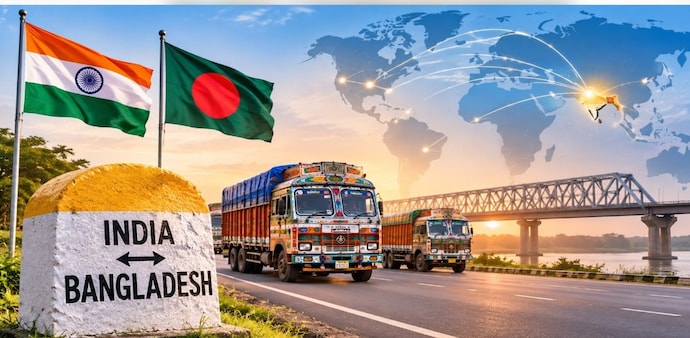
The WEF has identified the India–Bangladesh border as a key trade chokepoint in Asia-Pacific, flagging migration tensions, smuggling, security restrictions and congestion as major risks. The report warns that disruptions at critical trade corridors could increase logistics costs, delay shipments and affect regional supply chains.
- Nov 22, 2026,
- Updated Nov 22, 2026 2:30 AM IST
The India–Bangladesh border has been identified as a critical trade chokepoint in the Asia-Pacific region, with migration tensions, smuggling, security restrictions and congestion emerging as potential risks. A new World Economic Forum (WEF) report warns that disruptions to strategic trade corridors can affect supply chains, increase costs, and create broader economic vulnerabilities.
The findings are part of the WEF and Atlantic Council's November 2026 white paper, The Foresight Brief: Chokepoints Past, Present and Future, which examines how geographical, geopolitical and technological constraints continue to influence global commerce.
Why is the India–Bangladesh border important?
The report identifies the India–Bangladesh border among Asia-Pacific's strategic chokepoints, alongside the Strait of Malacca, Taiwan Strait and major Chinese ports.
Cross-border connectivity supports the movement of goods between the two neighbouring economies and facilitates regional supply chains.
However, the report flags four potential threats: migration tensions, smuggling, security restrictions and congestion.
These challenges could affect the efficiency of cross-border trade, particularly where commercial movement depends on limited infrastructure and border-processing capacity.
The report does not quantify the value of trade exposed to these risks or identify individual border crossings.
How can border disruptions affect businesses?
According to the WEF, chokepoints are strategically important connections through which goods, resources, services or information move, often with limited alternatives.
Their disruption can create cascading consequences across interconnected economic systems.
For businesses trading across the India–Bangladesh border, tighter security checks or congestion could potentially increase transportation costs, delay shipments and complicate inventory planning.
Industries dependent on predictable cross-border movement may face additional logistical challenges when clearance procedures become slower or less reliable.
Such risks underline the importance of efficient customs processing, reliable transport infrastructure and coordination between authorities.
Why are trade chokepoints becoming more significant?
The WEF report argues that globalisation and digitalisation have not eliminated the importance of physical infrastructure.
Maritime routes, ports, border crossings and logistics hubs remain essential to economic activity, even as international trade becomes increasingly technology-driven.
The significance of a chokepoint depends not only on trade volumes but also on the availability of alternative routes and the consequences of disruption.
Geopolitical tensions, governance challenges and changing economic conditions can further increase vulnerabilities.
What can improve regional trade resilience?
For India and Bangladesh, stronger border infrastructure, improved logistics coordination and more efficient customs procedures could help reduce potential bottlenecks.
The WEF recommends that businesses identify critical dependencies, assess alternative routes and strengthen contingency planning before disruptions occur.
Its broader message is that strategic resilience requires anticipating risks rather than responding only after trade flows are interrupted.
While the report does not prescribe specific measures for the India–Bangladesh border, its findings highlight the importance of reliable connectivity in supporting regional commerce and supply-chain stability.