
India, EU likely to sign FTA in December, says official ahead of PM Modi's Brussels visit
The European Commission has submitted proposals to the Council of the European Union seeking approval for signing and conclusion of the agreement, with the final legal text and tariff schedules.
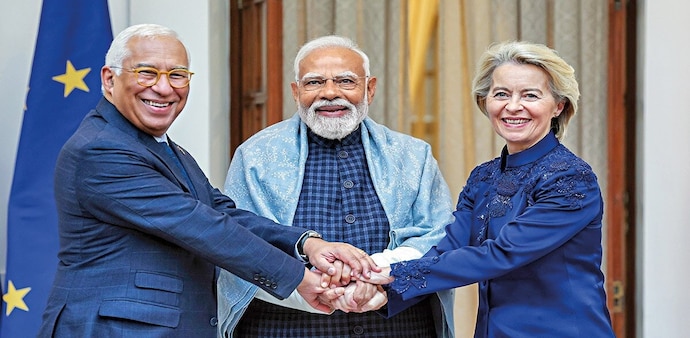
- Nov 22, 2026,
- Updated Nov 22, 2026 5:26 PM IST
India and the European Union (EU) are likely to sign the free trade agreement on December, PTI reported, citing an official. Both sides concluded the negotiations for the trade agreement January 27, 2026. Jean-Eric Paquet, European Union's Ambassador to India, said recently that the FTA will be signed during Prime Minister Narendra Modi's visit to Brussels in December and will come into effect next year.
The European Commission has submitted proposals to the Council of the European Union seeking approval for signing and conclusion of the agreement, with the final legal text and tariff schedules.
India-EU trade
The deal will create a market of around 2 billion people across India, the world's fourth largest economy, and the EU, the second largest economic bloc. India and the EU account for around 25 per cent of global GDP and one-third (roughly $11 trillion) of international trade (roughly $33 trillion).
What India will get?
Under the trade pact, described as 'mother of all deals', 93 per cent of Indian shipments will get duty-free access to the 27-nation EU, including zero tariffs on around $33 billion of labour-intensive exports.
Immediate or phased tariff relief will be given to boost exports in sectors such as textiles, apparel, leather, footwear, marine products, gems and jewellery, chemicals, minerals, and certain agricultural items like tea, coffee, and spices.
Sensitive sectors such as dairy will be safeguarded from market opening, with phased timelines to help domestic industries and MSMEs adjust. Imports of luxury cars and wines from the EU will become less expensive.
Besides this, India will gain wider access to the EU's services market, with commitments covering 144 subsectors, including IT, IT-enabled services, professional services and education.
The agreement will also establish frameworks to facilitate the mobility of Indian professionals and include provisions for traditional medicine systems such as AYUSH. The FTA will also provide for cooperation and flexibilities concerning the EU's Carbon Border Adjustment Mechanism (CBAM), while strengthening safeguards for India's traditional knowledge, including through the Traditional Knowledge Digital Library (TKDL).
What the EU will get?
Tariffs will either be cut or eliminated on 96.6% of EU export value (covering 90% of tariff lines), saving European exporters an estimated €4 billion per year in duties and potentially doubling EU exports to India by 2032. As per the agreement, India will gradually reduce duties on machinery, electrical equipment, medical and optical devices, chemicals and aircraft parts, where Indian tariffs have been historically high.
New Delhi will also cut tariffs on EU automobiles (moving from high duties to 10% under quota/phased rules) and lower duties on wines, spirits, olive oil, and processed foods.
The EU will also get better market access in financial and business services, software source code protection, strong intellectual property enforcement, and binding commitments on labour rights, and the Paris Agreement. Sensitive EU agricultural products and food safety standards will be safeguarded.
(With agency inputs)