
India needs a new 1991-style reform push to hit 8% growth, says Montek Singh Ahluwalia
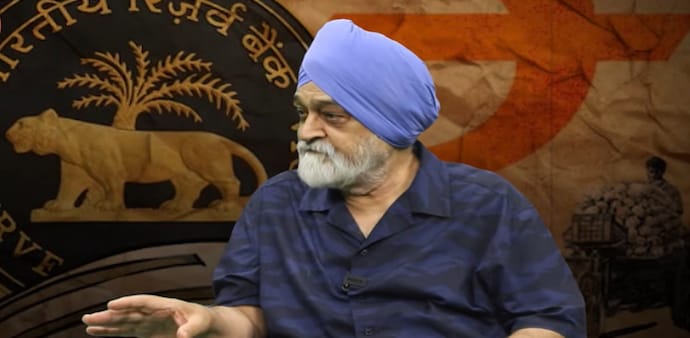
India needs a fresh, broad-based reform push to lift economic growth to 8% and keep the Viksit Bharat 2047 goal credible, former Planning Commission Deputy Chairman Montek Singh Ahluwalia said. He said the country must move beyond the 6–6.5% growth range by reviving private investment, strengthening institutions and making it easier for businesses to operate.
- Aug 29, 2026,
- Updated Aug 29, 2026 11:09 AM IST
India needs another broad-based reform push to raise economic growth to around 8% and make the Viksit Bharat 2047 goal credible, former Planning Commission Deputy Chairman Montek Singh Ahluwalia told The Print, warning that the current growth trajectory of around 6–6.5% may not be sufficient.
Ahluwalia, who was closely involved in India’s economic policymaking during and after the 1991 reforms, said achieving an additional 1.5 percentage points of growth over a sustained period would be a substantial challenge. He also cautioned that global economic uncertainty could make it harder for India to maintain even its current pace of expansion.
India needs deeper reforms
According to Ahluwalia, India’s next phase of growth will require reforms that go beyond the relatively straightforward changes undertaken in 1991. As the economy moves from lower-middle-income to middle-income status, the country faces the risk of falling into the “middle-income trap”.
This phase, he said, requires stronger institutions to support a more complex, private-sector-driven economy. Dispute resolution, investment rules and the broader ease of doing business therefore need to be addressed more decisively.
“Do we need a similar burst of well-structured reforms? The answer is yes… Viksit Bharat is a very attractive goal and, in fact, the government has continuously reiterated it,” he said.
Ahluwalia said India cannot rely on broad reform slogans alone. The government needs to identify specific measures that can improve the business environment over the next five years, particularly as investors face greater uncertainty globally.
He also argued that reforms should not translate into blanket import restrictions. India needs to build domestic manufacturing capacity while remaining integrated with global supply chains. Strategic dependence on China may need to be reduced in sensitive sectors, but shutting out Chinese imports across the economy would not be an effective strategy.
MUST READ: FCNR(B) deposits surge $65.4 billion, pushing India’s forex reserves to a record $729.33 billion
Private investment remains key
A major challenge is reviving private investment. Ahluwalia noted that public capital expenditure has been the dominant driver of growth, while private capital investment is still catching up.
He also pointed to the decline in net foreign direct investment inflows, saying India needs to make its investment environment more attractive as global risk perceptions rise. Simplifying regulations and improving dispute resolution would be critical to attracting capital.
He warned against using quantitative import restrictions to manage external pressures, saying such measures could damage India’s export competitiveness.
Can Tamil Nadu offer a model?
Ahluwalia, who has been appointed chairman of Tamil Nadu’s revenue augmentation committee, said the state’s fiscal challenges also highlight the need for stronger state-level reforms.
The committee is examining ways to strengthen revenue, but he stressed that increasing tax rates is not the only option. Simplifying compliance, particularly for small and medium enterprises, could itself improve revenue collection by making it easier for businesses to operate formally.
On agricultural income, Ahluwalia has argued that the issue deserves wider discussion, including whether high-income agricultural holdings should contribute to state revenues.
ALSO READ: Raghuram Rajan says Fed should raise rates as inflation remains elevated
His broader message is that India’s next reform phase will have to involve both the Centre and states. Unlike 1991, when many reforms involved removing outdated controls, the current challenge is more complex and requires institutional improvements, stronger private investment and faster implementation.
Ahluwalia said the key lesson from 1991 is not simply what India reformed, but how much faster it could have moved.
India needs another broad-based reform push to raise economic growth to around 8% and make the Viksit Bharat 2047 goal credible, former Planning Commission Deputy Chairman Montek Singh Ahluwalia told The Print, warning that the current growth trajectory of around 6–6.5% may not be sufficient.
Ahluwalia, who was closely involved in India’s economic policymaking during and after the 1991 reforms, said achieving an additional 1.5 percentage points of growth over a sustained period would be a substantial challenge. He also cautioned that global economic uncertainty could make it harder for India to maintain even its current pace of expansion.
India needs deeper reforms
According to Ahluwalia, India’s next phase of growth will require reforms that go beyond the relatively straightforward changes undertaken in 1991. As the economy moves from lower-middle-income to middle-income status, the country faces the risk of falling into the “middle-income trap”.
This phase, he said, requires stronger institutions to support a more complex, private-sector-driven economy. Dispute resolution, investment rules and the broader ease of doing business therefore need to be addressed more decisively.
“Do we need a similar burst of well-structured reforms? The answer is yes… Viksit Bharat is a very attractive goal and, in fact, the government has continuously reiterated it,” he said.
Ahluwalia said India cannot rely on broad reform slogans alone. The government needs to identify specific measures that can improve the business environment over the next five years, particularly as investors face greater uncertainty globally.
He also argued that reforms should not translate into blanket import restrictions. India needs to build domestic manufacturing capacity while remaining integrated with global supply chains. Strategic dependence on China may need to be reduced in sensitive sectors, but shutting out Chinese imports across the economy would not be an effective strategy.
MUST READ: FCNR(B) deposits surge $65.4 billion, pushing India’s forex reserves to a record $729.33 billion
Private investment remains key
A major challenge is reviving private investment. Ahluwalia noted that public capital expenditure has been the dominant driver of growth, while private capital investment is still catching up.
He also pointed to the decline in net foreign direct investment inflows, saying India needs to make its investment environment more attractive as global risk perceptions rise. Simplifying regulations and improving dispute resolution would be critical to attracting capital.
He warned against using quantitative import restrictions to manage external pressures, saying such measures could damage India’s export competitiveness.
Can Tamil Nadu offer a model?
Ahluwalia, who has been appointed chairman of Tamil Nadu’s revenue augmentation committee, said the state’s fiscal challenges also highlight the need for stronger state-level reforms.
The committee is examining ways to strengthen revenue, but he stressed that increasing tax rates is not the only option. Simplifying compliance, particularly for small and medium enterprises, could itself improve revenue collection by making it easier for businesses to operate formally.
On agricultural income, Ahluwalia has argued that the issue deserves wider discussion, including whether high-income agricultural holdings should contribute to state revenues.
ALSO READ: Raghuram Rajan says Fed should raise rates as inflation remains elevated
His broader message is that India’s next reform phase will have to involve both the Centre and states. Unlike 1991, when many reforms involved removing outdated controls, the current challenge is more complex and requires institutional improvements, stronger private investment and faster implementation.
Ahluwalia said the key lesson from 1991 is not simply what India reformed, but how much faster it could have moved.