
India now stands at a pivotal moment in its developmental journey, says Shaktikanta Das
India's strategy is no longer to simply grow rapidly but to grow sustainably and resiliently over the long term, 8% GDP growth within striking distance
- Oct 4, 2026,
- Updated Oct 4, 2026 5:02 PM IST
India is within striking distance of 8% GDP growth, said Shaktikanta Das, Principal Secretary-2 to the Prime Minister, adding that this is possible due to several measures taken to build resilience for gradual creation of governance foundations before the crisis actually emerged.
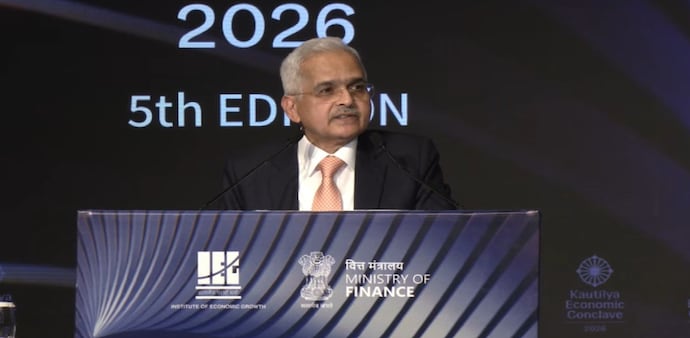
Addressing the Kautilya Economic Conclave on Sunday, Das noted that the current global economic situation is marked by wars, fragmentation, unilateralism, tech blockades, energy price volatility, and rising inflation.
"Interplay of these forces is creating uncertainty across the world and would stifle global growth. What is likely to follow is restrictive monetary policy by central banks. Even more critical are high public debt levels in many advanced economies, resulting in rising bond yields, lower fiscal space, and the ability of countries to counter current and future shocks," he said.
Read More: FPI outflows have nothing to do with their belief in India growth story: Neelkanth Mishra
However, despite such a challenging environment, India’s real GDP growth 7.8% in Q1FY27, with strong domestic demand and investment conditions. India also registered a 7.9% average annual GDP growth in the five-year period from FY22 to FY26 post the Covid pandemic, he said, adding that if the period from July to September 2025-26 to April to June 2026-27 is taken, real GDP growth in India just exceeds 8%.
“A distinguishing feature of India’s development journey in the last twelve years has been the gradual creation of governance foundations before the crisis actually emerged,” he said, adding that these include strengthening governance and state capacity, building macroeconomic stability through measures including flexible inflation targeting, fiscal prudence and better quality of expenditure, tax reforms and market integration, restoration of the health of the financial sector as well as prudent management of external sector.
Other measures include building India’s resilience by investment in long-term productive capacity and diversifying energy sources. “India is better positioned to withstand shocks,” he said, further noting that India now stands at a pivotal moment in its developmental journey.
Must Read: Lack of US-India deal will not have an adverse impact on India’s growth, says Panagariya
To capitalise on the emerging opportunities in the journey ahead, he said that India needs to take further measures, including harnessing Artificial Intelligence, bringing in long-term finance and patient capital, strategic self-reliance, sustainable development, and harnessing human capital.
“As we advance towards Viksit Bharat 2047, sustaining the reform momentum is very critical,” Das said, adding that India’s strategy is no longer to simply grow rapidly but to grow sustainably and resiliently over the long term.
India is within striking distance of 8% GDP growth, said Shaktikanta Das, Principal Secretary-2 to the Prime Minister, adding that this is possible due to several measures taken to build resilience for gradual creation of governance foundations before the crisis actually emerged.
Addressing the Kautilya Economic Conclave on Sunday, Das noted that the current global economic situation is marked by wars, fragmentation, unilateralism, tech blockades, energy price volatility, and rising inflation.
"Interplay of these forces is creating uncertainty across the world and would stifle global growth. What is likely to follow is restrictive monetary policy by central banks. Even more critical are high public debt levels in many advanced economies, resulting in rising bond yields, lower fiscal space, and the ability of countries to counter current and future shocks," he said.
Read More: FPI outflows have nothing to do with their belief in India growth story: Neelkanth Mishra
However, despite such a challenging environment, India’s real GDP growth 7.8% in Q1FY27, with strong domestic demand and investment conditions. India also registered a 7.9% average annual GDP growth in the five-year period from FY22 to FY26 post the Covid pandemic, he said, adding that if the period from July to September 2025-26 to April to June 2026-27 is taken, real GDP growth in India just exceeds 8%.
“A distinguishing feature of India’s development journey in the last twelve years has been the gradual creation of governance foundations before the crisis actually emerged,” he said, adding that these include strengthening governance and state capacity, building macroeconomic stability through measures including flexible inflation targeting, fiscal prudence and better quality of expenditure, tax reforms and market integration, restoration of the health of the financial sector as well as prudent management of external sector.
Other measures include building India’s resilience by investment in long-term productive capacity and diversifying energy sources. “India is better positioned to withstand shocks,” he said, further noting that India now stands at a pivotal moment in its developmental journey.
Must Read: Lack of US-India deal will not have an adverse impact on India’s growth, says Panagariya
To capitalise on the emerging opportunities in the journey ahead, he said that India needs to take further measures, including harnessing Artificial Intelligence, bringing in long-term finance and patient capital, strategic self-reliance, sustainable development, and harnessing human capital.
“As we advance towards Viksit Bharat 2047, sustaining the reform momentum is very critical,” Das said, adding that India’s strategy is no longer to simply grow rapidly but to grow sustainably and resiliently over the long term.