
'Keep UPI free for everybody': Economist says MDR won't affect consumers is 'incorrect logic'
Zero MDR was an important reason for UPI’s rapid spread. It made digital payment resemble cash, says Ajit Ranade
- Aug 11, 2026,
- Updated Aug 11, 2026 1:07 PM IST
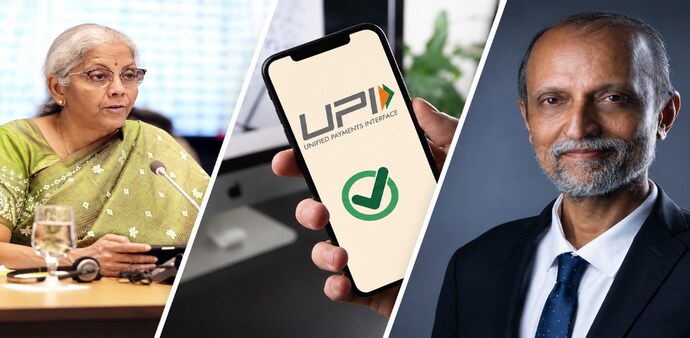
Economist Ajit Ranade has argued that UPI payments should remain free, saying the claim that a Merchant Discount Rate (MDR) imposed on merchants will not affect consumers is "incorrect logic".
The Parliament passed the Taxation and Other Laws (Amendment) Bill, 2026, which enables the government to permit banks to levy MDR on UPI transactions.
Finance Minister Nirmala Sitharaman has clarified that consumers and person-to-person (P2P) transfers will remain free.
Ranade, writing in Mint on Monday, said UPI is now an essential part of India's digital public infrastructure. In July, it handled nearly 24 billion transactions worth almost ₹30 trillion.
The amendment does not itself impose an MDR, Ranade said. But it removes the protection that had kept MDR at zero for UPI and RuPay payments, leaving future charges to executive decisions.
Don't Miss: Apple Pay is coming to India by October, but without UPI support; What it means for Indian users
Sitharaman has said any MDR would be paid only by merchants and not consumers. She also said the vast majority of merchant transactions, including low-value payments to roadside vendors, would remain free.
Ranade argued that this does not mean consumers would be unaffected. "That MDR will be paid by the merchant and will not affect consumers is incorrect logic. It can either be absorbed or passed on through higher prices."
He said more than 85% of person-to-merchant transactions are small-ticket payments. A ₹20 payment for tea or ₹150 paid to an auto driver is made without either side calculating a transaction cost. "Zero MDR was an important reason for UPI’s rapid spread. It made digital payment resemble cash."
₹20,000 CRORE ANNUAL COST
Ranade acknowledged that UPI has significant costs. Banks, payment service providers and the National Payments Corporation of India (NPCI) spend on servers, cybersecurity, fraud detection, dispute resolution and settlement.
The industry estimates the annual cost at about ₹20,000 crore, he said, while government reimbursement covers only a fraction of it. "The costs of UPI cannot be wished away, and banks and payment companies should not be expected to subsidise UPI indefinitely. But that does not settle the question of who should pay."
Ranade said there was a difference between cost and price. Public infrastructure can be expensive without charging users at every point of use because its benefits extend to society at large.
He argued that UPI has similar characteristics, with its value increasing as more people and merchants use it.
In Case You Missed It: 'A regressive step': Ashneer Grover says MDR on UPI will kill mobile payments
RBI DIVIDEND COULD COVER COST
Ranade suggested that the government could use other mechanisms to meet the cost of maintaining UPI.
The Reserve Bank of India’s dividend to the Centre was ₹2.86 trillion in 2025-26, he said. The annual cost of UPI is about 7% of that amount. "A transparent reimbursement mechanism, linked to audited costs and efficiency standards, can compensate banks and payment providers without imposing charges on merchants."
The economist also pointed to the wider benefits of digital payments. UPI usage can create pressure for better telecom connectivity, promote digital literacy and encourage business formalisation and transaction trails for tax compliance.
Ranade compared UPI with Aadhaar, saying authentication through Aadhaar is free because its wider social benefits come from ubiquity and low friction.
He also said the cost of cash should be considered when comparing payment systems. Currency needs to be printed, transported, sorted, stored, guarded and replenished, while banks have to maintain ATMs, branches and staff.
GOVERNMENT SAYS CONSUMERS WILL NOT PAY
Sitharaman, in the Rajya Sabha on Monday, said the amendment is only an enabling provision and does not impose any tax or transaction charge on UPI users. She said the legislation amends Section 10A of the Payment and Settlement Systems Act, 2007.
Once the Bill is passed, the UPI and Services Steering Committee headed by NPCI will consider whether an MDR should be introduced and, if so, its scope and structure, she said.
"No Merchant Discount Rate (MDR) framework has yet been finalised," Sitharaman said. "Will consumers pay any UPI charge? No, consumers will not have to pay any charges on UPI transactions."
"UPI has remained free for consumers since its launch, and every Indian will continue to make instant digital payments without paying a transaction charge," she said.
"The vast majority of merchant transactions, including ordinary, low-value transactions, will continue to remain free. Any future MDR will apply only to a limited category of merchant transactions above a prescribed threshold," the finance minister said.
Economist Ajit Ranade has argued that UPI payments should remain free, saying the claim that a Merchant Discount Rate (MDR) imposed on merchants will not affect consumers is "incorrect logic".
The Parliament passed the Taxation and Other Laws (Amendment) Bill, 2026, which enables the government to permit banks to levy MDR on UPI transactions.
Finance Minister Nirmala Sitharaman has clarified that consumers and person-to-person (P2P) transfers will remain free.
Ranade, writing in Mint on Monday, said UPI is now an essential part of India's digital public infrastructure. In July, it handled nearly 24 billion transactions worth almost ₹30 trillion.
The amendment does not itself impose an MDR, Ranade said. But it removes the protection that had kept MDR at zero for UPI and RuPay payments, leaving future charges to executive decisions.
Don't Miss: Apple Pay is coming to India by October, but without UPI support; What it means for Indian users
Sitharaman has said any MDR would be paid only by merchants and not consumers. She also said the vast majority of merchant transactions, including low-value payments to roadside vendors, would remain free.
Ranade argued that this does not mean consumers would be unaffected. "That MDR will be paid by the merchant and will not affect consumers is incorrect logic. It can either be absorbed or passed on through higher prices."
He said more than 85% of person-to-merchant transactions are small-ticket payments. A ₹20 payment for tea or ₹150 paid to an auto driver is made without either side calculating a transaction cost. "Zero MDR was an important reason for UPI’s rapid spread. It made digital payment resemble cash."
₹20,000 CRORE ANNUAL COST
Ranade acknowledged that UPI has significant costs. Banks, payment service providers and the National Payments Corporation of India (NPCI) spend on servers, cybersecurity, fraud detection, dispute resolution and settlement.
The industry estimates the annual cost at about ₹20,000 crore, he said, while government reimbursement covers only a fraction of it. "The costs of UPI cannot be wished away, and banks and payment companies should not be expected to subsidise UPI indefinitely. But that does not settle the question of who should pay."
Ranade said there was a difference between cost and price. Public infrastructure can be expensive without charging users at every point of use because its benefits extend to society at large.
He argued that UPI has similar characteristics, with its value increasing as more people and merchants use it.
In Case You Missed It: 'A regressive step': Ashneer Grover says MDR on UPI will kill mobile payments
RBI DIVIDEND COULD COVER COST
Ranade suggested that the government could use other mechanisms to meet the cost of maintaining UPI.
The Reserve Bank of India’s dividend to the Centre was ₹2.86 trillion in 2025-26, he said. The annual cost of UPI is about 7% of that amount. "A transparent reimbursement mechanism, linked to audited costs and efficiency standards, can compensate banks and payment providers without imposing charges on merchants."
The economist also pointed to the wider benefits of digital payments. UPI usage can create pressure for better telecom connectivity, promote digital literacy and encourage business formalisation and transaction trails for tax compliance.
Ranade compared UPI with Aadhaar, saying authentication through Aadhaar is free because its wider social benefits come from ubiquity and low friction.
He also said the cost of cash should be considered when comparing payment systems. Currency needs to be printed, transported, sorted, stored, guarded and replenished, while banks have to maintain ATMs, branches and staff.
GOVERNMENT SAYS CONSUMERS WILL NOT PAY
Sitharaman, in the Rajya Sabha on Monday, said the amendment is only an enabling provision and does not impose any tax or transaction charge on UPI users. She said the legislation amends Section 10A of the Payment and Settlement Systems Act, 2007.
Once the Bill is passed, the UPI and Services Steering Committee headed by NPCI will consider whether an MDR should be introduced and, if so, its scope and structure, she said.
"No Merchant Discount Rate (MDR) framework has yet been finalised," Sitharaman said. "Will consumers pay any UPI charge? No, consumers will not have to pay any charges on UPI transactions."
"UPI has remained free for consumers since its launch, and every Indian will continue to make instant digital payments without paying a transaction charge," she said.
"The vast majority of merchant transactions, including ordinary, low-value transactions, will continue to remain free. Any future MDR will apply only to a limited category of merchant transactions above a prescribed threshold," the finance minister said.