
Major milestone: Rajasthan's 700 MWe nuclear reactor begins initial fuel loading, enters key commissioning stage
The next major step will be the First Approach to Criticality (FAC), which will mark the start of a controlled fission chain reaction
- Sep 20, 2026,
- Updated Sep 20, 2026 10:06 PM IST
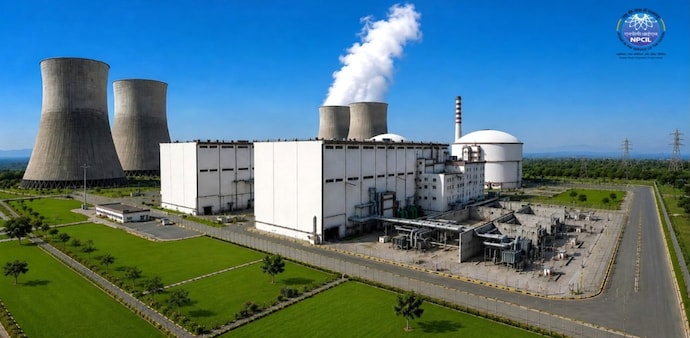
The Nuclear Power Corporation of India Limited (NPCIL) has begun the Initial Fuel Loading (IFL) at Unit-8 of the Rajasthan Atomic Power Project (RAPP-7&8) in Rawatbhata, Rajasthan.
The fuel loading began at 3:18 pm on September 19, NPCIL said in a post on Sunday.
NPCIL said the commencement of IFL followed permission from the Atomic Energy Regulatory Board (AERB) and completion of all prescribed pre-requisites. The permission came after safety evaluations, major system integrity audits, and site readiness reviews as part of the regulatory process.
RAPP-7&8 comprises two indigenous 700 MWe Pressurised Heavy Water Reactors (PHWRs). With fuel loading, Unit-8 has entered an important stage of its commissioning journey.
In Case You Missed It: Why Adani and Tata Power are turning to foreign nuclear reactors over local models
The next major step will be the First Approach to Criticality (FAC), which will mark the start of a controlled fission chain reaction. This will be followed by the start of power generation. The unit is expected to begin commercial operation during the current financial year.
Read More: India takes a giant nuclear power leap: Biggest-ever ₹28,000 cr reactor project opens for bids
Fourth indigenous 700 MWe reactor
RAPP-8 is the fourth reactor in a series of 16 indigenous 700 MWe PHWRs being set up in India.
The first two reactors in the series, KAPS-3 and KAPS-4 at Kakrapar in Gujarat, began commercial operation in 2023-24. RAPP-7 followed in April 2025.
NPCIL said the latest milestone represents an important achievement for NPCIL and various constituent units of the Department of Atomic Energy. It also strengthens the standardisation of the 700 MWe PHWR design and supports its continued deployment in fleet mode.
NPCIL said the milestone was achieved in line with applicable safety guidelines and AERB stipulations.
The progress at RAPP-8, it said, reflects the continued advancement of India’s indigenous nuclear power programme and NPCIL's commitment to the "safe, clean, reliable and sustained generation of nuclear power-based electricity."
NPCIL, a government enterprise under the Department of Atomic Energy, is involved in the design, construction, commissioning, operation, and maintenance of nuclear power reactors for generating electricity, as well as technology development.
It currently operates 24 nuclear power reactors with a total capacity of 8.78 GWe. Another 17 reactors, with a total capacity of about 13 GWe, are at various stages of implementation.
More reactors are planned as NPCIL aims to contribute more than 50% of the 100 GWe nuclear power capacity envisaged by the government by 2047.
The Nuclear Power Corporation of India Limited (NPCIL) has begun the Initial Fuel Loading (IFL) at Unit-8 of the Rajasthan Atomic Power Project (RAPP-7&8) in Rawatbhata, Rajasthan.
The fuel loading began at 3:18 pm on September 19, NPCIL said in a post on Sunday.
NPCIL said the commencement of IFL followed permission from the Atomic Energy Regulatory Board (AERB) and completion of all prescribed pre-requisites. The permission came after safety evaluations, major system integrity audits, and site readiness reviews as part of the regulatory process.
RAPP-7&8 comprises two indigenous 700 MWe Pressurised Heavy Water Reactors (PHWRs). With fuel loading, Unit-8 has entered an important stage of its commissioning journey.
In Case You Missed It: Why Adani and Tata Power are turning to foreign nuclear reactors over local models
The next major step will be the First Approach to Criticality (FAC), which will mark the start of a controlled fission chain reaction. This will be followed by the start of power generation. The unit is expected to begin commercial operation during the current financial year.
Read More: India takes a giant nuclear power leap: Biggest-ever ₹28,000 cr reactor project opens for bids
Fourth indigenous 700 MWe reactor
RAPP-8 is the fourth reactor in a series of 16 indigenous 700 MWe PHWRs being set up in India.
The first two reactors in the series, KAPS-3 and KAPS-4 at Kakrapar in Gujarat, began commercial operation in 2023-24. RAPP-7 followed in April 2025.
NPCIL said the latest milestone represents an important achievement for NPCIL and various constituent units of the Department of Atomic Energy. It also strengthens the standardisation of the 700 MWe PHWR design and supports its continued deployment in fleet mode.
NPCIL said the milestone was achieved in line with applicable safety guidelines and AERB stipulations.
The progress at RAPP-8, it said, reflects the continued advancement of India’s indigenous nuclear power programme and NPCIL's commitment to the "safe, clean, reliable and sustained generation of nuclear power-based electricity."
NPCIL, a government enterprise under the Department of Atomic Energy, is involved in the design, construction, commissioning, operation, and maintenance of nuclear power reactors for generating electricity, as well as technology development.
It currently operates 24 nuclear power reactors with a total capacity of 8.78 GWe. Another 17 reactors, with a total capacity of about 13 GWe, are at various stages of implementation.
More reactors are planned as NPCIL aims to contribute more than 50% of the 100 GWe nuclear power capacity envisaged by the government by 2047.