
MDR on UPI: Will cash be king again? Here’s what industry voices say
As a 0.4% MDR kicks in on UPI transactions above Rs 2,000, retailers fear merchants could turn back to cash—putting years of digital-payment adoption to the test.
- Sep 16, 2026,
- Updated Sep 16, 2026 5:32 PM IST
The Finance Ministry has said that the Unified Payments Interface (UPI), which accounts for 96% of transaction volumes, will remain free for users even after the merchant discount rate (MDR) is reintroduced from October 15. But industry players remain concerned that the move could fuel a shift back towards cash, potentially reversing years of progress in digital payments adoption.
The key question is whether merchants will absorb the 0.4% MDR on transactions above Rs 2,000—or pass the cost on to customers, making cash a more attractive option.
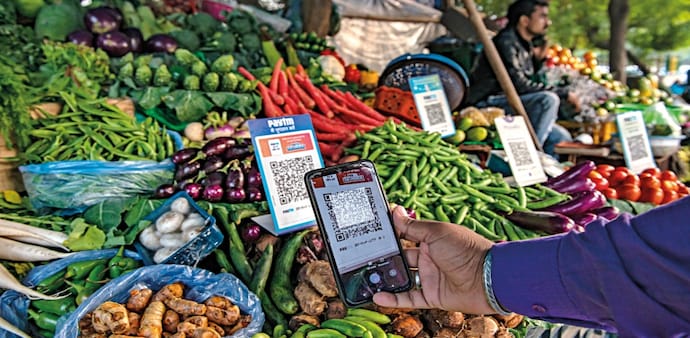
For micro, small and medium retailers already operating on thin margins, the MDR burden could create an incentive to steer transactions back to cash.
"Small merchants will now think twice about whether to accept cash or UPI. During the festive season, a large share of transactions crosses the Rs 2,000 mark, and the moment a fee attaches itself to digital payment, cash becomes the path of least resistance," says Kumar Rajagopalan, the CEO of Retailers Association of India.
Effective October 15, an MDR of 0.4% will apply to Person-to-Merchant (P2M) UPI transactions above Rs 2,000. For transactions of Rs 75,000 and above, the MDR will be capped at Rs 300 per transaction.
While most everyday transactions by volume will remain free, transactions above Rs 2,000 account for around 65% of UPI value. The question is how many merchants will absorb the added cost.
MUST READ: UPI MDR: Google Pay leads, Paytm to gain; what Goldman Sachs, Jefferies see for other UPI players
Santosh Katariya, president of the Clothing Manufacturers Association of India (CMAI), says introducing MDR on UPI at the start of the festive season will be challenging for the industry.
"This period is critical for merchants, retailers and consumer-facing businesses, many of whom are already working hard to revive demand and improve margins. Adding another cost to digital transactions at this juncture risks putting further pressure on an ecosystem that is still finding its footing," he said, adding that any increase in acceptance costs needs to be carefully calibrated.
To be sure, the 0.4% MDR is far lower than the 1.5-2.5% applicable on credit card transactions. Yet that cost remains one reason many small and medium merchants continue to avoid accepting credit cards.
Rajagopalan argues that MDR on UPI will run counter to the government’s financialisation agenda. Every transaction that moves off UPI and back into cash disappears from the formal trail that supports GST reporting — the opposite of what a decade of digitisation policy has tried to build, he said.
"The government should bear the cost of normal UPI transactions, since digital payments repay the system through GST compliance and traceable transactions instead of cash," Rajagopalan said.
ALSO READ: UPI MDR: Will mutual fund SIPs, stocks get costlier? Brokerages, experts explain impact on investors
Since its launch in 2016, UPI has reached massive scale. In August 2026 alone, it processed 24.51 billion transactions worth Rs 29.9 lakh crore. Supporters of MDR argue that sustaining UPI at this scale requires a way to recover costs.
Maintaining UPI payment operations, server bandwidth, fraud-prevention systems and bank technical support costs around Rs 20,000 crore annually, NPCI officials say. Relying solely on budget allocations creates funding uncertainty and limits long-term technology investments by banks and fintech firms, they add.
Reeju Datta, co-founder of Cashfree, agrees that zero MDR significantly boosted UPI adoption, but points to the substantial costs involved in running the system.
"A calibrated MDR finally gives the ecosystem a way to fund that directly and invest in areas such as fraud prevention and acceptance infrastructure in smaller towns. It will also incentivise newer players to enter the market and innovate for different use cases, which in turn could further increase UPI adoption," Datta said.
Harsh Vardhan Masta, CEO, PB Pay, says that as UPI transaction volumes, merchant acceptance and use cases scale, the focus must expand from adoption to long-term sustainability — including continued investment in infrastructure, cybersecurity, innovation and the wider merchant acceptance network.
Ranadurjay Talukdar, partner and payments sector leader at EY India, says MDR can create resources for resilience, cybersecurity, innovation and customer service across banks and payment providers.
"The key will be transparent sharing of MDR revenues, strict prevention of consumer surcharges and effective deployment of the proposed fund to deepen acceptance among smaller merchants and underserved markets," stressed Talukdar.
Larger merchants, restaurant chains and retail networks may absorb the higher MDR cost, just as they have accepted MDR on credit and debit card transactions. The key question is how smaller merchants respond.
DO READ: UPI vs debit card vs credit card MDR: How much does each payment method cost merchants?
The Finance Ministry has said that the Unified Payments Interface (UPI), which accounts for 96% of transaction volumes, will remain free for users even after the merchant discount rate (MDR) is reintroduced from October 15. But industry players remain concerned that the move could fuel a shift back towards cash, potentially reversing years of progress in digital payments adoption.
The key question is whether merchants will absorb the 0.4% MDR on transactions above Rs 2,000—or pass the cost on to customers, making cash a more attractive option.
For micro, small and medium retailers already operating on thin margins, the MDR burden could create an incentive to steer transactions back to cash.
"Small merchants will now think twice about whether to accept cash or UPI. During the festive season, a large share of transactions crosses the Rs 2,000 mark, and the moment a fee attaches itself to digital payment, cash becomes the path of least resistance," says Kumar Rajagopalan, the CEO of Retailers Association of India.
Effective October 15, an MDR of 0.4% will apply to Person-to-Merchant (P2M) UPI transactions above Rs 2,000. For transactions of Rs 75,000 and above, the MDR will be capped at Rs 300 per transaction.
While most everyday transactions by volume will remain free, transactions above Rs 2,000 account for around 65% of UPI value. The question is how many merchants will absorb the added cost.
MUST READ: UPI MDR: Google Pay leads, Paytm to gain; what Goldman Sachs, Jefferies see for other UPI players
Santosh Katariya, president of the Clothing Manufacturers Association of India (CMAI), says introducing MDR on UPI at the start of the festive season will be challenging for the industry.
"This period is critical for merchants, retailers and consumer-facing businesses, many of whom are already working hard to revive demand and improve margins. Adding another cost to digital transactions at this juncture risks putting further pressure on an ecosystem that is still finding its footing," he said, adding that any increase in acceptance costs needs to be carefully calibrated.
To be sure, the 0.4% MDR is far lower than the 1.5-2.5% applicable on credit card transactions. Yet that cost remains one reason many small and medium merchants continue to avoid accepting credit cards.
Rajagopalan argues that MDR on UPI will run counter to the government’s financialisation agenda. Every transaction that moves off UPI and back into cash disappears from the formal trail that supports GST reporting — the opposite of what a decade of digitisation policy has tried to build, he said.
"The government should bear the cost of normal UPI transactions, since digital payments repay the system through GST compliance and traceable transactions instead of cash," Rajagopalan said.
ALSO READ: UPI MDR: Will mutual fund SIPs, stocks get costlier? Brokerages, experts explain impact on investors
Since its launch in 2016, UPI has reached massive scale. In August 2026 alone, it processed 24.51 billion transactions worth Rs 29.9 lakh crore. Supporters of MDR argue that sustaining UPI at this scale requires a way to recover costs.
Maintaining UPI payment operations, server bandwidth, fraud-prevention systems and bank technical support costs around Rs 20,000 crore annually, NPCI officials say. Relying solely on budget allocations creates funding uncertainty and limits long-term technology investments by banks and fintech firms, they add.
Reeju Datta, co-founder of Cashfree, agrees that zero MDR significantly boosted UPI adoption, but points to the substantial costs involved in running the system.
"A calibrated MDR finally gives the ecosystem a way to fund that directly and invest in areas such as fraud prevention and acceptance infrastructure in smaller towns. It will also incentivise newer players to enter the market and innovate for different use cases, which in turn could further increase UPI adoption," Datta said.
Harsh Vardhan Masta, CEO, PB Pay, says that as UPI transaction volumes, merchant acceptance and use cases scale, the focus must expand from adoption to long-term sustainability — including continued investment in infrastructure, cybersecurity, innovation and the wider merchant acceptance network.
Ranadurjay Talukdar, partner and payments sector leader at EY India, says MDR can create resources for resilience, cybersecurity, innovation and customer service across banks and payment providers.
"The key will be transparent sharing of MDR revenues, strict prevention of consumer surcharges and effective deployment of the proposed fund to deepen acceptance among smaller merchants and underserved markets," stressed Talukdar.
Larger merchants, restaurant chains and retail networks may absorb the higher MDR cost, just as they have accepted MDR on credit and debit card transactions. The key question is how smaller merchants respond.
DO READ: UPI vs debit card vs credit card MDR: How much does each payment method cost merchants?