
'Mileage depends on more than fuel alone': Oil Ministry defends E20, calls it validated
'E20 has undergone extensive testing and validation, while real-world mileage depends on the overall driving and vehicle conditions,' says the ministry
- Aug 16, 2026,
- Updated Aug 16, 2026 8:12 AM IST
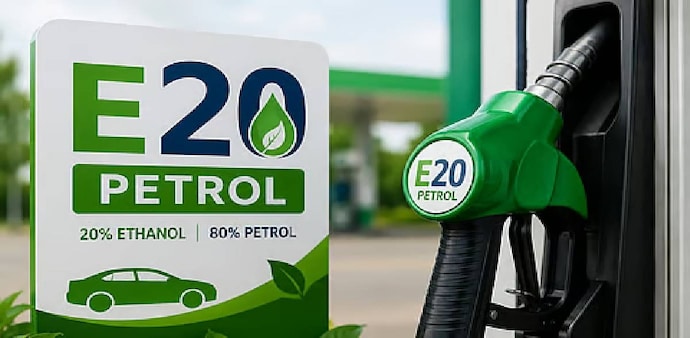
The Ministry of Petroleum and Natural Gas has again sought to allay concerns over ethanol-blended petrol, saying mileage depends on several factors and not fuel alone.
"Mileage depends on more than fuel alone. Driving habits, traffic, vehicle maintenance, tyre pressure and AC usage all play a role," the ministry said in a post on Saturday.
The ministry added that E20 petrol has undergone extensive testing and validation. "E20 has undergone extensive testing and validation, while real-world mileage depends on the overall driving and vehicle conditions," it said, adding: "E20: Tested. Validated."
Don't Miss: Centre slashes ATF and petrol export duties, keeps domestic fuel taxes steady
In another post, the ministry said E20 had been tested across key vehicle parameters, including engine durability, drivability, startability, material compatibility and corrosion resistance.
"These evaluations support confidence in E20 compatibility and vehicle performance, helping consumers make informed choices as India moves towards cleaner mobility," it said.
The government's latest comments come amid concerns that higher ethanol blending could affect vehicle mileage. There have also been concerns about the long-term impact of higher ethanol blends on fuel lines, seals, pumps and other components in older vehicles.
The government and automakers, however, have said testing has not shown widespread E20-related engine damage.
Government Had Acknowledged Mileage Impact
Last month, the government acknowledged a marginal reduction in fuel economy in vehicles designed to run on E10 before 2023.
Replying to a question in the Rajya Sabha, Minister of State for Petroleum and Natural Gas Suresh Gopi said, "Any reduction in fuel economy in certain E10-designed vehicles is generally marginal (around 3–5%)."
Gopi said mileage depended more on driving habits, tyre pressure, servicing and AC load than on fuel type.
"Government, automobile manufacturers and vehicle testing agencies have clarified that fuel efficiency depends on several factors, including driving habits, vehicle maintenance, tyre pressure, wheel alignment and air-conditioning load," he said.
The petroleum ministry has also said E20 contributes to cleaner and more efficient engine operation and improves emissions performance. It said the fuel is compatible with vehicle fuel systems and materials and does not cause abnormal wear and tear or compatibility issues.
The Ministry of Petroleum and Natural Gas has again sought to allay concerns over ethanol-blended petrol, saying mileage depends on several factors and not fuel alone.
"Mileage depends on more than fuel alone. Driving habits, traffic, vehicle maintenance, tyre pressure and AC usage all play a role," the ministry said in a post on Saturday.
The ministry added that E20 petrol has undergone extensive testing and validation. "E20 has undergone extensive testing and validation, while real-world mileage depends on the overall driving and vehicle conditions," it said, adding: "E20: Tested. Validated."
Don't Miss: Centre slashes ATF and petrol export duties, keeps domestic fuel taxes steady
In another post, the ministry said E20 had been tested across key vehicle parameters, including engine durability, drivability, startability, material compatibility and corrosion resistance.
"These evaluations support confidence in E20 compatibility and vehicle performance, helping consumers make informed choices as India moves towards cleaner mobility," it said.
The government's latest comments come amid concerns that higher ethanol blending could affect vehicle mileage. There have also been concerns about the long-term impact of higher ethanol blends on fuel lines, seals, pumps and other components in older vehicles.
The government and automakers, however, have said testing has not shown widespread E20-related engine damage.
Government Had Acknowledged Mileage Impact
Last month, the government acknowledged a marginal reduction in fuel economy in vehicles designed to run on E10 before 2023.
Replying to a question in the Rajya Sabha, Minister of State for Petroleum and Natural Gas Suresh Gopi said, "Any reduction in fuel economy in certain E10-designed vehicles is generally marginal (around 3–5%)."
Gopi said mileage depended more on driving habits, tyre pressure, servicing and AC load than on fuel type.
"Government, automobile manufacturers and vehicle testing agencies have clarified that fuel efficiency depends on several factors, including driving habits, vehicle maintenance, tyre pressure, wheel alignment and air-conditioning load," he said.
The petroleum ministry has also said E20 contributes to cleaner and more efficient engine operation and improves emissions performance. It said the fuel is compatible with vehicle fuel systems and materials and does not cause abnormal wear and tear or compatibility issues.