
'No serious economist will complain': PM's advisor Sanjeev Sanyal defends India's 7.8% GDP growth
'I don't think anybody should complain. We did exactly what the IMF and others were asking us to do,' Sanyal defends GDP methodology
- Sep 2, 2026,
- Updated Sep 2, 2026 2:52 PM IST
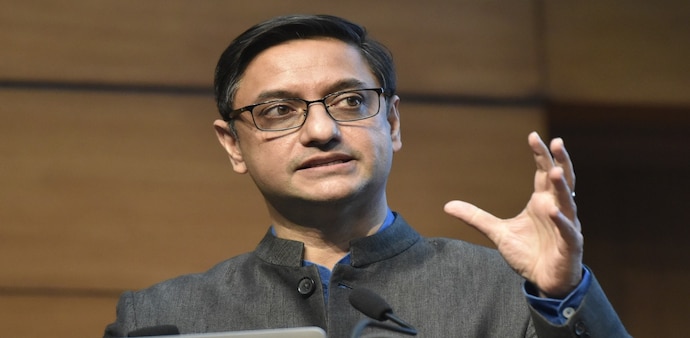
Sanjeev Sanyal, a member of the Prime Minister's Economic Advisory Council, has defended India's 7.8% GDP growth, rejecting criticism that the number is the result of "statistical gymnastics".
He said India's GDP methodology was updated in line with what the IMF and other institutions had asked for. "I don't think any serious economist is looking at this data and saying that it's not credible," Sanyal said while speaking to India Today TV.
India's economy grew 7.8% in the first quarter of 2026-27, beating expectations and the Reserve Bank of India's 7% forecast. The growth rate was also higher than the 6.9% recorded in the same quarter a year earlier.
Why The Base Year Was Changed
Sanyal said India had a methodology issue because the base year had not been updated earlier. The change was delayed because the usual start-of-the-decade period coincided with the Covid years. The government, therefore, waited until 2024.
"We did have a problem with methodology till last year because the base year had not been updated. Every decade, we update the base year at the beginning of the decade. We could not have done it in this decade for the simplest reason. Those were Covid years. So, the beginning of the decade years were not the typical years. So we had to wait till 2024 before we got a typical year that we could use as a base year. Now, once we got that, we of course updated the base year," he said.
The economist said the impact of the change had been flagged in advance. "At the time that it happened, I did warn everybody that 'don't complain now that we have updated the base year, which is what you were complaining about, that the GDP growth rate will look good," Sanyal said.
Because, he explained, when you update a base year, you get rid of the old dying sectors from the basket, and you add in relatively newer, higher-growth sectors - "and this is precisely what has happened."
Sanyal added that the update was in line with what international institutions had been asking India to do.
"I don't think anybody should complain. We did exactly what the IMF and others were asking us to do. No serious economist is going to complain about this. The GDP is very visibly strong, and it's showing through incidentally in other areas as well."
Don't Miss: 'Japan provides powerful inspiration': Ex-CEA backs PM Modi's push for domestic spending
'GDP Is Very Visibly Strong'
Sanyal said the strength of the economy can also be seen in data outside the government's GDP numbers. He referred to car sales numbers. "Those (numbers) are not from the government. Corporate profitability is doing decently well. Those are not government numbers," he said.
He said even without those indicators, 7.8% growth would represent a strong quarterly performance.
"So under the circumstances, but even in any circumstance, 7.8% GDP growth rate is a very strong one. As I said, I will be personally expecting it to temper going into the next few quarters, but even then, I think you will get a very decent GDP growth rate print for the year as a whole."
The RBI expects India's economy to grow 6.7% in the full 2026-27 fiscal year.
Congress Questions GDP Data
Soon after the GDP numbers were released, the Congress questioned the growth figures.
Congress general secretary Jairam Ramesh called the 7.8% number a "Greatly Distorted Picture" and said it did not reflect weak private investment sentiment. He also pointed to sluggish consumer confidence, rising prices of household essentials, unemployment, and the continuing trade deficit with China.
Sanjeev Sanyal, a member of the Prime Minister's Economic Advisory Council, has defended India's 7.8% GDP growth, rejecting criticism that the number is the result of "statistical gymnastics".
He said India's GDP methodology was updated in line with what the IMF and other institutions had asked for. "I don't think any serious economist is looking at this data and saying that it's not credible," Sanyal said while speaking to India Today TV.
India's economy grew 7.8% in the first quarter of 2026-27, beating expectations and the Reserve Bank of India's 7% forecast. The growth rate was also higher than the 6.9% recorded in the same quarter a year earlier.
Why The Base Year Was Changed
Sanyal said India had a methodology issue because the base year had not been updated earlier. The change was delayed because the usual start-of-the-decade period coincided with the Covid years. The government, therefore, waited until 2024.
"We did have a problem with methodology till last year because the base year had not been updated. Every decade, we update the base year at the beginning of the decade. We could not have done it in this decade for the simplest reason. Those were Covid years. So, the beginning of the decade years were not the typical years. So we had to wait till 2024 before we got a typical year that we could use as a base year. Now, once we got that, we of course updated the base year," he said.
The economist said the impact of the change had been flagged in advance. "At the time that it happened, I did warn everybody that 'don't complain now that we have updated the base year, which is what you were complaining about, that the GDP growth rate will look good," Sanyal said.
Because, he explained, when you update a base year, you get rid of the old dying sectors from the basket, and you add in relatively newer, higher-growth sectors - "and this is precisely what has happened."
Sanyal added that the update was in line with what international institutions had been asking India to do.
"I don't think anybody should complain. We did exactly what the IMF and others were asking us to do. No serious economist is going to complain about this. The GDP is very visibly strong, and it's showing through incidentally in other areas as well."
Don't Miss: 'Japan provides powerful inspiration': Ex-CEA backs PM Modi's push for domestic spending
'GDP Is Very Visibly Strong'
Sanyal said the strength of the economy can also be seen in data outside the government's GDP numbers. He referred to car sales numbers. "Those (numbers) are not from the government. Corporate profitability is doing decently well. Those are not government numbers," he said.
He said even without those indicators, 7.8% growth would represent a strong quarterly performance.
"So under the circumstances, but even in any circumstance, 7.8% GDP growth rate is a very strong one. As I said, I will be personally expecting it to temper going into the next few quarters, but even then, I think you will get a very decent GDP growth rate print for the year as a whole."
The RBI expects India's economy to grow 6.7% in the full 2026-27 fiscal year.
Congress Questions GDP Data
Soon after the GDP numbers were released, the Congress questioned the growth figures.
Congress general secretary Jairam Ramesh called the 7.8% number a "Greatly Distorted Picture" and said it did not reflect weak private investment sentiment. He also pointed to sluggish consumer confidence, rising prices of household essentials, unemployment, and the continuing trade deficit with China.