
ONGC strikes gas in Mahanadi Basin: What it means for India's LNG imports
The maiden well of ONGC's current deepwater campaign in the Mahanadi Basin is flowing gas with encouraging rates and sustained reservoir pressure, says the energy major
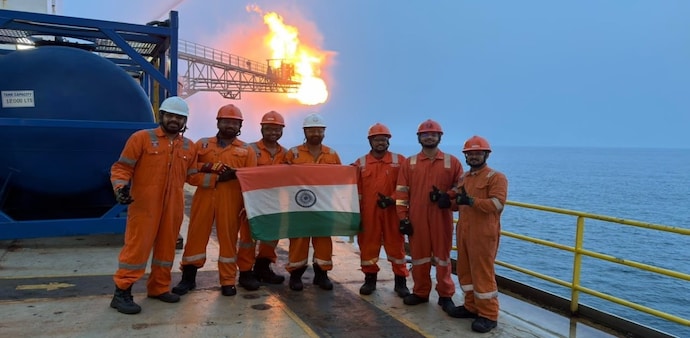
- Sep 22, 2026,
- Updated Sep 22, 2026 7:33 PM IST
State-run ONGC has struck gas in the deep waters of the Mahanadi Basin, marking its first gas discovery under the government's Samudra Manthan initiative.
The find is being seen as a potential boost to India's efforts to reduce its dependence on imported natural gas.
But how much can one well actually change India's import dependence?
The answer will depend on the size of the discovery, how much of the resource can be converted into reserves, and, eventually, how much gas can be commercially produced.
Don't Miss: US-Iran talks today? Oil slips to $98 a barrel; will Sensex, Nifty rebound?
What has ONGC found?
The oil and gas explorer said its maiden well of the current deepwater campaign in the Mahanadi Basin, MDW-28, is flowing gas at an encouraging rate and with sustained reservoir pressure.
The energy major started drilling the well on July 25 and opened the gas-bearing section for testing on September 18. It said the well is currently flowing at a good gas rate and healthy reservoir pressure.
ONGC Director OP Sinha told NDTV Profit that the well has tested at close to 2.25 million standard cubic metres per day (MMSCMD). He added that testing was still underway.
"This Mahanadi basin has been a very prospective basin. The resources in this basin are very large, around 600 million tonnes of OE (oil equivalent). The exact volume will evolve as we go along in this campaign. I must say that this well is flowing at a very good rate and at very good pressure. The properties that we have seen so far are very satisfactory," he said.
He, however, stressed that this is a resource estimate, not the size of proven reserves.
Can it reduce gas Imports?
India currently imports almost 50% of its natural gas requirement.
That makes a domestic deepwater discovery significant, particularly if the well eventually moves into commercial production.
India consumed 22,958 million standard cubic metres (MMSCM) of natural gas between April and July 2026, according to data from the Petroleum Planning and Analysis Cell (PPAC). Of this, 11,867 MMSCM, or 51.7%, came from imported LNG.
The Mahanadi well has tested at close to 2.25 million standard cubic metres per day (MMSCMD). If that test flow is sustained and eventually translates into commercial production, it would be equivalent to roughly 1.2% of India's current daily gas consumption and around 2.3% of its daily LNG import requirement, based on the April-July consumption and import volumes.
"India imports almost 50% of its natural gas requirement from abroad. So finding this good volume naturally is very significant in terms of our import reduction," Sinha said.
The director also said that India is trying to increase the gas percentage in its consumption from around 6 to 7% to 15% by 2030. "So this find - and further work plan - will definitely help India achieve its target of increasing our gas portfolio in our energy mix to 15% by 2030. In that context, this gas find becomes very very significant," he added.
What Is Samudra Manthan?
Samudra Manthan is a national programme to search for oil and gas deep beneath the ocean floor. The Union Cabinet approved the initiative on July 31, 2026.
ONGC said the Mahanadi campaign is aligned with the initiative and that it will continue exploring deep and ultra-deepwater frontiers for hydrocarbons.
Petroleum and Natural Gas Minister Hardeep Singh Puri said the discovery, along with other finds in the area, could open up the possibility of cluster development through shared facilities under the PNG Rules, 2025.
"A major milestone for India’s offshore energy exploration! ONGC continues to unlock new domestic energy sources by exploring India’s deep and ultra-deepwater frontiers as a part of the Samudra Manthan initiative," the oil minister said.
State-run ONGC has struck gas in the deep waters of the Mahanadi Basin, marking its first gas discovery under the government's Samudra Manthan initiative.
The find is being seen as a potential boost to India's efforts to reduce its dependence on imported natural gas.
But how much can one well actually change India's import dependence?
The answer will depend on the size of the discovery, how much of the resource can be converted into reserves, and, eventually, how much gas can be commercially produced.
Don't Miss: US-Iran talks today? Oil slips to $98 a barrel; will Sensex, Nifty rebound?
What has ONGC found?
The oil and gas explorer said its maiden well of the current deepwater campaign in the Mahanadi Basin, MDW-28, is flowing gas at an encouraging rate and with sustained reservoir pressure.
The energy major started drilling the well on July 25 and opened the gas-bearing section for testing on September 18. It said the well is currently flowing at a good gas rate and healthy reservoir pressure.
ONGC Director OP Sinha told NDTV Profit that the well has tested at close to 2.25 million standard cubic metres per day (MMSCMD). He added that testing was still underway.
"This Mahanadi basin has been a very prospective basin. The resources in this basin are very large, around 600 million tonnes of OE (oil equivalent). The exact volume will evolve as we go along in this campaign. I must say that this well is flowing at a very good rate and at very good pressure. The properties that we have seen so far are very satisfactory," he said.
He, however, stressed that this is a resource estimate, not the size of proven reserves.
Can it reduce gas Imports?
India currently imports almost 50% of its natural gas requirement.
That makes a domestic deepwater discovery significant, particularly if the well eventually moves into commercial production.
India consumed 22,958 million standard cubic metres (MMSCM) of natural gas between April and July 2026, according to data from the Petroleum Planning and Analysis Cell (PPAC). Of this, 11,867 MMSCM, or 51.7%, came from imported LNG.
The Mahanadi well has tested at close to 2.25 million standard cubic metres per day (MMSCMD). If that test flow is sustained and eventually translates into commercial production, it would be equivalent to roughly 1.2% of India's current daily gas consumption and around 2.3% of its daily LNG import requirement, based on the April-July consumption and import volumes.
"India imports almost 50% of its natural gas requirement from abroad. So finding this good volume naturally is very significant in terms of our import reduction," Sinha said.
The director also said that India is trying to increase the gas percentage in its consumption from around 6 to 7% to 15% by 2030. "So this find - and further work plan - will definitely help India achieve its target of increasing our gas portfolio in our energy mix to 15% by 2030. In that context, this gas find becomes very very significant," he added.
What Is Samudra Manthan?
Samudra Manthan is a national programme to search for oil and gas deep beneath the ocean floor. The Union Cabinet approved the initiative on July 31, 2026.
ONGC said the Mahanadi campaign is aligned with the initiative and that it will continue exploring deep and ultra-deepwater frontiers for hydrocarbons.
Petroleum and Natural Gas Minister Hardeep Singh Puri said the discovery, along with other finds in the area, could open up the possibility of cluster development through shared facilities under the PNG Rules, 2025.
"A major milestone for India’s offshore energy exploration! ONGC continues to unlock new domestic energy sources by exploring India’s deep and ultra-deepwater frontiers as a part of the Samudra Manthan initiative," the oil minister said.