
‘Partnership is not an alliance,’ says Jaishankar on India-US ties; talks about Russia, China, Europe policy objectives
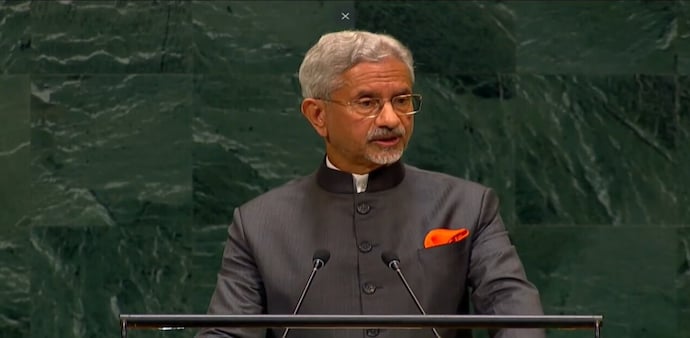
When asked about the US-India trade deal, Jaishankar said the trade ministers, the United States Trade Representative (USTR), the commerce and industry minister were working on it.
- Oct 14, 2026,
- Updated Oct 14, 2026 8:54 AM IST
India has a strong partnership with the US but that’s not an alliance, said India’s External Affairs Minister S Jaishankar on Tuesday. He also said that the India-US trade deal – that Finance Minister Nirmala Sitharaman said had hit a plateau – was heading towards a landing point.
Speaking at Bloomberg's New Economy Forum in New Delhi, Jaishankar said, “The reality is, the United States has repositioned itself. It’s changed the manner in which it engages the world, the basis on which it engages the world. So I think every country, in a way, has to recalculate and reset its relationship with the United States…We are a country which has a strong strategic partnership with the US. But a strategic partnership is a partnership. It’s not an alliance.”
When asked about the US-India trade deal, he said the trade ministers, the United States Trade Representative (USTR), the commerce and industry minister were working on it. “They are ironing it out. So my sense is that this is an issue which is heading towards a landing point. It’s heading in the right direction. We’re very encouraged by it. Please look at what my trade minister has been saying in public, saying that look, we are kind of almost there. We just need to figure this out,” he said.
MUST READ | 'US has deliberately become a lonelier power': EAM Jaishankar on shifting global order
Earlier, FM Sitharaman had said that the US-India trade deal was a “very vigorously negotiated agreement” and that any give and take would be “very, very difficult” for both sides.
ON CHINA
Jaishankar said stable border areas were essential for normalising India-China relations, while economic issues such as market access, investment and a level playing field would be addressed separately.
He said the situation along the border had improved significantly since 2024, allowing bilateral relations to move towards normalcy. India was not demanding a complete resolution of the boundary, he said. “What we are saying is, look, the bar is lower. The bar is: please maintain peace and tranquillity,” he said.
Jaishankar said the two countries were actively discussing an “early harvest” approach to settle some parts of the boundary dispute first, leaving more difficult sections for later.
The approach, he clarified, would apply only to the boundary question and would not be linked to economic concessions. He said India believed it was not receiving the same level playing field in China that it had provided to Chinese businesses.
ON RUSSIA
Jaishankar said it was in India’s and the world’s interest for Russia to maintain multiple partnerships, presenting India as an important option as Moscow increasingly turned towards Asia following the Ukraine war.
He acknowledged that the conflict had pushed Russia closer to Asia, particularly China, but said India could offer another consequential relationship.
India was reassuring Moscow that the relationship built over the past 75-80 years remained steady and continued to work for both countries, he said.
ON EUROPE
Jaishankar expressed hope that a free trade agreement (FTA) with Europe would enter into force in the coming months, possibly by the end of the year or early next year.
He also welcomed Europe’s discussions on strategic autonomy, saying the continent was moving towards a position with which India was comfortable.
India has a strong partnership with the US but that’s not an alliance, said India’s External Affairs Minister S Jaishankar on Tuesday. He also said that the India-US trade deal – that Finance Minister Nirmala Sitharaman said had hit a plateau – was heading towards a landing point.
Speaking at Bloomberg's New Economy Forum in New Delhi, Jaishankar said, “The reality is, the United States has repositioned itself. It’s changed the manner in which it engages the world, the basis on which it engages the world. So I think every country, in a way, has to recalculate and reset its relationship with the United States…We are a country which has a strong strategic partnership with the US. But a strategic partnership is a partnership. It’s not an alliance.”
When asked about the US-India trade deal, he said the trade ministers, the United States Trade Representative (USTR), the commerce and industry minister were working on it. “They are ironing it out. So my sense is that this is an issue which is heading towards a landing point. It’s heading in the right direction. We’re very encouraged by it. Please look at what my trade minister has been saying in public, saying that look, we are kind of almost there. We just need to figure this out,” he said.
MUST READ | 'US has deliberately become a lonelier power': EAM Jaishankar on shifting global order
Earlier, FM Sitharaman had said that the US-India trade deal was a “very vigorously negotiated agreement” and that any give and take would be “very, very difficult” for both sides.
ON CHINA
Jaishankar said stable border areas were essential for normalising India-China relations, while economic issues such as market access, investment and a level playing field would be addressed separately.
He said the situation along the border had improved significantly since 2024, allowing bilateral relations to move towards normalcy. India was not demanding a complete resolution of the boundary, he said. “What we are saying is, look, the bar is lower. The bar is: please maintain peace and tranquillity,” he said.
Jaishankar said the two countries were actively discussing an “early harvest” approach to settle some parts of the boundary dispute first, leaving more difficult sections for later.
The approach, he clarified, would apply only to the boundary question and would not be linked to economic concessions. He said India believed it was not receiving the same level playing field in China that it had provided to Chinese businesses.
ON RUSSIA
Jaishankar said it was in India’s and the world’s interest for Russia to maintain multiple partnerships, presenting India as an important option as Moscow increasingly turned towards Asia following the Ukraine war.
He acknowledged that the conflict had pushed Russia closer to Asia, particularly China, but said India could offer another consequential relationship.
India was reassuring Moscow that the relationship built over the past 75-80 years remained steady and continued to work for both countries, he said.
ON EUROPE
Jaishankar expressed hope that a free trade agreement (FTA) with Europe would enter into force in the coming months, possibly by the end of the year or early next year.
He also welcomed Europe’s discussions on strategic autonomy, saying the continent was moving towards a position with which India was comfortable.