
RBI governor says inflation under control, strengthening bets on rate hold
The RBI had earlier this month kept its key policy rate unchanged for the fourth consecutive meeting, citing muted inflationary pressures. The central bank also marginally lowered its inflation forecast for the year ending March to 5% from 5.1%, keeping the projection within its 2%-6% tolerance band.
- Aug 11, 2026,
- Updated Aug 11, 2026 8:27 PM IST
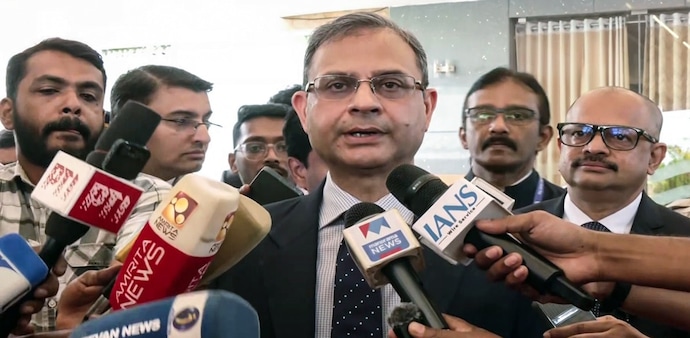
India’s inflation remains under control and the economy continues to show resilience, reinforcing expectations that the Reserve Bank of India (RBI) may maintain its current policy stance. RBI Governor Sanjay Malhotra said inflation was “more or less under check” at a banking industry event in Mumbai on Tuesday.
The comments came a day before India was scheduled to release its July inflation data. Economists surveyed by Bloomberg News were expecting consumer price growth of around 4.4% for the month. In June, inflation had moved above the RBI’s 4% target for the first time in nearly 18 months.
The RBI had earlier this month kept its key policy rate unchanged for the fourth consecutive meeting, citing muted inflationary pressures. The central bank also marginally lowered its inflation forecast for the year ending March to 5% from 5.1%, keeping the projection within its 2%-6% tolerance band.
RBI sees economy resilient despite risks
Malhotra also said India’s economic growth remains resilient and the country has adequate foreign exchange reserves to absorb potential external shocks.
According to Bloomberg News, the RBI has maintained a different policy approach from several regional central banks since the conflict in the Middle East began. While some central banks, including those in Japan, Australia and Indonesia, have tightened monetary policy, Indian policymakers have viewed the conflict largely as a temporary supply-side shock.
The RBI’s position has been that monetary policy would need to respond if higher energy prices begin triggering broader and more persistent inflationary pressures.
RBI Governor flags AI risks for banks
Malhotra also called on Indian banks to accelerate the adoption of artificial intelligence, while stressing that lenders need to invest in technology, infrastructure and employee training.
However, he warned that increased use of AI could create new risks for the banking system. These include biased or opaque decision-making, data privacy concerns and cybersecurity threats. Heavy dependence on a limited number of AI models or technology vendors could also expose banks to common technology failures, he said.
“The banks that will win in the AI era will not necessarily be the ones that adopt AI faster or the most. They will be the ones who adopt it with full understanding of what they are deploying,” Malhotra said, according to Bloomberg News.
His comments come as banks globally are assessing the implications of rapidly expanding AI use. Regulators are increasingly concerned about cyberattacks, operational failures and errors, as well as the possibility that widespread reliance on similar technologies could create risks for financial stability.
Finance Minister Nirmala Sitharaman had also warned in April about emerging AI-related risks for banks and called for stronger safeguards for information technology systems, customer data and funds.
Banks well placed to face challenges
Malhotra identified geopolitical and trade uncertainties among the key risks facing India’s banking sector. At the same time, he said banks remain well positioned to withstand these challenges, supported by robust credit growth, low bad loans, healthy liquidity and profitability.
He said India’s economy would emerge “stronger” from the current challenges, citing resilient growth, contained inflation and adequate foreign exchange reserves.
“All these things bode very well,” Malhotra said.
India’s inflation remains under control and the economy continues to show resilience, reinforcing expectations that the Reserve Bank of India (RBI) may maintain its current policy stance. RBI Governor Sanjay Malhotra said inflation was “more or less under check” at a banking industry event in Mumbai on Tuesday.
The comments came a day before India was scheduled to release its July inflation data. Economists surveyed by Bloomberg News were expecting consumer price growth of around 4.4% for the month. In June, inflation had moved above the RBI’s 4% target for the first time in nearly 18 months.
The RBI had earlier this month kept its key policy rate unchanged for the fourth consecutive meeting, citing muted inflationary pressures. The central bank also marginally lowered its inflation forecast for the year ending March to 5% from 5.1%, keeping the projection within its 2%-6% tolerance band.
RBI sees economy resilient despite risks
Malhotra also said India’s economic growth remains resilient and the country has adequate foreign exchange reserves to absorb potential external shocks.
According to Bloomberg News, the RBI has maintained a different policy approach from several regional central banks since the conflict in the Middle East began. While some central banks, including those in Japan, Australia and Indonesia, have tightened monetary policy, Indian policymakers have viewed the conflict largely as a temporary supply-side shock.
The RBI’s position has been that monetary policy would need to respond if higher energy prices begin triggering broader and more persistent inflationary pressures.
RBI Governor flags AI risks for banks
Malhotra also called on Indian banks to accelerate the adoption of artificial intelligence, while stressing that lenders need to invest in technology, infrastructure and employee training.
However, he warned that increased use of AI could create new risks for the banking system. These include biased or opaque decision-making, data privacy concerns and cybersecurity threats. Heavy dependence on a limited number of AI models or technology vendors could also expose banks to common technology failures, he said.
“The banks that will win in the AI era will not necessarily be the ones that adopt AI faster or the most. They will be the ones who adopt it with full understanding of what they are deploying,” Malhotra said, according to Bloomberg News.
His comments come as banks globally are assessing the implications of rapidly expanding AI use. Regulators are increasingly concerned about cyberattacks, operational failures and errors, as well as the possibility that widespread reliance on similar technologies could create risks for financial stability.
Finance Minister Nirmala Sitharaman had also warned in April about emerging AI-related risks for banks and called for stronger safeguards for information technology systems, customer data and funds.
Banks well placed to face challenges
Malhotra identified geopolitical and trade uncertainties among the key risks facing India’s banking sector. At the same time, he said banks remain well positioned to withstand these challenges, supported by robust credit growth, low bad loans, healthy liquidity and profitability.
He said India’s economy would emerge “stronger” from the current challenges, citing resilient growth, contained inflation and adequate foreign exchange reserves.
“All these things bode very well,” Malhotra said.