
RBI Governor: Today's resilience may not imply tomorrow's immunity
India is navigating the West Asia crisis from a position of strength, but taking measures to further enhance resilience
- Oct 3, 2026,
- Updated Oct 3, 2026 1:19 PM IST
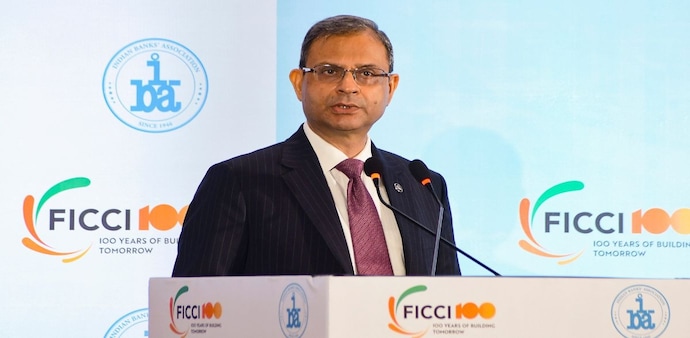
Underlining that today's resilience may not necessarily imply tomorrow's immunity, Reserve Bank of India Governor Sanjay Malhotra said that country's need to take measures to keep their financial systems resilient.
Addressing the Kautilya Economic Conclave on Saturday, Malhotra said the Indian economy has been navigating the West Asia crisis from a position of strength but cautioned that this is not a time for complacency.
He noted that retail inflation averaged 2% last year and has registered the strongest growth amongst major economies.
Strong macroeconomic fundamentals and a resilient financial system provide confidence in our ability to withstand this lingering shock, he said.
"India remains exposed to the effects of the West Asia conflict, to higher commodity prices and external sector pressures. Nevertheless, our economy is navigating this space from a position of strength," he said.
At the same time, India is taking further measures to enhance resilience through such shocks, using diversification of import sources, enhanced sufficiency in energy and other critical resources, building strategic petroleum reserves, accelerating energy transition, enhancing the competitiveness of domestic manufacturing, deeper integration into the global value chains, expanding market access to a number of countries by entering into trade pacts.
He also underlined that the Indian financial system is very brilliant, supported by the balance sheets of banks and NBFCs.
Malhotra said policymakers must factor in five key priorities while safeguarding financial systems.
"Financial stability is not about preventing them. It is about strengthening systemic resilience to face these shocks, " he said, adding that a new generation of systematic risks is also taking shape.
"The next financial crisis may not originate or even in the world of finance, it may begin with a geopolitical event, a cyber attack, or a technological failure that affects the financial system through multiple channels, Malhotra said.
Third, policymakers must improve monitoring and assessment frameworks, he said, adding that for this better and more granular data is needed.
Fourth, resilience must be system-wide. "Strong binding system is necessary, but it is not sufficient. We need resilience across sectors and institutions, financial markets, payment systems, technology infrastructure providers, critical third parties, and cross-border financial networks," he said.
The challenge before is to build a financial system that can withstand shocks that can not only be anticipated but those that we can not foresee.
Underlining that today's resilience may not necessarily imply tomorrow's immunity, Reserve Bank of India Governor Sanjay Malhotra said that country's need to take measures to keep their financial systems resilient.
Addressing the Kautilya Economic Conclave on Saturday, Malhotra said the Indian economy has been navigating the West Asia crisis from a position of strength but cautioned that this is not a time for complacency.
He noted that retail inflation averaged 2% last year and has registered the strongest growth amongst major economies.
Strong macroeconomic fundamentals and a resilient financial system provide confidence in our ability to withstand this lingering shock, he said.
"India remains exposed to the effects of the West Asia conflict, to higher commodity prices and external sector pressures. Nevertheless, our economy is navigating this space from a position of strength," he said.
At the same time, India is taking further measures to enhance resilience through such shocks, using diversification of import sources, enhanced sufficiency in energy and other critical resources, building strategic petroleum reserves, accelerating energy transition, enhancing the competitiveness of domestic manufacturing, deeper integration into the global value chains, expanding market access to a number of countries by entering into trade pacts.
He also underlined that the Indian financial system is very brilliant, supported by the balance sheets of banks and NBFCs.
Malhotra said policymakers must factor in five key priorities while safeguarding financial systems.
"Financial stability is not about preventing them. It is about strengthening systemic resilience to face these shocks, " he said, adding that a new generation of systematic risks is also taking shape.
"The next financial crisis may not originate or even in the world of finance, it may begin with a geopolitical event, a cyber attack, or a technological failure that affects the financial system through multiple channels, Malhotra said.
Third, policymakers must improve monitoring and assessment frameworks, he said, adding that for this better and more granular data is needed.
Fourth, resilience must be system-wide. "Strong binding system is necessary, but it is not sufficient. We need resilience across sectors and institutions, financial markets, payment systems, technology infrastructure providers, critical third parties, and cross-border financial networks," he said.
The challenge before is to build a financial system that can withstand shocks that can not only be anticipated but those that we can not foresee.