
Russia moves to secure India's fertiliser supply as subsidy bill mounts
On Monday, Russian President Putin assured India of continued supplies of fertilisers and energy
- Aug 25, 2026,
- Updated Aug 25, 2026 12:39 PM IST
Russia's assurance of uninterrupted fertiliser supplies to India comes at a critical juncture for New Delhi, with the government already spending close to Rs 1 lakh crore on fertiliser subsidies in FY27 and officials expecting the bill to rise further amid elevated global prices and supply disruptions.
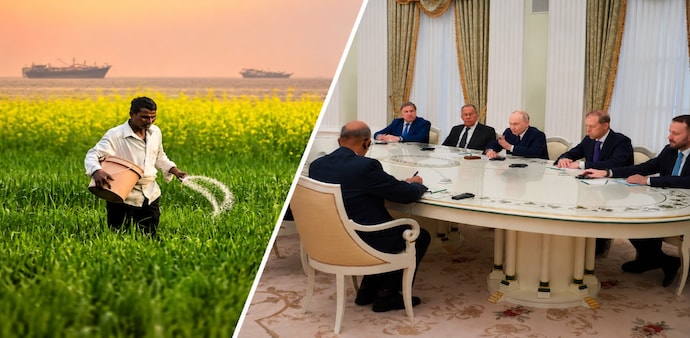
Russian President Vladimir Putin on Monday assured India of continued supplies of fertilisers and energy during External Affairs Minister S Jaishankar's visit to Moscow, with Russia also indicating that it is increasing fertiliser supplies to meet India's requirements.
Don't Miss: 'Our trade is growing again, thanks to PM Modi': Putin tells EAM Jaishankar
The assurance comes as the West Asia crisis and disruption around the Strait of Hormuz have complicated global supplies of fertiliser and key inputs such as LNG.
For India, the supply question has a direct fiscal implication. The government has so far spent more than 55% of its Rs 1.77 lakh crore fertiliser subsidy allocation for FY27, government sources confirmed to Business Today. Of this, around 40% has been incurred towards urea imports and domestic production.
Business Today reported in June that the Department of Fertilisers has sought a 100 per cent increase in allocation over the Rs 1.77 lakh crore provided in the Union Budget, arguing that substantially higher subsidies will be required to meet demand and absorb elevated global prices. The request has added to fiscal concerns within the ministry, given the significant subsidy burden involved.
Must Read: Made in Amethi: India’s first 100% indigenous AK-203 Sher is ready for its biggest test
While global urea prices have eased sharply from their April peak, other fertiliser prices remain elevated. Landed urea prices have fallen around 60% to $390 a tonne, from nearly $1,000 in April. However, DAP and MoP prices were around 15% and 10% higher, respectively, in July from a year earlier.
India imports around 70% of its fertiliser requirements and raw materials, making supply disruptions particularly significant. The government has consequently diversified procurement across countries, including Oman, Malaysia, Vietnam, Russia, Nigeria, and Egypt.
The Russian assurance could provide an additional layer of supply security, but the impact on the subsidy bill will depend on global prices, import costs, and the terms at which fertilisers are sourced.
Russia's assurance of uninterrupted fertiliser supplies to India comes at a critical juncture for New Delhi, with the government already spending close to Rs 1 lakh crore on fertiliser subsidies in FY27 and officials expecting the bill to rise further amid elevated global prices and supply disruptions.
Russian President Vladimir Putin on Monday assured India of continued supplies of fertilisers and energy during External Affairs Minister S Jaishankar's visit to Moscow, with Russia also indicating that it is increasing fertiliser supplies to meet India's requirements.
Don't Miss: 'Our trade is growing again, thanks to PM Modi': Putin tells EAM Jaishankar
The assurance comes as the West Asia crisis and disruption around the Strait of Hormuz have complicated global supplies of fertiliser and key inputs such as LNG.
For India, the supply question has a direct fiscal implication. The government has so far spent more than 55% of its Rs 1.77 lakh crore fertiliser subsidy allocation for FY27, government sources confirmed to Business Today. Of this, around 40% has been incurred towards urea imports and domestic production.
Business Today reported in June that the Department of Fertilisers has sought a 100 per cent increase in allocation over the Rs 1.77 lakh crore provided in the Union Budget, arguing that substantially higher subsidies will be required to meet demand and absorb elevated global prices. The request has added to fiscal concerns within the ministry, given the significant subsidy burden involved.
Must Read: Made in Amethi: India’s first 100% indigenous AK-203 Sher is ready for its biggest test
While global urea prices have eased sharply from their April peak, other fertiliser prices remain elevated. Landed urea prices have fallen around 60% to $390 a tonne, from nearly $1,000 in April. However, DAP and MoP prices were around 15% and 10% higher, respectively, in July from a year earlier.
India imports around 70% of its fertiliser requirements and raw materials, making supply disruptions particularly significant. The government has consequently diversified procurement across countries, including Oman, Malaysia, Vietnam, Russia, Nigeria, and Egypt.
The Russian assurance could provide an additional layer of supply security, but the impact on the subsidy bill will depend on global prices, import costs, and the terms at which fertilisers are sourced.