
‘Time for India’s manufacturing to pick up’: Anant Goenka flags opportunity from global supply-chain shifts
India’s manufacturing sector is poised for fresh growth as global supply chains diversify, according to RPG Group Vice Chairman Anant Goenka. He said strong fundamentals and reforms give India a window to accelerate manufacturing.
- Sep 10, 2026,
- Updated Sep 10, 2026 5:53 PM IST
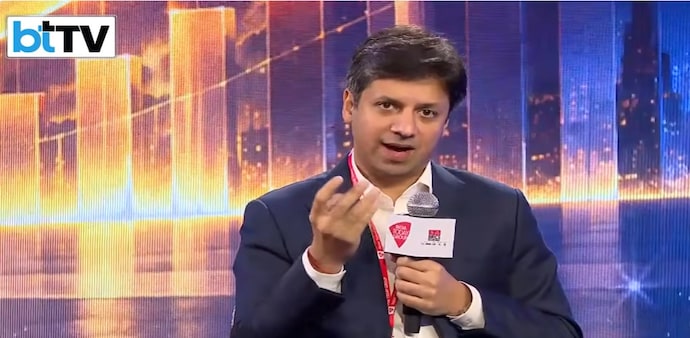
India is at the cusp of a potential manufacturing-led growth phase as global companies look to diversify supply chains, creating an opportunity for the country to strengthen its industrial base, according to RPG Group Vice Chairman and FICCI President Anant Goenka.
“I think we saw the services revolution in the last two decades. I think it is time for India's manufacturing to pick up,” Goenka said, arguing that the global shift towards diversified supply chains presents India with an opportunity that is yet to be fully captured.
“Countries are very clearly looking at diversified supply chains today. So it is not an opportunity missed in my view but it is an opportunity that is still to be grabbed,” he said at the India Today BRICS Roundtable.
Goenka’s optimism comes against the backdrop of improving domestic fundamentals and growing policy support for manufacturing and emerging industries. He said India’s macroeconomic position is among its strongest advantages at a time when the global economy is facing heightened uncertainty.
“The macros of the country are possibly the best in the world,” Goenka said, pointing to lower debt levels, stronger corporate balance sheets, historically low non-performing assets in banks, political stability and a continuing path of reforms.
He also cited improvements in ease of doing business, lower logistics costs and the country’s increased focus on renewable power as factors supporting India’s industrial prospects.
Six sectors could drive the next industrial wave
The opportunity is increasingly extending beyond traditional manufacturing into technology-intensive sectors. A Jefferies report identifies space, semiconductors, data centres, electronics, solar and aerospace as six high-growth frontiers that could strengthen India’s industrial competitiveness.
The report points to policy measures such as opening the space sector to private companies, production-linked incentive schemes for semiconductors, electronics and solar, tax holidays for data centres and government support for GPU purchases and local sourcing.
In space, India is targeting a five-fold expansion of its space economy to $40-45 billion by 2030, while private companies are moving towards commercial deployment. In semiconductors, around $20 billion in capital has been committed, with a major fabrication plant and multiple OSAT projects progressing.
Jefferies also expects India’s data-centre capacity to expand from around 2 GW to 10 GW over the next five years, representing a potential $45 billion investment opportunity. In electronics, domestic value addition in mobile components could rise from below 20% to nearly 50% over six years.
These developments fit into the broader manufacturing opportunity highlighted by Goenka, particularly as global supply chains are being reconfigured.
Faster decisions needed
However, Goenka said the uncertain global environment also requires companies to become more agile. He cited the sharp rise in crude prices as an example of how quickly corporate assumptions can become outdated.
“The budgets that we had set for ourselves as a company was obsolete,” he said, noting that crude had moved sharply from the level assumed when the company prepared its plans.
He said RPG has responded by creating “rapid response teams” comprising senior executives, including the CEO, CFO and CHRO. The teams meet every three days to take decisions on issues such as material availability, factory operations and employee safety.
“The need for corporates in the short term as these crisis and uncertainties come up is just very fast decision making,” Goenka said.
His comments come as Jefferies describes India’s industrial economy as undergoing a structural pivot, with private-sector participation and targeted government backing helping expand capacity across emerging sectors. For Goenka, the opportunity is clear—but capturing it will require Indian companies to move faster as global supply chains evolve.
India is at the cusp of a potential manufacturing-led growth phase as global companies look to diversify supply chains, creating an opportunity for the country to strengthen its industrial base, according to RPG Group Vice Chairman and FICCI President Anant Goenka.
“I think we saw the services revolution in the last two decades. I think it is time for India's manufacturing to pick up,” Goenka said, arguing that the global shift towards diversified supply chains presents India with an opportunity that is yet to be fully captured.
“Countries are very clearly looking at diversified supply chains today. So it is not an opportunity missed in my view but it is an opportunity that is still to be grabbed,” he said at the India Today BRICS Roundtable.
Goenka’s optimism comes against the backdrop of improving domestic fundamentals and growing policy support for manufacturing and emerging industries. He said India’s macroeconomic position is among its strongest advantages at a time when the global economy is facing heightened uncertainty.
“The macros of the country are possibly the best in the world,” Goenka said, pointing to lower debt levels, stronger corporate balance sheets, historically low non-performing assets in banks, political stability and a continuing path of reforms.
He also cited improvements in ease of doing business, lower logistics costs and the country’s increased focus on renewable power as factors supporting India’s industrial prospects.
Six sectors could drive the next industrial wave
The opportunity is increasingly extending beyond traditional manufacturing into technology-intensive sectors. A Jefferies report identifies space, semiconductors, data centres, electronics, solar and aerospace as six high-growth frontiers that could strengthen India’s industrial competitiveness.
The report points to policy measures such as opening the space sector to private companies, production-linked incentive schemes for semiconductors, electronics and solar, tax holidays for data centres and government support for GPU purchases and local sourcing.
In space, India is targeting a five-fold expansion of its space economy to $40-45 billion by 2030, while private companies are moving towards commercial deployment. In semiconductors, around $20 billion in capital has been committed, with a major fabrication plant and multiple OSAT projects progressing.
Jefferies also expects India’s data-centre capacity to expand from around 2 GW to 10 GW over the next five years, representing a potential $45 billion investment opportunity. In electronics, domestic value addition in mobile components could rise from below 20% to nearly 50% over six years.
These developments fit into the broader manufacturing opportunity highlighted by Goenka, particularly as global supply chains are being reconfigured.
Faster decisions needed
However, Goenka said the uncertain global environment also requires companies to become more agile. He cited the sharp rise in crude prices as an example of how quickly corporate assumptions can become outdated.
“The budgets that we had set for ourselves as a company was obsolete,” he said, noting that crude had moved sharply from the level assumed when the company prepared its plans.
He said RPG has responded by creating “rapid response teams” comprising senior executives, including the CEO, CFO and CHRO. The teams meet every three days to take decisions on issues such as material availability, factory operations and employee safety.
“The need for corporates in the short term as these crisis and uncertainties come up is just very fast decision making,” Goenka said.
His comments come as Jefferies describes India’s industrial economy as undergoing a structural pivot, with private-sector participation and targeted government backing helping expand capacity across emerging sectors. For Goenka, the opportunity is clear—but capturing it will require Indian companies to move faster as global supply chains evolve.