
'Why should India depend on others?': PM Modi after Cabinet clears ₹2,814 cr critical minerals processing scheme
The Union Cabinet, chaired by Modi, approved the Capex Support Scheme to Promote Critical Mineral Processing for five years, from FY2026-27 to FY2030-31
- Nov 4, 2026,
- Updated Nov 4, 2026 6:51 PM IST
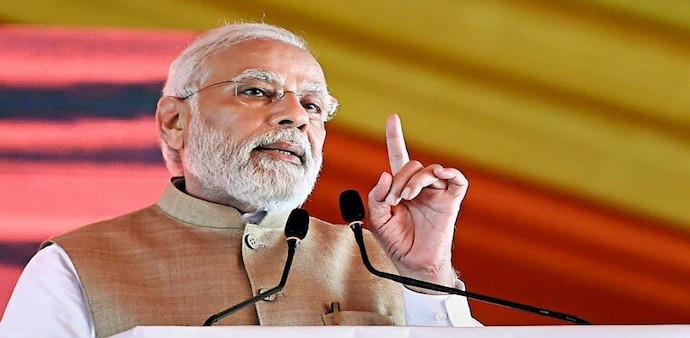
Prime Minister Narendra Modi on Wednesday said India should not depend on other countries to process critical minerals needed for electric vehicles, batteries, electronics and defence.
"Do you feel India should depend on other countries for processing the critical minerals that power our future? I certainly don’t!" Modi wrote on X. "Lithium, nickel, cobalt…these are essential for EVs, batteries, electronics and defence. Yet, we remain heavily dependent on imports of refined materials."
"To address this, the Cabinet has approved a scheme to change this," he said, listing new processing plants, capital subsidies and stronger supply chains among its priorities. "The principle is clear...India must have capabilities to build technologies of the future!"
Watch: India Wants Minerals, Canada Wants Markets: The Big Trade Deal Explained
What will the ₹2,814 crore scheme do?
Earlier today, the Union Cabinet, chaired by Modi, approved the Capex Support Scheme to Promote Critical Mineral Processing for five years, from FY2026-27 to FY2030-31.
Under the scheme, the government will provide a capital subsidy of 30% of eligible investment for setting up four processing facilities.
These will include two lithium processing plants with a minimum capacity of 30,000 tonnes each and two nickel processing plants with a minimum capacity of 50,000 tonnes each. Cobalt is also expected to be recovered as a by-product of nickel production.
The maximum financial assistance will be capped at ₹500 crore for each lithium beneficiary and ₹900 crore for each nickel beneficiary.
The government said India's existing processing infrastructure remains limited, leaving the country heavily dependent on imported refined minerals and high-purity materials.
How will companies be selected?
Beneficiaries will be chosen through a two-stage process. Companies must first meet technical qualification requirements before participating in financial bidding.
Two beneficiaries will be selected for each mineral based on the lowest capital subsidy sought. Government assistance will be released in three instalments linked to specified milestones.
The scheme aims to strengthen domestic supply chains and support electric mobility, battery energy storage, electronics, defence and speciality steel manufacturing.