
Luxury giants' desi rip-off: How brands like Prada, Ralph Lauren are profiting off uncredited Indian artistry
Luxury giants' desi rip-off: How brands like Prada, Ralph Lauren are profiting off uncredited Indian artistry
From Kolhapuri chappals to jhumkas, these "inspirations" flood Milan and Paris Fashion Weeks, often rebranded as vague "vintage" or "toe-braided" novelties, sparking viral fury over cultural appropriation
Sonali
- Apr 22, 2026,
- Updated Apr 22, 2026 9:05 AM IST
International luxury brands have made a habit of turning India's timeless crafts into runway spectacles and retail goldmines, slapping exorbitant price tags on desi designs while giving zero credit, or profits, to the artisans who perfected them over generations.
From Kolhapuri chappals to jhumkas, these "inspirations" flood Milan and Paris Fashion Weeks, often rebranded as vague "vintage" or "toe-braided" novelties, sparking viral fury over cultural appropriation.
Advertisement
Here's a comprehensive list of key examples:
Prada's Kolhapuri chappal controversy:
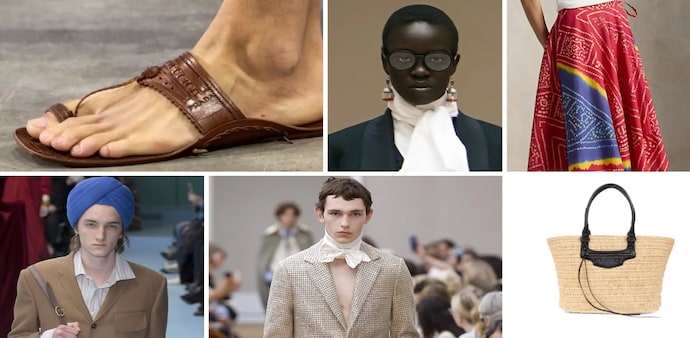
Prada launched toe-braided leather sandals for Spring/Summer 2026 at Milan Fashion Week in June 2025, mimicking Maharashtra's GI-protected Kolhapuri chappals, handwoven leather footwear artisans sell for ₹400. Priced at over ₹1.25 lakh, the brand only admitted "inspiration" post-backlash, with no artisan credits or collaborations.
Ralph Lauren's Jhumka Backlash:
In March 2026, Ralph Lauren showcased dangling jhumka-style earrings at Fall 2026 Paris Fashion Week, labeling them mere "vintage accessories" without nodding to their South Asian roots—think bell-shaped drops handmade by Indian jewelers for ₹500-₹5,000. Runway models amplified the desi flair, but social media trolled the omission hard.
Advertisement
Ralph Lauren Strikes Again with Bandhani:
Hot on the jhumka heels, Ralph Lauren dropped a Bandhani print cotton wrap skirt in April 2026 for ₹44,800, using Gujarat-Rajasthan tie-dye techniques that street vendors offer for ₹1,000-₹3,000. Described blandly as "Bandhini techniques," it ignored the craft's heritage, fueling fresh outrage.
Dior's Mukaish Millions:
Dior stunned Paris Fashion Week in July 2025 with a $200,000 (₹1.67 crore+) Mukaish embroidery overcoat, straight out of Lucknow's gold wire tradition, artisan versions cost ₹10,000-₹50,000. No shoutout to India despite Indian hands crafting it, right after Prada's row.
Advertisement
Gucci's kurta and turban plays:
Gucci has leaned into embroidered kurtas (up to ₹3.15 lakh) and Sikh turban motifs across 2025 collections, riffing on zardozi and Punjabi styles that locals make for ₹2,000-₹10,000. Ongoing since earlier runs, it's peak "streetwear luxury" without the roots.
Balenciaga's 'Jhola' jute juggernaut:
Balenciaga's SS 2025 jute tote bag, launched in 2024, reimagined Bengal-Bihar village weaving, ₹200-₹1,000 locally, for ₹85,000+. Touted as eco-chic, it skipped crediting the rural weavers who sustain the craft.
As Indian voices amplify online, calls mount for stricter GI enforcement and mandatory artisan partnerships. Will luxury houses pivot to collaboration, or keep cashing in on silence?
International luxury brands have made a habit of turning India's timeless crafts into runway spectacles and retail goldmines, slapping exorbitant price tags on desi designs while giving zero credit, or profits, to the artisans who perfected them over generations.
From Kolhapuri chappals to jhumkas, these "inspirations" flood Milan and Paris Fashion Weeks, often rebranded as vague "vintage" or "toe-braided" novelties, sparking viral fury over cultural appropriation.
Advertisement
Here's a comprehensive list of key examples:
Prada's Kolhapuri chappal controversy:
Prada launched toe-braided leather sandals for Spring/Summer 2026 at Milan Fashion Week in June 2025, mimicking Maharashtra's GI-protected Kolhapuri chappals, handwoven leather footwear artisans sell for ₹400. Priced at over ₹1.25 lakh, the brand only admitted "inspiration" post-backlash, with no artisan credits or collaborations.
Ralph Lauren's Jhumka Backlash:
In March 2026, Ralph Lauren showcased dangling jhumka-style earrings at Fall 2026 Paris Fashion Week, labeling them mere "vintage accessories" without nodding to their South Asian roots—think bell-shaped drops handmade by Indian jewelers for ₹500-₹5,000. Runway models amplified the desi flair, but social media trolled the omission hard.
Advertisement
Ralph Lauren Strikes Again with Bandhani:
Hot on the jhumka heels, Ralph Lauren dropped a Bandhani print cotton wrap skirt in April 2026 for ₹44,800, using Gujarat-Rajasthan tie-dye techniques that street vendors offer for ₹1,000-₹3,000. Described blandly as "Bandhini techniques," it ignored the craft's heritage, fueling fresh outrage.
Dior's Mukaish Millions:
Dior stunned Paris Fashion Week in July 2025 with a $200,000 (₹1.67 crore+) Mukaish embroidery overcoat, straight out of Lucknow's gold wire tradition, artisan versions cost ₹10,000-₹50,000. No shoutout to India despite Indian hands crafting it, right after Prada's row.
Advertisement
Gucci's kurta and turban plays:
Gucci has leaned into embroidered kurtas (up to ₹3.15 lakh) and Sikh turban motifs across 2025 collections, riffing on zardozi and Punjabi styles that locals make for ₹2,000-₹10,000. Ongoing since earlier runs, it's peak "streetwear luxury" without the roots.
Balenciaga's 'Jhola' jute juggernaut:
Balenciaga's SS 2025 jute tote bag, launched in 2024, reimagined Bengal-Bihar village weaving, ₹200-₹1,000 locally, for ₹85,000+. Touted as eco-chic, it skipped crediting the rural weavers who sustain the craft.
As Indian voices amplify online, calls mount for stricter GI enforcement and mandatory artisan partnerships. Will luxury houses pivot to collaboration, or keep cashing in on silence?
Read more!