
Poor Man's Budget
Rural development, agriculture and social pensions all found prominent mention in the Budget announcements.
- Feb 5, 2019,
- Updated Feb 8, 2019 7:12 PM IST
Should we be victims of mere populism or wasteful expenditure?" Arun Jaitley, Union Finance Minister, had asked while presenting the first Budget of the Narendra Modi-led National Democratic Alliance (NDA) government in July 2014. He was referring to the funds the previous United Progressive Alliance (UPA) government had earmarked for social security schemes like the Mahatma Gandhi National Employment Guarantee Act (MGNREGA), as BJP had dubbed these as mere populist schemes without any tangible benefits. Five years later, the same question stares at the stand-by finance minister Piyush Goyal who presented the last Budget of the NDA government, as he seems to have done exactly what Jaitley feared, be overly populist.
The Interim Budget 2019/20 is all about handouts and welfare plans for farmers, labourers, small businesses, and people at the lowest end of the taxpayer base. While the MGNREGA scheme continues to get a substantial budgetary support of Rs 60,000 crore for 2019/20, there are a host of new schemes that can be termed more populist in size and scope. The direct income support scheme for 120 million farmers who owns two hectares or less will alone require the government to spend about Rs 75,000 crore. In addition, there are plans to partly fund a senior citizens pension scheme that can help 100 million labourers in the unorganised sector. The government has also announced full rebate on the income tax liability of about 30 million people who have a taxable income of up to Rs 5 lakh a year. While the ruling party has managed to connect with the majority of Indian voters through these schemes, are the sops good enough to make a difference? And does the government have the resources to fund these?
Inadequate Measures
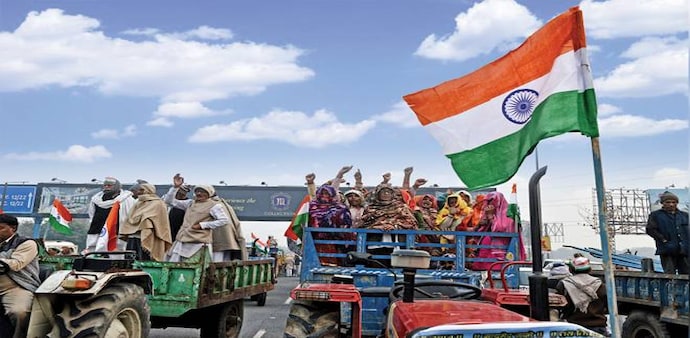
PM Kisan Samman Nidhi (PM-Kisan), the biggest of all the new announcements made, envisages transfer of Rs 6,000 per year as direct income support to 120 million farmers in three equal installments. Since the programme, fully funded by the central government, will be operational during the current year itself, farmers who qualify for the support will receive Rs 2,000 as the first installment before the next general elections due in a couple of months now. However, the response from farmers is not encouraging. It's adding insult to the farmer's injury, says a group of farmers and farm activists who had converged from nine states across the country in Shikohpur village in Haryana on the Budget day. "Disappointing and anti-farmer," says Chaudhary Rakesh Tikait , National Spokesperson, Bharatiya Kisan Union.
PM-Kisan as well as other sops - a 2 per cent interest subvention on loans availed by animal husbandry and fisheries farmers, and an additional 3 per cent on timely repayment - failed to enthuse farmers as these did not match their expectations. "The Rythu Bandhu scheme of Telangana government provides Rs 10,000 per acre of support, which means that a 5-acre farmer would get Rs 50,000 per year, giving at least partial support towards cultivation cost. It is a joke to declare that Rs 6,000 per year will save farmers from moneylenders, when a typical small farmer requires an investment of at least Rs 1 lakh in cost of cultivation," says Kiran Kumar Vissa from Rythu Swarajya Vedika, Telangana.
Farmer representatives feel the interest subvention announcement is minor, as the benefit would hardly go to 1 per cent of the farmers. "The government's support to dairy farming and animal husbandry has been very poor - out of the promised Rs 10,881 crore for Dairy Infrastructure Development Fund in 2017/18, only Rs 440 crore has been disbursed so far," says Avik Saha, Convener, Jai Kisan Andolan.
The critics might have a point, but the government has already stretched itself beyond fiscal limits to accommodate the funds for PM-Kisan. There is an outlay for Rs 21,100 crore this fiscal, while Rs 75,000 crore has been set aside for FY 2019/20.
"The arithmetic of the Budget is not there. Where are you going to get the money? Your farm related sops alone would add up to Rs 100,000 crore", says Arun Kumar, an economist who teaches at the Jawaharlal Nehru University. Data gaps also exist. "In the case of Rythu Bandhu, KCR (Telangana's chief minister) spent a lot of time figuring out who all are eligible, and so on. Similar data on a countrywide scale is not available. Socio Economic and Caste Census (SECC) 2011 would have some data on land holding, but not mapped with Aadhaar numbers," Kumar says.
Drop in the Ocean
The second scheme for which enrolments and marketing campaigns will begin in the election year itself is the Pradhan Mantri Shram-Yogi Maandhan that assures a monthly pension of Rs 3,000 to unorganised sector workers with monthly income up to Rs 15,000 from the age of 60 years. The premium will be shared by the worker and the government. The government expects 100 million labourers to benefit from this scheme. It has also made a budgetary allocation of Rs 500 crore for the current year. "It is good to give more money into rural hands, so that rural demand increases. It is good to make them save. But where is the money? If you have to pay even Rs 50 into the account of each pension beneficiary monthly, you will need Rs 6,000 crore. So the arithmetic is dicey at the moment," says Kumar.
Gaps In Coverage
The third most disgruntled segment of the population that the government has tried to pacify are the small business and industries in the informal sector. They bore the brunt of GST implementation and demonetisation. The government has announced full rebate on income tax liability of about 30 million people with taxable income of up to Rs 5 lakh a year. The government has also tried to ensure that MSMEs have easier access to funds. But it left out traders. The 8.5 million trading establishments that invested at least Rs 10-12 lakh into their businesses have also been left high and dry, says K.E. Raghunathan, President, All India Manufacturers' Organisation. Goyal didn't address the bigger problems that MSMEs face either. "About 35 per cent of Indian MSMEs are ailing due to want of capital, NPAs (non-performing assets) or want of orders. The Budget offers no help to them," says Raghunathan.
What remained in focus was rural India. The Pradhan Mantri Gram Sadak Yojana (PMGSY) gets an allocation of Rs 19,000 crore in 2019/20 (Budget estimate) as against Rs 15,500 crore in 2018/19 (Revised estimate). Rajat Kathuria, Director and Chief Executive of Delhi-based think tank ICRIER, says it is natural to see governments targeting the rural sector and the middle class in an election year. "There is an eye on the election, but that's not necessarily a bad thing as the farm sector is going through a bad phase. The slippage in fiscal deficit is also not a big concern. However, where is the revenue going to come from? Is it the tax buoyancy in the GST, widening of tax base or growth? Or is it going to come at the expense of some cut on capital expenditure? I hope the latter is not the case," Kathuria says.
@joecmathew
Should we be victims of mere populism or wasteful expenditure?" Arun Jaitley, Union Finance Minister, had asked while presenting the first Budget of the Narendra Modi-led National Democratic Alliance (NDA) government in July 2014. He was referring to the funds the previous United Progressive Alliance (UPA) government had earmarked for social security schemes like the Mahatma Gandhi National Employment Guarantee Act (MGNREGA), as BJP had dubbed these as mere populist schemes without any tangible benefits. Five years later, the same question stares at the stand-by finance minister Piyush Goyal who presented the last Budget of the NDA government, as he seems to have done exactly what Jaitley feared, be overly populist.
The Interim Budget 2019/20 is all about handouts and welfare plans for farmers, labourers, small businesses, and people at the lowest end of the taxpayer base. While the MGNREGA scheme continues to get a substantial budgetary support of Rs 60,000 crore for 2019/20, there are a host of new schemes that can be termed more populist in size and scope. The direct income support scheme for 120 million farmers who owns two hectares or less will alone require the government to spend about Rs 75,000 crore. In addition, there are plans to partly fund a senior citizens pension scheme that can help 100 million labourers in the unorganised sector. The government has also announced full rebate on the income tax liability of about 30 million people who have a taxable income of up to Rs 5 lakh a year. While the ruling party has managed to connect with the majority of Indian voters through these schemes, are the sops good enough to make a difference? And does the government have the resources to fund these?
Inadequate Measures
PM Kisan Samman Nidhi (PM-Kisan), the biggest of all the new announcements made, envisages transfer of Rs 6,000 per year as direct income support to 120 million farmers in three equal installments. Since the programme, fully funded by the central government, will be operational during the current year itself, farmers who qualify for the support will receive Rs 2,000 as the first installment before the next general elections due in a couple of months now. However, the response from farmers is not encouraging. It's adding insult to the farmer's injury, says a group of farmers and farm activists who had converged from nine states across the country in Shikohpur village in Haryana on the Budget day. "Disappointing and anti-farmer," says Chaudhary Rakesh Tikait , National Spokesperson, Bharatiya Kisan Union.
PM-Kisan as well as other sops - a 2 per cent interest subvention on loans availed by animal husbandry and fisheries farmers, and an additional 3 per cent on timely repayment - failed to enthuse farmers as these did not match their expectations. "The Rythu Bandhu scheme of Telangana government provides Rs 10,000 per acre of support, which means that a 5-acre farmer would get Rs 50,000 per year, giving at least partial support towards cultivation cost. It is a joke to declare that Rs 6,000 per year will save farmers from moneylenders, when a typical small farmer requires an investment of at least Rs 1 lakh in cost of cultivation," says Kiran Kumar Vissa from Rythu Swarajya Vedika, Telangana.
Farmer representatives feel the interest subvention announcement is minor, as the benefit would hardly go to 1 per cent of the farmers. "The government's support to dairy farming and animal husbandry has been very poor - out of the promised Rs 10,881 crore for Dairy Infrastructure Development Fund in 2017/18, only Rs 440 crore has been disbursed so far," says Avik Saha, Convener, Jai Kisan Andolan.
The critics might have a point, but the government has already stretched itself beyond fiscal limits to accommodate the funds for PM-Kisan. There is an outlay for Rs 21,100 crore this fiscal, while Rs 75,000 crore has been set aside for FY 2019/20.
"The arithmetic of the Budget is not there. Where are you going to get the money? Your farm related sops alone would add up to Rs 100,000 crore", says Arun Kumar, an economist who teaches at the Jawaharlal Nehru University. Data gaps also exist. "In the case of Rythu Bandhu, KCR (Telangana's chief minister) spent a lot of time figuring out who all are eligible, and so on. Similar data on a countrywide scale is not available. Socio Economic and Caste Census (SECC) 2011 would have some data on land holding, but not mapped with Aadhaar numbers," Kumar says.
Drop in the Ocean
The second scheme for which enrolments and marketing campaigns will begin in the election year itself is the Pradhan Mantri Shram-Yogi Maandhan that assures a monthly pension of Rs 3,000 to unorganised sector workers with monthly income up to Rs 15,000 from the age of 60 years. The premium will be shared by the worker and the government. The government expects 100 million labourers to benefit from this scheme. It has also made a budgetary allocation of Rs 500 crore for the current year. "It is good to give more money into rural hands, so that rural demand increases. It is good to make them save. But where is the money? If you have to pay even Rs 50 into the account of each pension beneficiary monthly, you will need Rs 6,000 crore. So the arithmetic is dicey at the moment," says Kumar.
Gaps In Coverage
The third most disgruntled segment of the population that the government has tried to pacify are the small business and industries in the informal sector. They bore the brunt of GST implementation and demonetisation. The government has announced full rebate on income tax liability of about 30 million people with taxable income of up to Rs 5 lakh a year. The government has also tried to ensure that MSMEs have easier access to funds. But it left out traders. The 8.5 million trading establishments that invested at least Rs 10-12 lakh into their businesses have also been left high and dry, says K.E. Raghunathan, President, All India Manufacturers' Organisation. Goyal didn't address the bigger problems that MSMEs face either. "About 35 per cent of Indian MSMEs are ailing due to want of capital, NPAs (non-performing assets) or want of orders. The Budget offers no help to them," says Raghunathan.
What remained in focus was rural India. The Pradhan Mantri Gram Sadak Yojana (PMGSY) gets an allocation of Rs 19,000 crore in 2019/20 (Budget estimate) as against Rs 15,500 crore in 2018/19 (Revised estimate). Rajat Kathuria, Director and Chief Executive of Delhi-based think tank ICRIER, says it is natural to see governments targeting the rural sector and the middle class in an election year. "There is an eye on the election, but that's not necessarily a bad thing as the farm sector is going through a bad phase. The slippage in fiscal deficit is also not a big concern. However, where is the revenue going to come from? Is it the tax buoyancy in the GST, widening of tax base or growth? Or is it going to come at the expense of some cut on capital expenditure? I hope the latter is not the case," Kathuria says.
@joecmathew