
Across travel, hospitality and F&B, young consumers are chasing ‘TFW’
Across travel, hospitality, and food and beverage, India's Gen Z is reshaping how they discover, design, and share their leisure experiences.
Smita Tripathi
- Jan 28, 2026,
- Updated Jan 28, 2026 4:05 PM IST
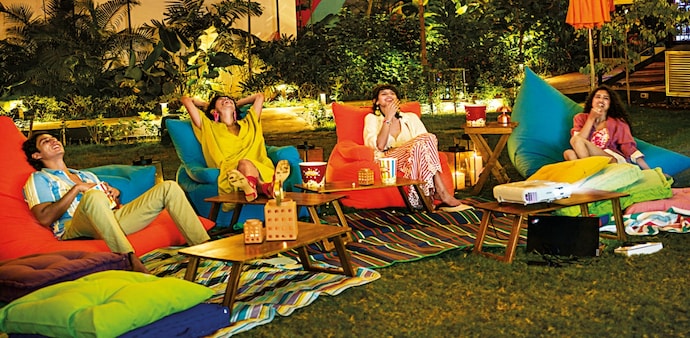
That feeling when, or TFW, captures a popular Gen Z emotion, often expressed through a hashtag on social media. So, on a Sunday afternoon in Mumbai, when 24-year-old Vaheeshta Das, who works at VFS Global, was planning her next short break, she was essentially #chasingTFW. Like many in her generation, she schedules four or five trips a year around shifting work calendars. The planning process unfolds almost entirely online. Instagram, she says, offers aspiration and aesthetics. Reddit provides candour. AI fills in the gaps.
Hey!
Already a subscriber? Sign In
THIS IS A PREMIUM STORY FROM BUSINESS TODAY.
Subscribe to Business Today Digital and continue enjoying India's premier business offering uninterrupted
only FOR
₹999 / Year
Unlimited Digital Access + Ad Lite Experience
Cancel Anytime
-
 Unlimited access to Business Today website
 -
 Exclusive insights on Corporate India's working, every quarter
 -
 Access to our special editions, features, and priceless archives
 -
 Get front-seat access to events such as BT Best Banks, Best CEOs and Mindrush
That feeling when, or TFW, captures a popular Gen Z emotion, often expressed through a hashtag on social media. So, on a Sunday afternoon in Mumbai, when 24-year-old Vaheeshta Das, who works at VFS Global, was planning her next short break, she was essentially #chasingTFW. Like many in her generation, she schedules four or five trips a year around shifting work calendars. The planning process unfolds almost entirely online. Instagram, she says, offers aspiration and aesthetics. Reddit provides candour. AI fills in the gaps.
Advertisement
“Instagram shows the vibe of a place,” Das explains. “Reddit is where people are more honest and unfiltered.” AI tools help her structure itineraries, optimise travel days and discover experiences she might otherwise miss. Used together, these platforms create what she calls a “realistic picture” of a destination before she books, helping her get closer to the ideal TFW.
This layered approach to travel planning captures a broader transformation underway in India’s travel, hospitality and food-and-beverage sectors. Generation Z (those born between 1997 and 2012), long framed as an emerging cohort, has become one of the most influential forces reshaping these sectors.
The Gen Z Travel Playbook
Advertisement
Gen Z is travelling more frequently, planning more strategically and assigning value differently. Data from online travel platforms Cleartrip, Skyscanner, and Klook points to a cohort that treats travel as a recurring, integrated part of life rather than a once-a-year indulgence.
The BT–PRICE Gen Z Consumption Behaviour Survey shows an almost even split between domestic and international travel overall. Out of the 4,000-odd people surveyed across India, 45% in metro cities prefer to travel domestically. The count changes to 55% in Tier II cities. Among the most affluent, nearly nine in ten trips are abroad.
Cleartrip’s Unpacked 2025 report underscores the scale of change. Gen Z travel bookings grew by 650% in 2025, with young people travelling year-round rather than clustering trips around holidays. Cities with strong food, nightlife and cultural scenes—Dubai, Kuala Lumpur, and Bangkok—emerged as top spontaneous international choices. Two-thirds of bookings were made on mobile phones, with UPI and credit cards dominating payments.
Advertisement
Skyscanner’s data paints a behavioural picture. Half of Indian Gen Z travellers say they plan to make smarter spending choices to maximise holidays, while 52% globally take at least three leisure trips a year. Notably, 40% of Indian Gen Z ended up taking more trips than planned in 2024, suggesting impulse and flexibility being central to their travel habits.
Technology plays a critical role, but it does not operate in isolation. Social media is the primary source of inspiration for 66% of Indian Gen Z travellers, but offline validation still matters. Many discuss itineraries with friends before committing. Travel is also closely tied to wellbeing. More than 90% report feeling less anxious after a trip, and nearly three-quarters plan holidays specifically for wellness.
Klook’s internal data shows strong growth in culturally resonant but less crowded destinations such as Da Lat (Vietnam), Chiang Rai (Thailand), and secondary circuits in Bali. Sustainability features prominently as well, with many Gen Z travellers actively seeking eco-friendly accommodation and quieter destinations.
A New Grammar of Hospitality
Advertisement
For decades, India’s hospitality sector operated on predictability: defined seasons, clear separation between business and leisure travel and established ideas of luxury rooted in formality. Gen Z is steadily dismantling those assumptions.
At Pullman and Novotel New Delhi Aerocity, younger guests now arrive as primary decision-makers. “Earlier, Gen Z travellers were often accompanying families or corporates,” says Himanshu Sharma, Director of Sales and Marketing at the properties.
Shorter, more frequent breaks have replaced long annual holidays. Weekend staycations, brunch-led getaways and event-driven travel dominate, alongside hybrid work trips. At Moxy Bengaluru Airport Prestige Tech Cloud, a brand designed explicitly around younger travellers, this shift is structural rather than reactive. “We didn’t adapt to Gen Z later, we were built with them in mind,” says Anuradha Venkatachalam, the hotel’s manager.
For Gen Z, design and comfort must coexist. “Instagrammability matters, but not in isolation,” Venkatachalam adds. “Form and function are inseparable.”
In Goa, Gen Z’s disregard for conventional travel rhythms is even more pronounced. “There is no fixed season or weekday-weekend pattern,” says Pratiti Rajpal, General Manager of Ronil Goa—a JdV by Hyatt Hotel. The appeal lies in freedom and vibe: check-ins at the bar, midnight swims, pet-friendly stays and a non-judgemental, social atmosphere.
Advertisement
Sustainability and local immersion further differentiate this cohort. At Palm Grove Beach Resort in Goa, Eva Agardsdotter, Partner, observes that eco-conscious practices strongly influence Gen Z choices. “They often prefer accommodations that demonstrate real responsibility towards the environment and local communities,” she says, pointing to the resort’s mud-built Little Palm Grove extension and community-led beach clean-ups. Guests gravitate towards yoga, village walks, night markets and workshops rather than traditional luxury cues.
Redefinition of Luxury
For large hotel groups, these shifts have strategic implications. At Marriott International, Gen Z has emerged as one of the fastest-growing segments in India—a trend visible through rising engagement with the Marriott Bonvoy loyalty programme.
“Our research shows that younger travellers are entering the travel ecosystem much earlier and travelling more frequently,” says Khushnooma Kapadia, Vice President of Marketing for South Asia at Marriott International. “What’s important is that Gen Z is not a future audience anymore. They’re already shaping demand, brand expectations, and engagement strategies.”
Social media, she adds, now plays a decisive role.
Advertisement
Across segments, Gen Z consistently prioritises neighbourhood immersion over spectacle. “Luxury for them is access,” says Kapadia. “Access to culture, people, and experiences that feel real.”
Experiential operators see similar patterns. At destinations such as Gujarat’s Rann Utsav and Dholavira, Gen Z travellers gravitate towards participative experiences. “They’re far more interested in local immersion than traditional grandeur,” says Krinal Thaker, Marketing Head at Evoke Experiences, a destination-driven hospitality company. “Luxury is now measured by uniqueness and relevance, not opulence.”
Heritage walks, archaeological storytelling, folk music and stargazing rank high among Gen Z preferences. “What they object to is paying for something that feels redundant,” adds Thaker. “If the experience offers emotional or cultural value, price becomes secondary.”
Amrit Rajaratnam, Managing Director of Island Life Sri Lanka that operates four hotels across the emerald island, says, “Feeling connected to the destination is more important for Gen Z than traditional symbols of indulgence.”
What’s on Their Plate
Across cities like Mumbai, Delhi, and Bengaluru, restaurateurs are noticing that younger diners are not simply eating out, they are curating social lives around food, choosing places that feel participatory and visually appealing online. “Sense of community is one thing Gen Z is extremely big on,” says food historian and author Anoothi Vishal. “They want to discover together, not compete through price points.” That shift has helped propel regional pop-ups, micro-cuisines, and casual formats over rigid fine dining.
At Hunger Inc. Hospitality, the contrast is visible brand to brand. “Veronica’s sees a much higher Gen Z footfall,” says Co-founder Yash Bhanage, noting that alcohol-light, daytime-friendly concepts naturally attract younger diners.
Contrary to stereotypes of delivery-first habits, he observes that Gen Z enjoys being physically present. “From what we see at Veronica’s and Bombay Sweet Shop, they genuinely enjoy dine-in culture.” Yet this cohort is not being directly engineered for. Sameer Seth, Founder and CEO of Hunger Inc., insists that menu development still begins with instinct, not demographics.
“We are never saying, ‘This is what will appeal to Gen Z.’ We ask whether something is genuinely delicious,” he says, pointing to the Coffee Rasgulla Tiramisu. Its popularity among younger diners, Seth argues, reflects resonance rather than targeting.
Discovery, however, has changed irrevocably. “Social media visibility now complements location. A strong digital presence can offset secondary locations, especially for Gen Z,” says Rajan Sethi, Managing Director of Bright Hospitality that owns brands such as Gurgaon-based OMO, Espressos Anyday, and Ikk Panjab. Over the past three to five years, Gen Z has grown from a peripheral audience to a core customer segment for Bright Hospitality.
Founder & CEO, Sahil Sambhi Brands that includes Japanico, Vietnom and Bawri, among others, Sahil Sambhi, goes further, arguing that aesthetics are inseparable from food. “Dining is becoming more specialised, experiential, and curated,” he says, noting how menu design, layouts, and tone are filtered instantly through Instagram.
Gen Z’s evolving relationship with alcohol is also reshaping menus. AD Singh of the Olive Group describes a move towards lower-intensity socialising. “They want quieter places, low ABV or zero-proof cocktails, and space for conversation,” he says.
Price, too, is more nuanced than assumed. “India has always been value-driven,” Bhanage notes, adding that younger consumers are simply earlier in their earning cycles. Bright Hospitality’s Sethi calls them “price-aware rather than price-sensitive,” willing to pay for ambience, beverages, and experiences that feel socially rewarding.
He adds that they are pushing the industry to be “more fluid, social, and experience-first.” The plate still matters. But so does everything around it.
@smitabw
Read more!