
Behind Suzlon's Revival: What's helping the wind energy player recover lost ground
Behind Suzlon's Revival: What's helping the wind energy player recover lost ground
Debt reduction and bet on high-margin segments such as operations & maintenance help the wind energy player recover lost ground.
Krishna Gopalan
- Jun 26, 2025,
- Updated Jul 2, 2025 4:16 PM IST
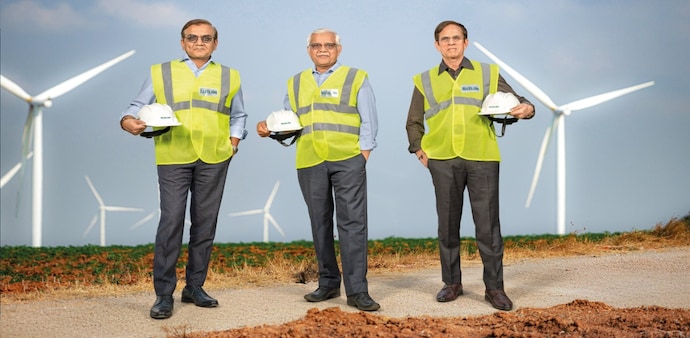
A walk through Suzlon One Earth in Pune with the enthusiastic Girish Tanti, the group’s Co-Founder & Vice-Chairman, is an interesting experience. The 10-acre headquarters of the wind energy player runs on renewable energy. Predictably, the landscape is dotted with wind turbines, solar panels and photovoltaic cells. Tanti shows us a gallery tracking the evolution of Suzlon. In many ways, it’s the story of wind energy in India.
Hey!
Already a subscriber? Sign In
THIS IS A PREMIUM STORY FROM BUSINESS TODAY.
Subscribe to Business Today Digital and continue enjoying India's premier business offering uninterrupted
only FOR
₹999 / Year
Unlimited Digital Access + Ad Lite Experience
Cancel Anytime
-
 Unlimited access to Business Today website
 -
 Exclusive insights on Corporate India's working, every quarter
 -
 Access to our special editions, features, and priceless archives
 -
 Get front-seat access to events such as BT Best Banks, Best CEOs and Mindrush
A walk through Suzlon One Earth in Pune with the enthusiastic Girish Tanti, the group’s Co-Founder & Vice-Chairman, is an interesting experience. The 10-acre headquarters of the wind energy player runs on renewable energy. Predictably, the landscape is dotted with wind turbines, solar panels and photovoltaic cells. Tanti shows us a gallery tracking the evolution of Suzlon. In many ways, it’s the story of wind energy in India.
Advertisement
Since 1995, when it was founded, to going global and then falling deep into debt, and now firing on all cylinders, Suzlon Energy has seen it all. But the best is yet to come, claims the top management. “It is a very interesting phase for the company, and we are hugely excited,” says Tanti. Take the numbers for the last quarter of the 2025 fiscal when the company reported an 81% rise in Ebitda. In FY25, profit rose a humongous 213% to `2,071 crore and for the first time, a guidance is being put out for at least 60% growth across the board. It is also debt-free, a far cry from the days in 2015 when it had a debt of `17,500 crore.
Advertisement
Tanti is a happy man. “The focus is on growing the market,” he says. As India doubles down on its focus on renewable energy—it wants to build 500 GW renewable capacity by 2030, up from 226.75 GW at present—Suzlon’s management sees a clear opportunity. But how much of that potential can the company capture?
Suzlon 2.0
“I would say we are a lot more cautious today. That’s perhaps the big difference,” says Vinod Tanti, Chairman, Suzlon Group, the older and the more reticent of the Tanti siblings. That is a big change from the journey that started with a `1,500 crore IPO in 2005. The period immediately after that saw frenetic growth (somewhat unchecked perhaps) and expensive overseas acquisitions before the 2008 global financial crisis hit home. “It was because a large part of our revenue came from outside India. The first symptom was the cash flow constraint. For a project-based company, it became extremely challenging,” says Vinod Tanti. The business involves paying in advance, selling on credit and a need to give performance and execution guarantees. “The first things to get blocked are inventory and working capital,” he adds.
Advertisement
Vinod, seated in his large room with younger brother Girish, emphasises on better risk processes. “For example, if we have a new product, there is now a clear process to define risk at each stage. Not everything is left to the technical team,” he says.
Despite the multiple challenges Suzlon has been through, the senior management is confident their products are still technically the best. “Even today, competition cannot replicate our turbine design,” says Vinod Tanti.
Girish chips in and says the company’s primary goal is combating climate change. “We are working for that larger cause,” he says.
The Crisis
The picture of Tulsi Tanti, Suzlon’s founder, who passed away in October 2022, is a constant across the campus. So is the sense of quiet confidence, a far cry from the turbulence till a few years ago.
J.P. Chalasani, CEO, Suzlon Group, picks out 2017 as the turning point. That year, India did 5 GW of wind energy installation, of which Suzlon’s share was 1.8 GW. “When the move from regulated tariff to competitive bidding took place, project commissioning took a hit. That period was challenging with high debt and an interest outgo of `100 crore per month,” he says. He is referring to the reverse bidding system introduced in 2017 under which the companies had to further outbid each other after the opening of the initial bids. This led to a crash in wind power rates and put immense pressure on the companies.
Advertisement
The pressures forced the company to address its high costs and debt. “At that point, our breakeven for the wind turbine generator (WTG) business was 1,500 MW. We brought it down to around 600-700 MW. We also reorganised manpower and other operations,” says Chalasani.
Debt, too, was a big issue. The first step towards tackling that was a rights issue culminating in a qualified institutional placement in 2023. It led to promoters diluting their shareholding from a peak of 70%. “We became debt-free in August 2023. As on March 2025, we have more than `2,000 crore on our balance sheet, and for the fourth quarter, recorded our highest-ever profit in a decade,” he adds.
Analysts tracking Suzlon are a lot more optimistic today. “They are a global leader with around 20.9 GW installed in 17 countries apart from holding the largest share in India at around 15 GW. Suzlon is well-placed to benefit from India’s target of 100 GW installed wind capacity by 2030,” says Abhishek Nigam, Senior Vice-President & Institutional Research Analyst (Oil & Gas, Utilities), Motilal Oswal Financial Services. To him, a net cash position allows the company to invest in growing the business. “Plus, all-time-high order book and healthy delivery pipeline underpin visibility on earnings, with expected Ebitda compound annual growth rate of 47% over FY25-27.”
Advertisement
One visible change today is the approach to mergers and acquisitions (M&As). Soon after the IPO in 2005, Suzlon had joined the cross-border acquisition frenzy. It bought Hansen Transmissions, a gear-box manufacturer in Belgium, for $565 million (`2,500 crore at the exchange rates), followed by a €1.5 billion (`7,300 crore) deal to acquire Germany’s REPower, a wind turbine maker.
Cut to the present. The company last August bought a 76% stake in Renom Energy Services (initially 51%, followed by an additional 25% within 18 months for a total outgo of just `660 crore) from the Sanjay Ghodawat Group. Renom, a player in the multi-brand OMS (operations and maintenance services) business, has a diverse portfolio of 3 GW. A Motilal Oswal report says this comprises 1,905 MW of wind energy, 148 MW of solar energy and 963 MW of BoP (balance of plant or supporting systems that are installed for efficient functioning of a plant) for several customer segments.
“Renom’s owners wanted to exit. Compared to what we have done in the past, the ticket size is much smaller,” says Girish Tanti. Still, there were some apprehensions over how the markets would react, especially with Suzlon’s M&A history. “It was important to explain the rationale for the investment to the investor community. Funding came from internal accruals, without raising fresh debt,” he says. The move was a positive, driving home the message that Suzlon will pursue relevant opportunities, he adds.
Advertisement
Renom brings huge strategic advantages to Suzlon. “Currently, there are 35 GW of non-Suzlon turbines in service in India. This is a clear opportunity for Renom to grow from its current 3 GW capacity,” says Chalasani. In terms of synergy, Renom’s position as a multi-brand service provider sits well with Suzlon’s understanding of the business. “We have retained the old management and want to take them along. There is no compulsion to buy the entire stake,” says Girish Tanti.
Changing Track
A look at Suzlon’s financials makes it clear why the OMS business is critical. It brought in 20% of the total revenue in FY25 but with a 34% margin. The WTG business, in comparison, accounted for 76% revenue with a 10% margin.
According to Girish Tanti, the two businesses are inter-dependent. “In WTGs, once we break even, cash flows increase dramatically. When volumes are hit, the role of OMS is enhanced,” he says. Chalasani, who earlier worked with NTPC, Reliance Power and Punj Lloyd, says the WTG business is cyclical while the services part is like an annuity business. “The idea is to strike a balance. We can easily manage with just the services business. If the WTG business takes a hit, services can see us through.”
Divyam Mour, research analyst, Samco Securities, says the WTG business benefits from operating leverage (proportion of fixed to overall costs) in boom years, while OMS, with over `1,900 crore annual revenue and 40%+ Ebitda margins, ensures annuity-like cash flows. “The stable OMS segment with long-term contracts and 94 service sites across 15+ GW capacity cushions against revenue volatility and supports profitability,” he says. “When we analyse WTG supply contracts, it is mandatory for clients to get into an OMS contract with us. If there is no service requirement, we don’t sell the WTG, and are fine with that,” says Chalasani.
Looking Beyond
While Suzlon gets ready for a better future, it is hard to miss how much the renewable energy segment will change as both Reliance Industries and the Adani Group make big moves backed by huge investments. “While Adani and Reliance bring scale, Suzlon’s three-decade track record, entrenched client base and highly localised operations remain hard to replicate quickly. That said, the competitive intensity may keep margins under check, making operational efficiency and technology innovations key differentiators going forward,” says Samco Securities’ Mour.
Girish Tanti goes back in time when everybody, right from the first set of homegrown renewable players to electrical suppliers, was jumping on to the wind energy bandwagon. “There is enough space for everyone. In a disruptive environment, we want to play to our strengths of market understanding and being a vertically integrated player (wind energy turbine manufacturing, commissioning, OMS),” he says. Suzlon leads with a 32%-plus market share. Among other players are Vestas, Envision, Nordex and Inox. In March, TPG acquired a majority stake in Siemens Gamesa with smaller investors, including members of the Murugappa family and Prashant Jain, earlier with JSW Energy. “Globally, in the last three decades, only five wind power companies have survived. All five of us have come close to bankruptcy. The ones that survived have become resilient,” says Girish Tanti.
One area of concern is Suzlon’s operating leverage. Samco Securities’ Mour thinks this magnifies both gains and risks. “For the company, FY25 marked an inflection point where scale significantly expanded margins. Ebitda nearly quintupled compared to FY24 on just 67% revenue growth. With capacity in place and visibility on future orders, the business is well-placed to sustain margin expansion,” he says. Leveraging fixed assets across larger volumes reduces per-MW cost, enhances return on capital employed and strengthens competitive positioning, he says. “However, discipline in working capital and order execution remain crucial.”
Motilal Oswal’s Nigam says high operating leverage, capital-intensive nature of manufacturing, the scale required for profitability and expanding order base mitigate these risks. “The company’s eligibility to participate in PSU tenders (its negative net worth did not allow this earlier) further enhances order visibility,” he says. As Suzlon ramps up execution and leverages scale, Nigam says it is better positioned to spread fixed costs over a larger base, “supporting profitability and reducing vulnerability to margin pressures.”
For Girish Tanti, the cushion is the OMS component, which has come of age. “Besides, we are today in more market segments like commercial and industrial, apart from PSUs. The last two years were about laying a robust foundation to build capabilities and capacities, making us ready for years of sharp growth,” he says.
On the WTG business, Vinod Tanti says many of them (the turbines) have completed the 25-year cycle. “That is a big opportunity, and we are getting ready for that.” Starting mid-last year, new orders have come from Juniper Green Energy, Aditya Birla Renewables, NTPC Green, Jindal Renewable Power and Torrent Power. “NTPC Green was a breakthrough. It opens the PSU segment. While we can continue to grow at 2x, the overall market is providing opportunities beyond that. It means we must work harder,” says Chalasani.
From an investor’s point of view, the promoters’ holding has dropped steadily. In 2015, Dilip Shanghvi, CMD of Sun Pharmaceutical Industries, put in `1,800 crore during a difficult period for a 23% stake. Girish speaks of Shanghvi as a valued investor.
“As a family, they have stayed with us during the toughest of times. They continue to remain a large shareholder, and we look towards them for guidance.” In a more recent development, the promoter family of Suzlon transferred around 1.46% of their equity to a few institutional investors, reducing their holding to 11.75%. Girish is clear that “this is a purpose-driven and calibrated action to broaden Suzlon’s institutional ownership, enhance shareholder value and strategically unlock capital for reinvestment in India’s renewable energy ecosystem.”
Understandably, there is some concern on low promoter ownership. “This marginal dilution in no way reflects a change in our long-term commitment. The Tanti family continues to play an active leadership role and is committed to unlocking the next phase of growth with our management team,” he says.
There is a lot Suzlon has been through in its three-decade journey. The promoter family is clear that they are in for the long haul. “We must be a renewable energy solutions company from just the one in wind,” says Girish, as Vinod nods in agreement. That is a good place to be in. 
@krishnagopalan
Read more!