
BT Best Banks Awards: ICICI Bank named 'Bank Of The Year' and 'Best Large Indian Bank'
BT Best Banks Awards: ICICI Bank named 'Bank Of The Year' and 'Best Large Indian Bank'
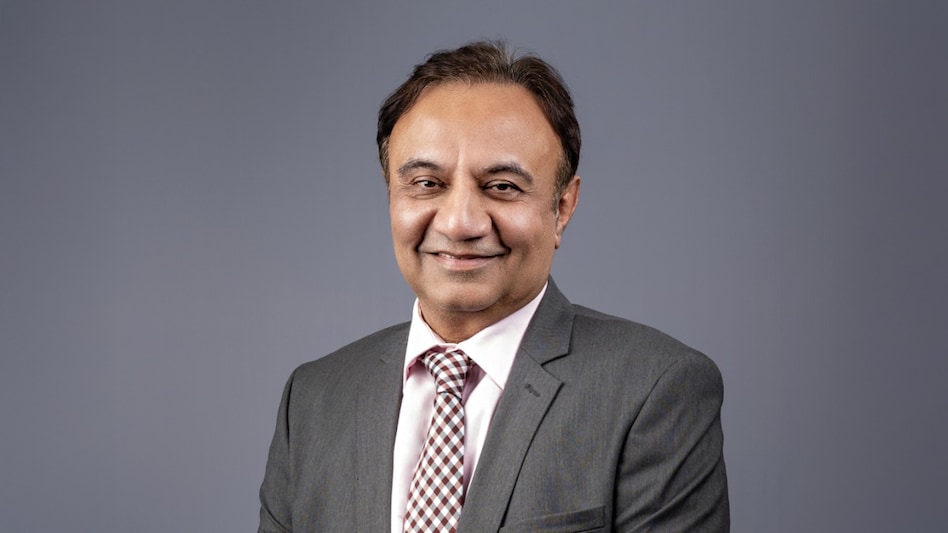
ICICI Bank, a five-time winner in the BT-KPMG Best Banks and NBFCs Survey, continues to raise the bar under MD & CEO Sandeep Bakhshi.
Anand Adhikari
- Feb 28, 2026,
- Updated Feb 28, 2026 8:27 PM IST
As ICICI Bank turns 70, its journey, from a development finance institution to a bank, mirrors several defining leadership phases most prominently under N. Vaghul, who nurtured the institution; K. V. Kamath, who transformed it into a retail and technology giant; and now Sandeep Bakhshi, who restored its trust and durability.
Hey!
Already a subscriber? Sign In
THIS IS A PREMIUM STORY FROM BUSINESS TODAY.
Subscribe to Business Today Digital and continue enjoying India's premier business offering uninterrupted
only FOR
₹999 / Year
Unlimited Digital Access + Ad Lite Experience
Cancel Anytime
-
 Unlimited access to Business Today website
 -
 Exclusive insights on Corporate India's working, every quarter
 -
 Access to our special editions, features, and priceless archives
 -
 Get front-seat access to events such as BT Best Banks, Best CEOs and Mindrush
As ICICI Bank turns 70, its journey, from a development finance institution to a bank, mirrors several defining leadership phases most prominently under N. Vaghul, who nurtured the institution; K. V. Kamath, who transformed it into a retail and technology giant; and now Sandeep Bakhshi, who restored its trust and durability.
Advertisement
Bakhshi didn’t inherit a growth story but a trust deficit when the then MD & CEO, Chanda Kochhar, quit in 2018 amid charges of misconduct. One of his first decisions was ensuring the bank was process-led and not personality-led. He also initiated a balance sheet repair in what was one of the fastest clean-ups among large private banks; he reduced risky corporate exposure, scaled down international banking, and tightened underwriting discipline. He also initiated a culture reset by stressing growth with profitability.
These efforts have translated into the bank being the Bank of the Year jury award winner for the fifth time in a row. This year, it has won the Best Large Indian Bank award in the BT-KPMG Survey of India’s Best Banks and NBFCs. Under Bakhshi’s leadership, ICICI Bank has evolved into a low-profile organisation with emphasis on systems and institutional strength rather than individuals. There are no big promises, no dramatic narratives, just predictable execution. Proof of this lies in Bakhshi’s addresses in annual reports and investor calls, where he consistently emphasises the bank’s strategic focus on growing profit before tax, excluding treasury, through a 360-degree customer-centric approach and tapping opportunities across ecosystems and micro-markets.
Advertisement
“We continue to operate within the framework of our values to strengthen our franchise. Maintaining high standards of governance, deepening coverage, and enhancing delivery capabilities with a focus on simplicity and operational resilience are key drivers for our risk-calibrated profitable growth,” said Bakhshi in a recent investor call.
The Star Performer
Under Bakhshi, the bank has been focusing on growing its loan portfolio in a granular manner with no specific targets for loan-mix or segment-wise loan growth. But certain segments have come up in the ladder.
For instance, in the last five years, the bank has grown its business banking segment—business and self-employed customers with turnover up to `750 crore—from a 12.3% share in the loan mix in March 2021 to 19.2% in FY25. “Business banking could be much larger than corporate banking over the next few years. This is true for us and for the industry as a whole. Historically, the business banking segment accounted for just 11–12% of the total credit in the banking industry,” says Sandeep Batra, Executive Director, ICICI Bank.
Advertisement
For ICICI Bank, this has been a story of the last decade—strong credit underwriting models tailored to the segment, enabling the entire branch network to serve business banking clients, and digital platforms driving deeper engagement.
In highly competitive business banking, the strategy is the same as in retail and corporate segments—a 360-degree customer approach—aiming to capture wallet share across credit, transaction banking, deposits, forex, and more. This drives profitability, as it is not a high-yield business based purely on lending. It supports growth not only in lending but also in fee income and current account balances.
“The growth in the business banking (SME finance) is seen at a macro level, where major banks reported strong growth in the SME segment as corporate credit reported single-digit growth,” ays Akshay Tiwari, AVP – Equity Research Analyst, Asit C Mehta Investment Interrmediates.
Business banking is also reflecting broader changes in the ecosystem. With demonetisation, digitisation, and goods and services tax, there has been increased formalisation of small and mid-sized businesses. The presence of credit bureaus has also helped. The portfolio is well secured with collateral and is highly diversified—by geography and industry—reducing concentration risk and making it behave more like a retail book than a corporate one, where a single default can have an outsized impact.
Advertisement
The market has huge potential. For instance, in FY24, MSMEs contributed about 30% to India’s GDP. The category also accounted for 45% of the country’s exports and is the largest employer with 241 million employees; 19% of s are owned by women.
The portfolio is well secured with collateral and is highly diversified—by geography and industry—reducing concentration risk and making it behave more like a retail book than a corporate one, where a single default can have an outsized impact.However, there are asset quality challenges in stressful situations
Gurvinder Juneja, Partner at Fortuna Asset Managers, says the only big challenge facing business banking in terms of risk in 2026 will be opex efficiency. “Compared to wholesale corporate lending, business banking relies heavily on human capital, so the bank will need to demonstrate that its digital stack will keep the cost-to-income ratio relatively constant as the loan mix moves towards business banking with fewer loans,” says Juneja.
Retail, Rural: One Roof
The bank has consolidated its retail and rural business groups under a unified structure. The combined retail and rural segment accounts for close to 60% of the loan book. “Income level matters more than location. For instance, a person earning Rs 20 lakh a year behaves similarly in both urban and rural settings,” says Batra.
Advertisement
On the unsecured side, two products—personal loans and credit cards—make up about 14% of the loan book.
After its regular annual inspection, the Reserve Bank of India (RBI) asked the bank to set aside Rs 1,283 crore as an additional buffer for a portion of its agricultural loans during the December quarter of FY26. The decision was taken was not because borrowers stopped paying or because the loans went bad but because some loans did not fully meet the RBI’s technical rules to be counted under priority sector lending.
Corporate Loan Mix
The bank’s domestic corporate book has shrunk from 23.45% to 20.4% over the last four years. The corporate portfolio now strictly includes companies with annual turnover above Rs 7.5 billion. Is this because there are not enough opportunities, or because the bank does not want to take risks?
Experts say large, well-run corporations with strong balance sheets have multiple sources of funding. The bank is active in transaction banking income—such as flows through current accounts—rather than focusing on loan growth per se. There is another lever that is bringing business. “Transaction banking is a large focus area for us, not just for corporates, but also for business banking. We were underinvested earlier; that is changing,” says Batra. Transaction banking focuses on making day-to-day financial operations simpler and more efficient for companies. Services include payments, collections, trade finance, foreign exchange, cash management, and supply chain finance, for businesses of all sizes.
Advertisement
Deposit Challenge
The bank’s current account and savings account (CASA) has stabilised around 38–40%. But ICICI Bank has the highest growth in CASA at 13.07%, almost double that of almost all large banks. Given the broader challenges in growing CASA, the bank expects this ratio to remain in the same range.
The bank attributes this stability to three factors. First, the steady expansion of its distribution network has widened access across geographies. Second, its digital platforms have emerged as strong acquisition and engagement tools, driving customer inflows and fund flows. Third, focused efforts in segments such as business banking have supported both loan growth and low-cost deposits.
Succession Challenge
Bakhshi has been re-appointed as Managing Director and CEO for another two years, from October 4, 2026, to October 3, 2028, following RBI approval. While the RBI caps the total leadership tenure across roles in a bank at 15 years, his continuation is constrained by the RBI’s retirement age of 70 years. By October 2028, Bakhshi will have less than two years remaining before hitting the RBI's age ceiling. That timeline makes it likely he will begin the succession process well in advance, ensuring a smooth transition and giving his successor adequate time to settle into the role before he steps down.Between January and December 2025, the stock has delivered single-digit returns of about 6%, clearly underperforming the BSE Bankex, which rose 18% during the same period.
Read more!