
Cash in Vogue: Currency-in-circulation hits Rs 37.2 lakh crore in FY25 vs Rs 14.5 lakh crore in FY15
Cash in Vogue: Currency-in-circulation hits Rs 37.2 lakh crore in FY25 vs Rs 14.5 lakh crore in FY15
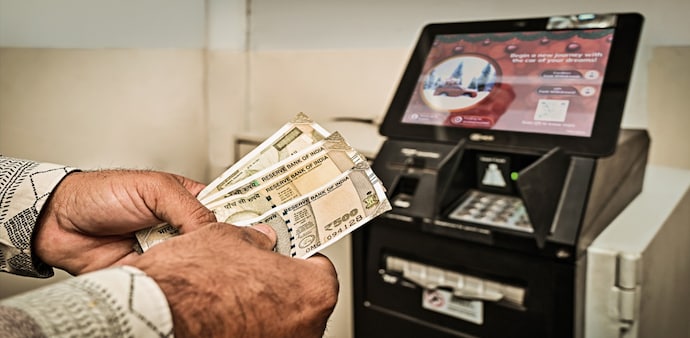
Cash is very much in vogue, and that's why the currency-in-circulation (CiC) stood at Rs 37.20 lakh crore in FY25, compared to Rs 14.5 lakh crore in FY15
Raghu Mohan
- May 19, 2025,
- Updated May 21, 2025 6:35 PM IST
Digital transactions are growing exponentially. Yet, India continues to deploy more automated teller machines (ATMs), and cash-in-transit (CiT) firms are moving tens of thousands of crores across the country every day. These validate the enduring relevance of cash in a country navigating both digital transformation and infrastructural diversity.
Hey!
Already a subscriber? Sign In
THIS IS A PREMIUM STORY FROM BUSINESS TODAY.
Subscribe to Business Today Digital and continue enjoying India's premier business offering uninterrupted
only FOR
₹999 / Year
Unlimited Digital Access + Ad Lite Experience
Cancel Anytime
-
 Unlimited access to Business Today website
 -
 Exclusive insights on Corporate India's working, every quarter
 -
 Access to our special editions, features, and priceless archives
 -
 Get front-seat access to events such as BT Best Banks, Best CEOs and Mindrush
Digital transactions are growing exponentially. Yet, India continues to deploy more automated teller machines (ATMs), and cash-in-transit (CiT) firms are moving tens of thousands of crores across the country every day. These validate the enduring relevance of cash in a country navigating both digital transformation and infrastructural diversity.
Advertisement
There exists an ecosystem to make cash transactions seamless. For you to pull out cash from an ATM, somebody has put it there. Or, when you pay cash at large retail outlets, it must be taken to a bank where it is sorted to be put back into circulation. This faceless business is carried by CiT firms. The volumes of cash handled are huge. They cart Rs 15,000-20,000 crore on our roads every day. This would not have been commercially viable if the popularity of cash had waned.
CASH HASN’T CASHED OUT
Cash is very much in vogue, and that’s why the currency-in-circulation (CiC) stood at Rs 37.20 lakh crore in FY25, compared to Rs 14.5 lakh crore in FY15. This was 11.24% of the gross domestic product (GDP) based on the Reserve Bank of India’s (RBI's) weekly statistical supplement for the fortnight ended March 28, 2025. According to data released by the International Monetary Fund, India's GDP doubled in size over the last ten years, and is expected to reach $4.27 trillion by the end of 2025 from $2.1 trillion in 2015.
Advertisement
The popularity of cash in India is even as transactions via the Unified Payments Interface (UPI) have skyrocketed over the years. March 2025 data puts the number of UPI transactions at 19.78 billion with a value of Rs 24.77 lakh crore, up 14% and 13%, respectively, over February. In March 2020 (at the time of the pandemic), these numbers were 799.54 million and Rs 1.33 lakh crore in value terms.
Now, it may appear counter-intuitive that both CiC and UPI transactions and their value are moving up. This is because the cash-versus-digital debate was posited as a binary to begin with. It is not so.
Secretary General of the Cash Logistics Association and former executive director, RBI, U. S. Paliwal, fleshes out the dynamics at play. According to him, while UPI offers convenience for a wide range of transactions (bill payments, online purchases, money transfers), it requires complex infrastructure and specific electronic devices. On the contrary, cash remains indispensable as part of the payments ecosystem when everything else fails, when there are calamities, cyber-attacks, pandemics, riots, power cuts, and a person has to do certain types of transactions. “More importantly, in rural and semi-urban areas or for small-ticket purchases in local markets, cash is used,” he says.
Advertisement
MORE ATMs
The popularity of cash can be established by looking at the ATM channel data. During demonetisation in November 2016, the ATM base stood at 225,000. It is 260,000 now. Between September 2023 and March 2024, requests for proposal (RFP) for ATMs topped 44,500 (more than the 40,000 ATMs added post-demonetisation). In April, Australian fintech firm Findi announced that it had orders for 7,000 ATMs. The importance of the ATM channel, a guzzler of cash, is set to go up. Anush Raghavan, President, of Cash Management Solutions, CMS Info Systems, says in FY24, the average monthly ATM cash withdrawals increased 5.51% to Rs 1.43 crore, “underscoring the pivotal role of cash in a dynamic, diverse payments ecosystem.” ATM deployments may increase now that the interchange fee (what a bank must pay when a customer uses the plastic issued by it on another bank’s ATM) has been hiked from Rs 17 to Rs 19. The charge after five transactions has been increased from Rs 21 to Rs 23. Also, every new bank branch must have at least one on-site ATM or a recycler, which allows a customer to withdraw and deposit cash. The cost of a cash transaction at a branch is about Rs 60; recyclers reduce it.
Advertisement
How is the branch story panning out? The RBI’s Report on Trend and Progress of Banking in India FY24 observes: “Despite fast-paced digitalisation in India, the number of commercial bank branches per lakh population increased 1.5 times during the period 2010 to 2023”. In FY24, we had 130,905 bank branches. Of the 5,379 new branches during this period, 41.9% were opened in centres with a population of less than 50,000. The central bank notes: “While banks are increasingly emphasising digital channels, physical branches remain the core of customer engagement.”
What is also to be watched out for is how CiTs shape up. As of date, banks outsource cash processing activities at their currency chests (CC) to CiTs.
The key thing is that the annual pace of increase in CiC has been slower due to the rapid deployment of digital payments in the economy
-PARAS JASRAI, ASSOCIATE DIRECTOR, INDIA RATINGS & RESEARCH
Managing CURRENCY
The process of currency management is also less known to the public. There are four currency presses in the country. Two are run by the Security Printing and Minting Corporation of India (SPMCIL), while two come under Mint Road’s wholly-owned arm, the Bharatiya Reserve Bank Note Mudran Pvt. Ltd. (BRBNMPL). SPMCIL’s facilities are in Nasik (Maharashtra) and Dewas (Madhya Pradesh) while BRBNMPL’s are in Mysuru (Karnataka) and Salboni (West Bengal).
Advertisement
Currency management is done through the RBI’s 19 Issue Offices (IOs) in Ahmedabad, Bengaluru, Belapur, Bhopal, Bhubaneswar, Chandigarh, Chennai, Guwahati, Hyderabad, Jaipur, Jammu, Kanpur, Kolkata, Lucknow, Mumbai, Nagpur, New Delhi, Patna, and Thiruvananthapuram. These IOs take delivery of freshly minted banknotes from the security presses and send them to CC locations. Commercial banks also maintain a network of CCs. There are also small coin depots. Interestingly, currency becomes a part of CiC only when it is taken out of CCs. The cash collected by the RBI as part of the cash reserve ratio— Rs 4 for every Rs 100 in deposits—remains in CCs.
This brings us to the question of whether the authorities would open the CC business itself or opt for a common currency chest management solution; back-channel talks had been held by CITs with the central bank. Doing so will take care of an irritant. Banks with CCs tend to privilege their ATMs over those who operate white-label ATMs (units that are owned and operated by non-bank entities).
While cash has not lost currency yet in India, that does not indicate that the digital plot has gone off the rails. “The key thing to note is that the annual pace of increase in CiC has been slower due to the rapid deployment of digital payments in the economy. CiC (growth) is projected to decline further in FY25 and FY26,” says Paras Jasrai, Associate Director, India Ratings & Research.
Advertisement
India requires multiple robust payment systems. The ongoing transition to a formalised economy and increasing consumption will collectively drive the growth of all forms of payments
-ANUSH RAOHAVAN, PRESIDENT CASH MANAGEMENT SYSTEMS, CMS INFO SYSTEMS
DIGITAL ON TRACK TOO
The RBI launched the Composite Digital Payments Index in January 2021 to track the growth and reach of digital payments. The index measures progress across five key areas: payment enablers, demand-side infrastructure, supply-side infrastructure, payment performance, and consumer focus.
The index is computed semi-annually with March 2018 as the base year. At the end of March 2024, it stood at 445.5 compared to 395.6 a year ago, driven by significant growth in payments performance and infrastructure. The RBI also found that the average value of retail digital payments fell to Rs 4,560 in March 2024 from Rs 8,769 in March, reflecting the growing popularity of digital modes for small payments.
And UPI is set to get a fillip. The RBI aims to boost flexibility in person-to-person (P2P) and person-to-merchant (P2M) payments. The limit for P2P UPI transactions is Rs 100,000. On P2M transactions it varies between Rs 200,000 and Rs 500,000. These ceilings will now be revised upwards after the RBI gave its nod, indicating a greater number of high-value transactions.
Read more!