
Clothes Maketh A Woman? Appearance Expectations At Workplace
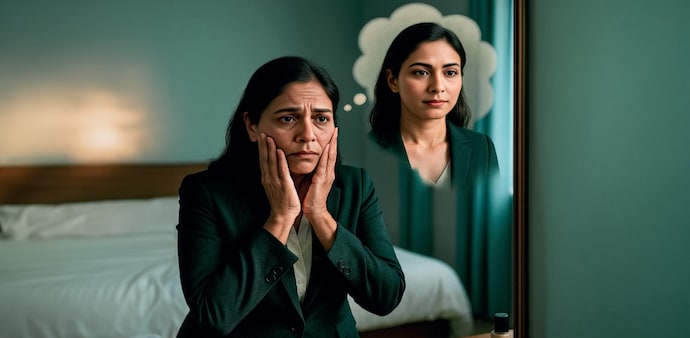
Appearance expectations don't always show up as written dress codes or grooming rules. More often, they seep into culture in quiet but powerful ways.
Sakshi Batra
- Dec 26, 2025,
- Updated Dec 26, 2025 12:04 PM IST
In corporate India’s ivory towers and buzzing boardrooms, a quiet tension lingers beneath the surface—one that has little to do with performance metrics or quarterly outcomes. It is the implicit expectation to “look the part.”
Hey!
Already a subscriber? Sign In
THIS IS A PREMIUM STORY FROM BUSINESS TODAY.
Subscribe to Business Today Digital and continue enjoying India's premier business offering uninterrupted
only FOR
₹999 / Year
Unlimited Digital Access + Ad Lite Experience
Cancel Anytime
-
 Unlimited access to Business Today website
 -
 Exclusive insights on Corporate India's working, every quarter
 -
 Access to our special editions, features, and priceless archives
 -
 Get front-seat access to events such as BT Best Banks, Best CEOs and Mindrush
In corporate India’s ivory towers and buzzing boardrooms, a quiet tension lingers beneath the surface—one that has little to do with performance metrics or quarterly outcomes. It is the implicit expectation to “look the part.”
For years, discussions around workplace equality have centred on pay gaps and leadership representation. Yet, when speaking to women across industries, another subtler question emerges: Are women still being evaluated, consciously or otherwise, on their appearance at work?
Advertisement
Sujaya Nag, Senior Vice President—HR, Brigade Group, calls the pressure very real but often invisible. “Across my years leading HR in India and overseas, I’ve seen how women carry an extra layer of scrutiny that men might not face. We hear it in coaching conversations—women second-guessing what to wear for a client meeting, wondering if they’ll look ‘too young’ or ‘too serious,” she says.
Appearance expectations do not always show up as formal rules. More often, they seep into culture in quiet but powerful ways.
Nag believes it could be a dress code interpreted through personal bias, a comment brushed off as ‘just feedback,’ or an assumption that grooming equals competence.
This silent pressure can start mounting up from the beginning of one’s career. “In my experience, entry-level professionals often receive subtle cues about ‘looking polished’ or ‘fitting into the culture’. These are not formal policies—they’re micro-messages that shape behaviour early on,” she adds.
Advertisement
Garima Mishra, Managing Director of Group Landmark, an automotive retail company, challenges the idea that looking good is a gendered burden. “The pressure on ‘look’ to me is generic, it’s gender-agnostic,” she says. “The first impression being the last impression has become even more relevant in today’s day and age where meetings are more result oriented,” she adds.
Her view disrupts a widely held narrative—that women bear a disproportionate weight of expectations to look good. Instead, she suggests, the pressure touches everyone, even though its manifestation may differ.
“The pressure isn’t evenly distributed, but it’s not absent for men either,” says Nag. “Appearance expectations exist for everyone, yet women often feel them more acutely because of the layered norms around professionalism and polish,” says Nag. For some women, she believes, this can chip away at confidence and influence choices about visibility. “I’ve seen talented professionals hesitate to take client-facing roles because they worried about not fitting the mould,” she adds.
Advertisement
Punita Kumar Sinha, Founder, Managing Partner and Chief Investment Officer of Pacific Paradigm Advisors, an independent investment advisory firm, believes it is more complicated for women to figure out how to dress in senior positions depending on the nature and culture of the organisation.
Many women professionals also argue that societal beauty standards create a heavier load for them—one that intersects with biases around age, body type, and femininity.
“The desire to look good has become so important that people see no harm in going under the knife, if need be. Beauty standards have been redefined in the modern age vis-à-vis when we were growing up,” says Mishra.
The bigger question would be perhaps to understand if unconscious biases about how one looks influence hiring and promotions as well.
Some might argue that while meritocracy is ideal, unconscious biases slip through the cracks.
According to Nag, it’s more than most organisations would like to admit. “Bias works quietly; it shapes perceptions of who seems ‘presentable,’ ‘commanding,’ or ‘trustworthy,’ often based on subjective cues rather than capability,” she adds.
Advertisement
Mishra concurs. When asked about how much looks influence hiring decisions, she says, “Biases about looks impact hiring and client assignments greatly, but if this affects promotions, then that is vanity.”
Most companies outline certain appearance expectations, though not always explicitly about beauty.
For those entering the workforce and feeling the pressure to appear perfect—through social media presence, profile images, video-call frames, or curated LinkedIn aesthetics—it is important to recognise that appearance does retain a degree of influence in corporate India, though the burden is gradually diminishing.
While women continue to contend with narrower beauty expectations, men too are increasingly experiencing similar pressures. The critical task ahead for India Inc. is not to eliminate appearance norms altogether but to ensure they do not overshadow competence, potential, or inclusivity.
In the end, professionalism should be worn like a well-tailored suit—assured, poised, and never at the expense of one’s authentic self.
@sakshibatra18
Read more!