
Here’s how Tata Chemicals is building a resilient, future-ready business
Here’s how Tata Chemicals is building a resilient, future-ready business
Tata Chemicals is transitioning towards cleaner energy sources, with a focus that has evolved from conserving energy to natural resources.
Krishna Gopalan
- Jun 11, 2026,
- Updated Jun 11, 2026 6:46 PM IST
Tata Chemicals is one of the largest producers of soda ash globally, with a manufacturing footprint across four continents. For the uninitiated, soda ash is chemically known as sodium carbonate and is an inorganic compound used in a host of applications, including manufacturing soaps and detergents, glass, and in metallurgy. Apart from this, the company produces salt and specialty products, including crop protection and seeds. It has been recognised as the Most Sustainable Company in Chemicals in the category of Sectoral Excellence in Manufacturing in this year’s BT India’s Most Sustainable Companies.
Advertisement
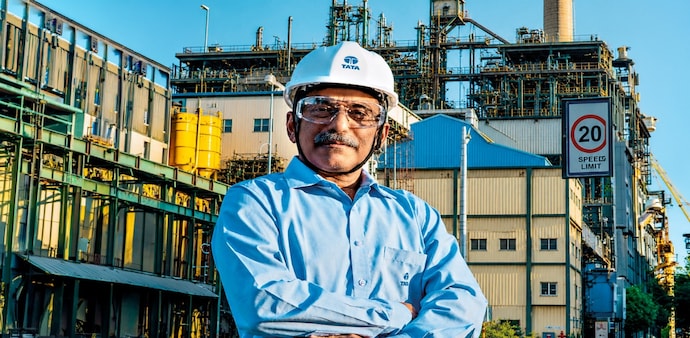
In his compact room, Narasimha Kamath V, Tata Chemicals’ Chief Manufacturing Officer, speaks of how sustainability “has been integral to the strategy since its inception.” He has spent over three decades with the organisation, with almost all that time at the Mithapur plant (in Gujarat), before moving to Mumbai.
Tata Chemicals’ history goes back to 1939, and Kamath picks out three phases in the sustainability journey. The first one was when the entire Okhamandal region faced a drought, and the company adapted its operations by replacing fresh water with seawater. “During the middle years, we built this approach to design our own multi-effect evaporators to process brine (highly concentrated salt mixed with water), to produce water and salt,” he explains. This facility came to be known as the make-up water plant, where water is treated as the primary product and salt is the by-product. While water was used for steam generation, the salt was iodised and, over time, became a key product for Tata Chemicals. “Since 2015, we have not used groundwater or surface water from the lake for our process needs,” adds Kamath.
Advertisement
During the 1990s, Tata Chemicals developed a patented technology to filter solids from wastewater generated by the soda ash plant. These were then used as raw material for the cement operation. “This plant was specifically designed to utilise rejected limestone from soda ash production, fly ash from the cement plant and filter solids from soda ash wastewater, creating a highly circular system. This level of circularity is rare and distinguishes the facility from most soda ash plants globally,” says Kamath.
According to R Mukundan, MD & CEO, Tata Chemicals Limited, sustainability is guided by the Tata Group sustainability initiative, which is steered under the umbrella of Project Aalingana (the Tata Group’s approach to planet resilience and its aspiration to be net zero by 2045). “It is driven by a vision to protect the world and build the future through technologies of tomorrow. This vision is rooted in our value chain through resource efficiency, emissions reduction and responsible water management,” he says. At the core of all this is strong governance and transparent reporting. “As we move forward, we remain steadfast in our commitment to responsible growth that delivers long-term value creation while meaningfully supporting climate and sustainability ambitions,” he emphasises. To Mukundan, the BT recognition reflects the belief that sustainable practices are fundamental to building resilient, future-ready businesses.
Advertisement
Kamath emphasises that the final phase for Tata Chemicals is the transition towards cleaner energy sources. Its focus has evolved from conserving energy to moving towards natural resources. “Now, it is about embracing cleaner energy solutions such as solar and biomass. We are also evaluating and implementing advanced solutions that include green soda ash technologies, solar thermal and carbon capture,” he says.
This is not without its fair share of challenges – a big one is that operations are highly energy-intensive and include evaporation, drying and stripping that are still dependent on steam generated from fossil fuels. Moving to cleaner sources requires adapting existing boilers for biomass and converting steam-driven equipment to run on renewable electricity.
With modern technology, a lot can be done at scale. Tata Chemicals is now designing its new projects around green energy solutions. That includes mechanical vapour recompression (recycling waste heat) to replace multiple-effect evaporators. At the Cuddalore plant (in Tamil Nadu), existing grid power agreements are being converted to greener power sources, apart from transitioning to captive solar power at other locations.
@krishnagopalan
Tata Chemicals is one of the largest producers of soda ash globally, with a manufacturing footprint across four continents. For the uninitiated, soda ash is chemically known as sodium carbonate and is an inorganic compound used in a host of applications, including manufacturing soaps and detergents, glass, and in metallurgy. Apart from this, the company produces salt and specialty products, including crop protection and seeds. It has been recognised as the Most Sustainable Company in Chemicals in the category of Sectoral Excellence in Manufacturing in this year’s BT India’s Most Sustainable Companies.
Advertisement
In his compact room, Narasimha Kamath V, Tata Chemicals’ Chief Manufacturing Officer, speaks of how sustainability “has been integral to the strategy since its inception.” He has spent over three decades with the organisation, with almost all that time at the Mithapur plant (in Gujarat), before moving to Mumbai.
Tata Chemicals’ history goes back to 1939, and Kamath picks out three phases in the sustainability journey. The first one was when the entire Okhamandal region faced a drought, and the company adapted its operations by replacing fresh water with seawater. “During the middle years, we built this approach to design our own multi-effect evaporators to process brine (highly concentrated salt mixed with water), to produce water and salt,” he explains. This facility came to be known as the make-up water plant, where water is treated as the primary product and salt is the by-product. While water was used for steam generation, the salt was iodised and, over time, became a key product for Tata Chemicals. “Since 2015, we have not used groundwater or surface water from the lake for our process needs,” adds Kamath.
Advertisement
During the 1990s, Tata Chemicals developed a patented technology to filter solids from wastewater generated by the soda ash plant. These were then used as raw material for the cement operation. “This plant was specifically designed to utilise rejected limestone from soda ash production, fly ash from the cement plant and filter solids from soda ash wastewater, creating a highly circular system. This level of circularity is rare and distinguishes the facility from most soda ash plants globally,” says Kamath.
According to R Mukundan, MD & CEO, Tata Chemicals Limited, sustainability is guided by the Tata Group sustainability initiative, which is steered under the umbrella of Project Aalingana (the Tata Group’s approach to planet resilience and its aspiration to be net zero by 2045). “It is driven by a vision to protect the world and build the future through technologies of tomorrow. This vision is rooted in our value chain through resource efficiency, emissions reduction and responsible water management,” he says. At the core of all this is strong governance and transparent reporting. “As we move forward, we remain steadfast in our commitment to responsible growth that delivers long-term value creation while meaningfully supporting climate and sustainability ambitions,” he emphasises. To Mukundan, the BT recognition reflects the belief that sustainable practices are fundamental to building resilient, future-ready businesses.
Advertisement
Kamath emphasises that the final phase for Tata Chemicals is the transition towards cleaner energy sources. Its focus has evolved from conserving energy to moving towards natural resources. “Now, it is about embracing cleaner energy solutions such as solar and biomass. We are also evaluating and implementing advanced solutions that include green soda ash technologies, solar thermal and carbon capture,” he says.
This is not without its fair share of challenges – a big one is that operations are highly energy-intensive and include evaporation, drying and stripping that are still dependent on steam generated from fossil fuels. Moving to cleaner sources requires adapting existing boilers for biomass and converting steam-driven equipment to run on renewable electricity.
With modern technology, a lot can be done at scale. Tata Chemicals is now designing its new projects around green energy solutions. That includes mechanical vapour recompression (recycling waste heat) to replace multiple-effect evaporators. At the Cuddalore plant (in Tamil Nadu), existing grid power agreements are being converted to greener power sources, apart from transitioning to captive solar power at other locations.
@krishnagopalan
Read more!