
How AWL Agri Business engineered a sunflower-to-mustard oil turnaround
How AWL Agri Business engineered a sunflower-to-mustard oil turnaround
India's largest edible oil company, AWL Agri Business, is sharpening its focus on branded staples and quick commerce.
Riddhima Bhatnagar
- Sep 9, 2025,
- Updated Sep 9, 2025 5:12 PM IST
For AWL Agri Business, FY25 was marked by a big change in ownership. In July, Wilmar International raised its stake in the firm, formerly Adani Wilmar, to 64% after a Rs 7,150 crore deal, becoming the majority shareholder, while the Adani family’s stake fell to 11%.
Hey!
Already a subscriber? Sign In
THIS IS A PREMIUM STORY FROM BUSINESS TODAY.
Subscribe to Business Today Digital and continue enjoying India's premier business offering uninterrupted
only FOR
₹999 / Year
Unlimited Digital Access + Ad Lite Experience
Cancel Anytime
-
 Unlimited access to Business Today website
 -
 Exclusive insights on Corporate India's working, every quarter
 -
 Access to our special editions, features, and priceless archives
 -
 Get front-seat access to events such as BT Best Banks, Best CEOs and Mindrush
For AWL Agri Business, FY25 was marked by a big change in ownership. In July, Wilmar International raised its stake in the firm, formerly Adani Wilmar, to 64% after a Rs 7,150 crore deal, becoming the majority shareholder, while the Adani family’s stake fell to 11%.
The firm reported a sharp turnaround with a whopping 582% jump in profit after tax (PAT), the highest increase in the BT500 India’s Most Profitable Companies list for FY25, while net sales rose 24% to Rs 63,672 crore.
Advertisement
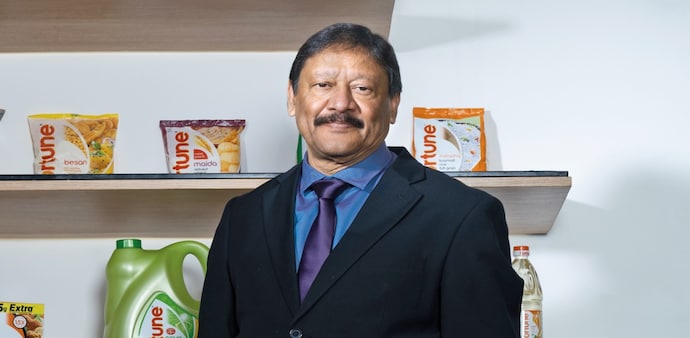
Angshu Mallick, Managing Director and Chief Executive Officer of AWL Agri Business, attributes this resilience to a unique blend of global expertise and local execution. He insists that operations remain unchanged as AWL continues to use Adani’s ports and logistics infrastructure while strengthening its own supply chain.
“Wilmar gives us a global understanding of the edible oil supply chain and pricing trends. Our multi-oil portfolio lets us switch between oils during shortages or price spikes and our distribution strength ensures our brand reaches every corner of India,” he says.
Mallick points out that trust and brand value are AWL’s biggest assets.
Since its initial public offering in 2022, AWL has invested nearly Rs 1,000 crore annually across oil, food and industrial segments. One of its key bets is converting India’s largely loose staples market into one dominated by branded packaged goods. “In the next 10 years, there will be a marked shift from loose to packed staples. We are planning capacity today to be ready for that demand,” says Mallick.
Advertisement
The shift towards branded, he believes, is accelerating thanks to quick commerce. “Quick commerce platforms help strong brands as consumers tend to choose trusted brands on these platforms. This could rapidly accelerate the shift from loose to packed staples,” says Mallick.
In the oils business, AWL is adding a 600 tonne-per-day sunflower oil refinery at Hazira to serve Mumbai, while also expanding mustard oil capacity. Beyond food, it is scaling up its industrial verticals with Rs 700 crore oleochemicals plant in South India.
However, demand has been uneven, Mallick notes. “Rural markets, which make up 35% of AWL’s sales, have grown steadily thanks to four consecutive good harvests and a supportive monsoon. When a farmer sees four good crops back-to-back, he gains confidence to spend,” says Mallick. Urban demand, however, is under strain. He is hopeful that some relief may come from recent tax benefits, softer inflation in essentials and possible GST cuts during the festive season.
Advertisement
Market watchers believe AWL’s growth story is going strong but highlight a few challenges. Deven Choksey, MD at DRChoksey FinServ, backs the fast-moving consumer goods (FMCG) sector, pointing out that volumes are growing well. “Wilmar brings strategic depth, but due to high competition, AWL will need to keep investing heavily in brand building and distribution to take a share from HUL, ITC, Tata Consumer and Marico.” Besides, edible oil, AWL’s largest segment, is vulnerable to volatility, says Choksey.
G. Chokkalingam, Founder and Chief Investment Officer at Equinomics Research, calls corrections a buying opportunity, citing tight working capital and low debt. “Its working capital discipline is notable, with receivables plus inventories at just 17% of annual sales,” he adds. At 25 times its FY26 earning per share, valuations look attractive, he adds. Plus, edible oil is a perennially growing business, and the downside is priced in.
@Riddhima76
Read more!