
How Finance Minister Nirmala Sitharaman heralded the winds of change in the Indian economy
How Finance Minister Nirmala Sitharaman heralded the winds of change in the Indian economy
Breaking the so-called perceptions and global trends, India not only has a woman Finance Minister but a crop of female officials leading economic policymaking.
Surabhi
- Dec 15, 2025,
- Updated Dec 15, 2025 8:42 PM IST
For generations, it has been difficult for women to break the so-called glass ceiling in finance. It’s been rarer still to spot a woman in economic governance. Even now, across the world, only a few countries have women finance ministers and central bank governors.
Hey!
Already a subscriber? Sign In
THIS IS A PREMIUM STORY FROM BUSINESS TODAY.
Subscribe to Business Today Digital and continue enjoying India's premier business offering uninterrupted
only FOR
₹999 / Year
Unlimited Digital Access + Ad Lite Experience
Cancel Anytime
-
 Unlimited access to Business Today website
 -
 Exclusive insights on Corporate India's working, every quarter
 -
 Access to our special editions, features, and priceless archives
 -
 Get front-seat access to events such as BT Best Banks, Best CEOs and Mindrush
For generations, it has been difficult for women to break the so-called glass ceiling in finance. It’s been rarer still to spot a woman in economic governance. Even now, across the world, only a few countries have women finance ministers and central bank governors.
Globally, women head the finance ministry in only a handful of countries, including Australia, Japan and the UK. The President of the European Central Bank is Christine Lagarde, and the International Monetary Fund (IMF) is led by Kristalina Georgieva as its Managing Director. Gita Gopinath was associated with the IMF till recently, first as its Chief Economist and later as the First Deputy Managing Director. She has now moved back to academia.
Advertisement
Over the past few years, India, too, has seen a wave of change. The country’s finance minister is a woman, so are some of the top policymakers in the finance ministry and the Reserve Bank of India (RBI). The crop of women at the top in economic wings of the government is a welcome change. Though the public sector has pay parity between men and women, and equal metrics for promotion, women say they are often relegated to “softer sectors” such as social welfare, while core economic ministries remain the preserve of their male colleagues. “There is always a boys’ club at play. In public facing roles or in postings such as district collectors, even local stakeholders often say they are more comfortable dealing with male officials,” recalls a senior bureaucrat.
Advertisement
Economist Indira Rajaraman and former Professor Emeritus at NIPFP makes two points on women in policy making and governance and said, “Any woman at any policy level is functioning fundamentally in a patriarchal world. Even a woman Prime Minister, who is at the top of decision making in the executive arm of government is functioning in a patriarchal world where the leaders of other countries are male for the most part. As a result, women are a minority in leadership roles and they face the consequences of being in that minority and the traditional perceptions of women as being soft and not as fierce or as strong as men,” she says.
Advertisement
The benefits of putting women in charge of economic policymaking are clear. Rajaraman further points out that reservation for women in Gram Panchayat Councils has led to a remarkable functioning all over the country. “Gram Panchayat Council with 30% reservation of women, which is now at 50% in many states, has worked very well. They have constitutional support for the gender balance that they have, and it has become very widely accepted,” she says, adding that while having women as Sarpanch does not change anything, but 50% representation at the Council level for women makes a huge difference. “As council members, women can express forcefully their preferences for local services such as managing waste or dealing with contaminated water,” she points out.
In their own way, each of these women is leaving an indelible mark on the economy.
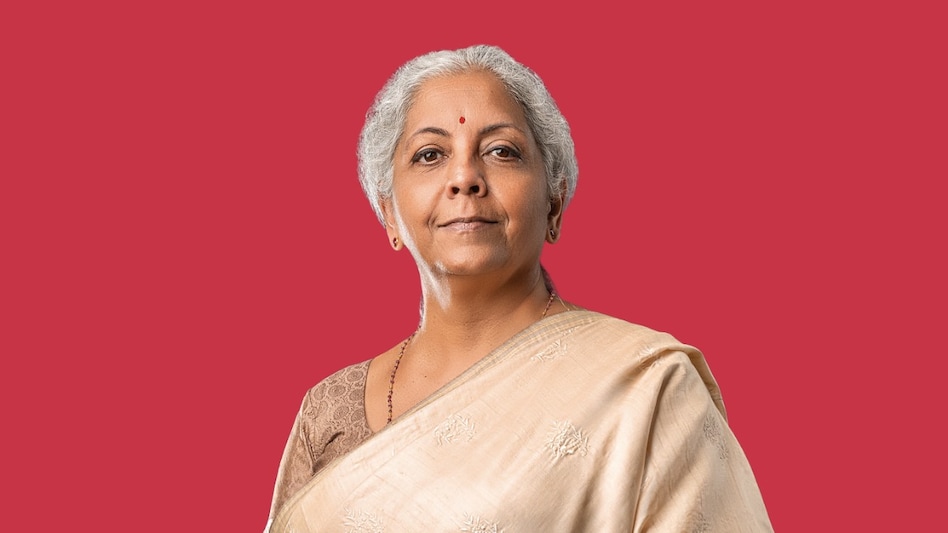
Nirmala Sitharaman has been Union Finance and Corporate Affairs Minister since 2019. She is now the longest continuously serving Finance Minister, helming the economy through the troughs of the Covid-19 pandemic and lockdowns and placing it firmly on a growth trajectory that has managed to withstand external headwinds. She is credited with several reforms, the most recent being the huge cuts in income tax rates for individuals and rationalisation of the goods and services tax. She has presented a record eight consecutive Budgets.
Advertisement
As if taking a lead, in a first, the Centre has appointed Anuradha Thakur, a 1994-batch IAS officer of the Himachal Pradesh cadre, as Secretary of the Department of Economic Affairs (DEA) in the Finance Ministry. Thakur, previously Additional Secretary in the Ministry of Corporate Affairs, was appointed Officer on Special Duty in the DEA in April and succeeded Ajay Seth when he retired on June 30.
The role of the DEA Secretary is very crucial. The person is responsible for managing the economy and formulating policies that will impact areas as varied as growth and inflation, capital markets, infrastructure financing and sustainable finance. The Secretary is also in charge of managing relations with international financial agencies, coordinating and preparing the Union Budget, and liaising with regulators like the Securities and Exchange Board of India and the RBI.
The hope is that this will not be a flash in the pan and more women will continue to be appointed to roles for economic policymaking.
-DAKSHITA DAS,FORMER MD AND CEO, NATIONAL HOUSING BANK
For instance, the economic liberalisation in 1991, led by Finance Minister Manmohan Singh, was overseen by the then DEA Secretary Montek Singh Ahluwalia. During the demonetisation of 2016, DEA Secretary Shaktikanta Das oversaw the replacement of currency notes. Das went on to become the RBI Governor and is now Principal Secretary to the Prime Minister.
Advertisement
Other senior women officials in the ministry are Anu P. Mathai, Additional Secretary, DEA, and Parama Sen, Additional Secretary (Personnel), Expenditure.
Women officers at Secretary-level posts in the finance ministry have been few and far between. Sushma Nath was appointed Secretary in the Department of Expenditure way back in 2008 and went on to become the country’s first woman Finance Secretary. Later, in 2015, Anjali Chib Duggal was appointed Secretary of the Department of Financial Services. Ila Patnaik, who is Chief Economist at the Aditya Birla Group, served as the Principal Economic Adviser in the finance ministry in 2014-15.
Dakshita Das, former Managing Director and CEO of the National Housing Bank, who worked in the finance ministry extensively with a long stint as Director (Budget), DEA, and later as Additional Secretary, Department of Financial Services, says before the current crop, the ministry had key women functionaries, along with the then Expenditure Secretary Sushma Nath, way back in 2008-09. “At that time, Joint Secretary Budget Loretta Vaz and a lot of officials in the Budget Division were women,” she recalls, noting that few women have been posted in crucial roles in the ministry after that.
Advertisement
“These are very demanding posts, and one needs to be on the ball at all times. One needs to read and catch up on contemporary trends and developments, stay late and be prepared to deal with dynamic changes,” she says, adding that they also need to navigate these traditional male bastions well.
The Ministry of Corporate Affairs is also headed by a woman, Deepti Gaur Mukherjee, a 1993 batch IAS officer of the Madhya Pradesh cadre. She was appointed to the post in August 2024. She has led the rollout of the flagship Pradhan Mantri Internship Scheme. She has also been instrumental in drafting the amendments to the Insolvency and Bankruptcy Act and is taking forward efforts to scale up Indian professional services firms on the lines of the Global Big Four.
In Mumbai, the country’s financial capital, Poonam Gupta is one of the four Deputy Governors of the Reserve Bank of India. She was appointed this April and is the first woman in that role after 14 years. Before her, there have been only three women DGs in the RBI—K.J. Udeshi (2003-2005), Shyamala Gopinath (2004-2009), and Usha Thorat (2005-2010). Since its inception 90 years ago, the RBI has not had a female Governor.
An economist by training, Gupta oversees key portfolios at the RBI, including monetary policy, economic policy and research, financial stability and financial markets and research. Prior to her latest assignment, she headed the Delhi-based economic think tank National Council of Applied Economic Research, where she was appointed Director General in 2021, the first woman to hold that position.
Meanwhile, another woman, T.C.A. Kalyani, is the Controller General of Accounts, in charge of accounting for both the Centre and states.
Women are a minority in leadership roles and face the consequences of the traditional perception of being soft and not as fierce as men
-INDIRA RAJARAMAN,ECONOMIST AND FORMER PROFESSOR EMERITUS, NIPFP
India’s competition regulator, the Competition Commission of India, is also headed by a woman—Ravneet Kaur. Over the past two-and-a-half years, she has shown that she is clearly the person for the job—be it her handling of investigations against Big Tech firms or her work on digital markets and competition.
The National Sample Survey (NSS) is headed Geeta Singh Rathore. As Director General of NSS, Rathore is leading a nearly 3,000-strong workforce and 5,000 contract workers, who are responsible for collecting and compiling the much-needed data required for policymaking. At present, the NSS is working on 13 surveys. “Providing almost real-time and good quality data are my key priorities,” says Rathore.
While it’s crucial that the best person is chosen for a job, conversations with women bureaucrats make it clear that their representation in economic portfolios remains thin, especially at the top.
Das points out that this is a challenge not only in the government but also in the private sector, where only a few women rise to the CXO level. “The hope is that this will not be a flash in the pan and more women will continue to be appointed to roles for economic policymaking,” she says.
The impressive precedence now set will surely leave a lasting impact in the corridors of power and women will hopefully no longer be seen as the second sex.
@surabhi_prasad
Read more!