
How Holding Steady Has Helped Bank of Maharashtra
Bank of Maharashtra's mantra of ensuring profitability without compromising credit quality has helped it stay ahead of the pack.
Amit Mudgill
- Mar 1, 2026,
- Updated Mar 1, 2026 5:03 PM IST
With gross non-performing assets (NPAs) at decadal lows and capital adequacy near record highs, a bank’s success hinges on its ability to sustain earnings, maintain credit discipline and leverage technology for cost efficiency, particularly in an easing rate cycle. These factors determine whether a lender can absorb margin pressure while delivering steady growth.
Hey!
Already a subscriber? Sign In
THIS IS A PREMIUM STORY FROM BUSINESS TODAY.
Subscribe to Business Today Digital and continue enjoying India's premier business offering uninterrupted
only FOR
₹999 / Year
Unlimited Digital Access + Ad Lite Experience
Cancel Anytime
-
 Unlimited access to Business Today website
 -
 Exclusive insights on Corporate India's working, every quarter
 -
 Access to our special editions, features, and priceless archives
 -
 Get front-seat access to events such as BT Best Banks, Best CEOs and Mindrush
With gross non-performing assets (NPAs) at decadal lows and capital adequacy near record highs, a bank’s success hinges on its ability to sustain earnings, maintain credit discipline and leverage technology for cost efficiency, particularly in an easing rate cycle. These factors determine whether a lender can absorb margin pressure while delivering steady growth.
Advertisement
Bank of Maharashtra (BoM) ticks most of these boxes. As a result, it has been picked as the Best Mid-Sized Bank in the BT-KPMG Best Banks and NBFCs Survey.
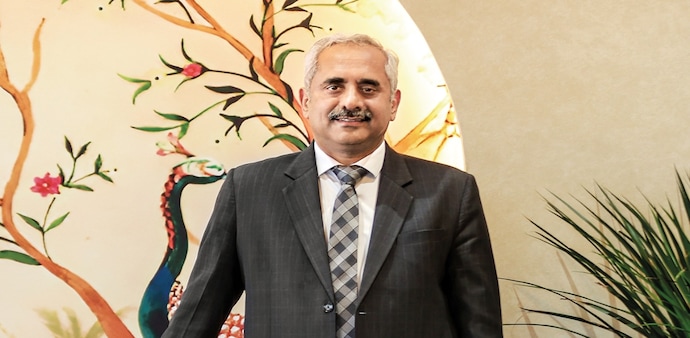
Growth with profitability, without compromising on quality, remains BoM’s mantra, says MD and CEO Nidhu Saxena. He tells BT that the lender maintained its focus on low-cost deposits, while paring a large portion of high-cost bulk deposits and exploring alternative funding sources to support profitable growth.
Saxena says customer centricity remained at the core of product development initiatives. Digital handholding solutions such as the Zen Lyfe mobile app saw lifetime-high registrations, while the recently launched Global Edge Savings account was received well. Other initiatives included the introduction of Video KYC and the deployment of data analytics, process automation and API-led architectures to improve operational efficiency.
Advertisement
“Our bank has opened 600-plus branches in the last three financial years, with an additional 116 branches in the current financial year. The bank is executing a focused expansion plan under Project 321, where we are opening 321 new branches within 18 months,” he adds.
BoM’s performance is particularly impressive since falling interest rates typically compress net interest margins (NIMs), making earnings quality and fee income diversification vital. BoM’s NIM remained resilient at 3.87% in the December quarter, compared with 4% for FY25, 3.92% for FY24 and 3.56% for FY23.
Saxena says the bank continued to maintain a high CASA (Current Account and Savings Account) share in total deposits, adding that high-cost bulk deposits are not encouraged and the focus remains on low-cost funding.
Advertisement
BoM’s gross NPA ratio has stayed below 2% in FY24, FY25 and so far in FY26, while capital adequacy stood at 17.06% and provisioning coverage at 98.41% as of December 31, 2025.
Return on assets improved to 1.83% in the first nine months of FY26, from 1.75% in FY25, 1.5% in FY24 and 1.1% in FY23. Return on equity for the same period stood at 22.30%.
Over the past four to six quarters, BoM has shown marked improvement in profitability and asset quality, says Saurabh Jain, Head of Fundamental Research at SMC Global Securities. He says NIM had improved to nearly 4%, reflecting better yield management despite rate pressures. Improved asset quality was supported by disciplined underwriting and recoveries, while the bank’s focus on retail and MSME lending diversified its portfolio.
BoM's three-year compounded annual growth rate (CAGR) in loans and advances stood at 21.64%, compared with 11-26% for rivals like IDBI Bank, Indian Overseas Bank, Federal Bank, UCO Bank, Central Bank of India, IDFC First Bank and YES Bank.
Advertisement
Total deposit growth recorded a three-year CAGR of 14.93%, against 6-34% for the same peer set. Fee income grew 14.82%, compared with 8-36% for peers, while operating profit rose 24.34%, beating all peers except IDFC First Bank.
Dhananjay Sinha, CEO and co-head of institutional equities and research at Systematix Group, says the bank has managed the downward rate cycle well and is not facing any major stress on its book, with gross slippages improving significantly and net NPAs steadily declining. Advances growth remained well above industry levels, while the loan-to-deposit ratio stood at a comfortable 83%.
Following a recent offer for sale, the bank met minimum public shareholding norms, with government holding at 73.6%.
Looking ahead, Ventura Securities said BoM had guided for a net interest margin of 3.75% in the coming quarters, while aiming to keep credit costs and slippages below 1%, maintain CASA above 50% and keep the RAM portfolio near its targeted mix.
Saxena says the retail segment contributed 26-27% to total advances, driven by home, gold and vehicle loans.
Key risks for the bank include margin compression in a falling rate cycle, competition from larger private banks and potential stress in MSME exposures if economic conditions weaken, Jain says. A relatively higher share of institutions in the bank’s CASA is a factor to be watched, Sinha adds.
Advertisement
For its part, the bank is firmly focused on the future and is betting on green energy and clean transportation financing.
@amit_mudgill
Read more!