
How improving profitability is reviving investor interest in agritech
Fresh funding, improving profitability and emerging technologies are reviving investor interest in agritech. Has the sector finally found a formula that can help it scale up sustainably?
Palak Agarwal
- Jul 23, 2026,
- Updated Jul 23, 2026 2:03 PM IST
India is home to one of the world’s largest agricultural workforces. The result: Nearly half the country’s population depends on agriculture, cultivating fragmented holdings that average just three acres. This has been a challenge for the new generation of entrepreneurs looking to empower farmers.
Agritech will have truly taken root in India when we have a couple of public companies and widespread farmer adoption of new technologies, new value chains and new platforms.
-Mark Kahn,Managing Partner, Omnivore
The first wave of agritech start-ups, from 2013 to 2019, were hit by the funding winter that saw venture capital dry up across sectors. Now, the tide is turning. Encouraged by fresh capital—such as Arya.ag’s $80-million fundraise and AgroStar’s $30-million round—and profitability milestone for DeHaat, the sector is betting on a different model. This time, the focus is on a deep-tech plus infrastructure-led play, rather than the sector as a whole. But the fundamental question remains: Can technology truly transform a sector defined by structural realities?
Advertisement
As Mark Kahn, Managing Partner at Omnivore, a venture capital firm based in Mumbai, puts it, “the death of agri-tech was greatly exaggerated.” The question is not whether agritech can attract capital but whether it has finally built models that can scale across a landscape of 146 million smallholders, where success means at least 50% adoption rate.
The Great Correction
The agri-tech sector has a complex value chain with two distinct endpoints: the farmer, who produces the goods, and the consumer, who ultimately purchases them. Agritech start-ups have historically targeted different parts of this chain—either upstream (the farmer) or downstream (the buyer). However, the fundamental challenge lies in the fact that the customers at each end have different needs and economic realities.
Advertisement
Farmers operate on thin margins, which limits their willingness and ability to pay for new solutions. In contrast, the consumer side presents a diverse market with multiple segments and a greater capacity for expenditure. This disparity became evident as the sector evolved, particularly 2011-12 onwards.
The wave of agritech ventures like BharatAgri and Greenikk focused on the farmer. They promised to improve yields and economic value through better inputs, equipment, and advisory services.
The core problem, however, was not just a lack of awareness or resistance to change; it was adoption. “Everyone was in this race trying to sell something to the farmer... but all the interventions increased the cost of production,” says Vipul Patel, Partner, Seed Funding at IIMA Ventures, which has agritech start-ups like Ecozen, Stellapps, and Bijak in its portfolio.
Advertisement
The economics, however, didn’t add up for many farmers because the evidence was often lacking.
“The farmer wants to see results in that particular farming cycle,” explains Patel, adding that if a product fails to deliver a clear, short-term benefit, adoption remains dismally low. This, combined with the inherent complexity of Indian farming and the friction created by small landholdings, led to widespread struggle.
The experience forced both founders and investors to rethink what could work. Kahn says the issue was not that agriculture lacked opportunity but that many early ventures were built on flawed assumptions.
As ecosystem experts point out, the outcome of this struggle was a natural selection of business models. Many start-ups failed. Some managed to survive but only by becoming traditional, niche companies selling specific tools. However, the more resilient ventures learnt and pivoted. They began to expand their focus from purely upstream solutions to a more horizontal, integrated model that spans the entire value chain.
One of the prominent examples of this evolution is Patna-based DeHaat, backed by investors like Temasek, Sequoia, and Prosus. Speaking with Business Today, Shashank Kumar, co-founder and CEO of DeHaat, says that over the years, the company has expanded beyond inputs and advisory to include market linkages, warehousing, financing and insurance, creating multiple touchpoints across the agricultural ecosystem.
Advertisement
Over the years, the company has expanded beyond inputs and advisory to include market linkages, warehousing, financing and insurance, creating multiple touchpoints across the agricultural ecosystem.
-Shashank Kumar,co-founder and CEO, DeHaat
“It’s a crop-agnostic and service-agnostic platform where farmers get access to the entire bundle of key services—from inputs to market access, warehousing, financing and insurance,” says Kumar.
In 2024, the company expanded further downstream with the launch of DeHaat Honest Farms, a consumer brand for food products. Kumar says the objective was to create access to premium consumer markets for farmers, reflecting a broader trend of agritech companies moving beyond farm services and into branded consumer products.
The scale of the model is also reflected in DeHaat’s financial performance. According to Tracxn, the company reported a 12% Y0Y increase in profit to `369 crore in FY25, a sharp turnaround from a loss of `1,133 crore in FY24. Revenue stood at `3,041 crore.
The shift towards integrated business models mirrors a broader industry view. A 2025 EY report argues that Indian agriculture is entering a phase where productivity, efficiency, sustainability and inclusivity must converge, with technology acting as an enabler rather than a standalone solution.
The agriculture sector contributes nearly 18% to the GDP and supports over half the population, the future of this sector depends on how effectively technology and innovation can be integrated to build resilient, profitable, and inclusive systems.
Advertisement
The revival is not limited to integrated value-chain players. Investors are also increasingly bullish on deep-tech and climate-focused agritech businesses. One example is Pune-based Ecozen, which develops solar-powered cold chain, irrigation, and energy solutions for agriculture. The company has steadily improved its performance, with profit rising from `20 crore in FY23 to `95 crore in FY25.
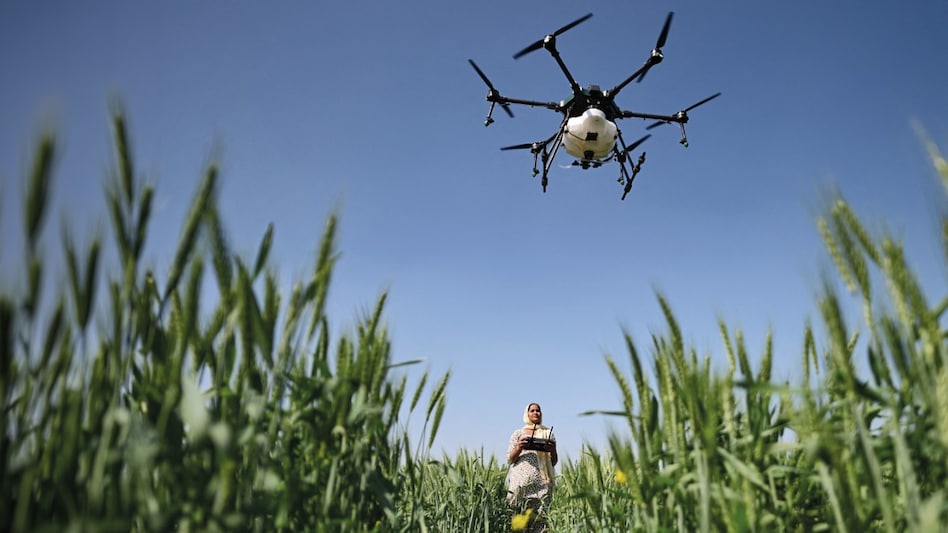
Investors say the renewed interest in deep-tech agritech is being driven by advances in AI, robotics, climate resilience and precision agriculture.
The Investor Lens
The recent revival in growth-stage funding is instilling confidence among new founders entering the agritech ecosystem. Arya.ag’s recent fundraise—an integrated agritech and fintech platform that connects agricultural supply and demand by empowering farmers, farmer producer prganisations and small agri-businesses with post-harvest storage, short-term finance, and digital market linkages—alongside AgroStar’s $30 million raise late last year, signals renewed investor confidence in the sector.
As per Prasanna Rao, CEO of Arya.ag, one of the key changes in the ecosystem is that investors now have a much clearer understanding of its various segments.
Advertisement
Another area attracting attention is agricultural finance and supply chain. For decades, Indian agriculture has faced a chronic shortage of working capital, driven by factors such as high default rates, policy uncertainties and the inherent risks associated with farming. As a result, many unsecured lending models have struggled to succeed.
Industry experts argue that the opportunity lies in financing models that solve real problems while maintaining adequate safeguards against risk.
What Would Success Look Like?
The funding winter also exposed a deeper reality that agritech does not lend itself to the blitzscaling playbook that powered sectors such as e-commerce, food delivery and, more recently, quick commerce. Building businesses in agriculture requires navigating fragmented markets, seasonal cycles, farmer adoption challenges and complex supply chains, all of which take time to scale.
Industry experts argue that agritech needs patient capital and patient founders. Fresh funding rounds indicate that investor interest is returning, but capital is flowing into proven business models, rather than the sector as a whole
Omnivore estimates that its portfolio companies have collectively worked with around 17 million farmers. Arya.ag works with one million farmers and DeHaat with 13 million. Yet, these numbers represent only a fraction of India’s farmers.
The sector may not yet be there. But after years of learning hard lessons, India’s agritech ecosystem appears to have entered a new phase, one built less on technology for technology’s sake and more on solving the fundamental inefficiencies.
@PalakAgarwal64
India is home to one of the world’s largest agricultural workforces. The result: Nearly half the country’s population depends on agriculture, cultivating fragmented holdings that average just three acres. This has been a challenge for the new generation of entrepreneurs looking to empower farmers.
Agritech will have truly taken root in India when we have a couple of public companies and widespread farmer adoption of new technologies, new value chains and new platforms.
-Mark Kahn,Managing Partner, Omnivore
The first wave of agritech start-ups, from 2013 to 2019, were hit by the funding winter that saw venture capital dry up across sectors. Now, the tide is turning. Encouraged by fresh capital—such as Arya.ag’s $80-million fundraise and AgroStar’s $30-million round—and profitability milestone for DeHaat, the sector is betting on a different model. This time, the focus is on a deep-tech plus infrastructure-led play, rather than the sector as a whole. But the fundamental question remains: Can technology truly transform a sector defined by structural realities?
Advertisement
As Mark Kahn, Managing Partner at Omnivore, a venture capital firm based in Mumbai, puts it, “the death of agri-tech was greatly exaggerated.” The question is not whether agritech can attract capital but whether it has finally built models that can scale across a landscape of 146 million smallholders, where success means at least 50% adoption rate.
The Great Correction
The agri-tech sector has a complex value chain with two distinct endpoints: the farmer, who produces the goods, and the consumer, who ultimately purchases them. Agritech start-ups have historically targeted different parts of this chain—either upstream (the farmer) or downstream (the buyer). However, the fundamental challenge lies in the fact that the customers at each end have different needs and economic realities.
Advertisement
Farmers operate on thin margins, which limits their willingness and ability to pay for new solutions. In contrast, the consumer side presents a diverse market with multiple segments and a greater capacity for expenditure. This disparity became evident as the sector evolved, particularly 2011-12 onwards.
The wave of agritech ventures like BharatAgri and Greenikk focused on the farmer. They promised to improve yields and economic value through better inputs, equipment, and advisory services.
The core problem, however, was not just a lack of awareness or resistance to change; it was adoption. “Everyone was in this race trying to sell something to the farmer... but all the interventions increased the cost of production,” says Vipul Patel, Partner, Seed Funding at IIMA Ventures, which has agritech start-ups like Ecozen, Stellapps, and Bijak in its portfolio.
Advertisement
The economics, however, didn’t add up for many farmers because the evidence was often lacking.
“The farmer wants to see results in that particular farming cycle,” explains Patel, adding that if a product fails to deliver a clear, short-term benefit, adoption remains dismally low. This, combined with the inherent complexity of Indian farming and the friction created by small landholdings, led to widespread struggle.
The experience forced both founders and investors to rethink what could work. Kahn says the issue was not that agriculture lacked opportunity but that many early ventures were built on flawed assumptions.
As ecosystem experts point out, the outcome of this struggle was a natural selection of business models. Many start-ups failed. Some managed to survive but only by becoming traditional, niche companies selling specific tools. However, the more resilient ventures learnt and pivoted. They began to expand their focus from purely upstream solutions to a more horizontal, integrated model that spans the entire value chain.
One of the prominent examples of this evolution is Patna-based DeHaat, backed by investors like Temasek, Sequoia, and Prosus. Speaking with Business Today, Shashank Kumar, co-founder and CEO of DeHaat, says that over the years, the company has expanded beyond inputs and advisory to include market linkages, warehousing, financing and insurance, creating multiple touchpoints across the agricultural ecosystem.
Advertisement
Over the years, the company has expanded beyond inputs and advisory to include market linkages, warehousing, financing and insurance, creating multiple touchpoints across the agricultural ecosystem.
-Shashank Kumar,co-founder and CEO, DeHaat
“It’s a crop-agnostic and service-agnostic platform where farmers get access to the entire bundle of key services—from inputs to market access, warehousing, financing and insurance,” says Kumar.
In 2024, the company expanded further downstream with the launch of DeHaat Honest Farms, a consumer brand for food products. Kumar says the objective was to create access to premium consumer markets for farmers, reflecting a broader trend of agritech companies moving beyond farm services and into branded consumer products.
The scale of the model is also reflected in DeHaat’s financial performance. According to Tracxn, the company reported a 12% Y0Y increase in profit to `369 crore in FY25, a sharp turnaround from a loss of `1,133 crore in FY24. Revenue stood at `3,041 crore.
The shift towards integrated business models mirrors a broader industry view. A 2025 EY report argues that Indian agriculture is entering a phase where productivity, efficiency, sustainability and inclusivity must converge, with technology acting as an enabler rather than a standalone solution.
The agriculture sector contributes nearly 18% to the GDP and supports over half the population, the future of this sector depends on how effectively technology and innovation can be integrated to build resilient, profitable, and inclusive systems.
Advertisement
The revival is not limited to integrated value-chain players. Investors are also increasingly bullish on deep-tech and climate-focused agritech businesses. One example is Pune-based Ecozen, which develops solar-powered cold chain, irrigation, and energy solutions for agriculture. The company has steadily improved its performance, with profit rising from `20 crore in FY23 to `95 crore in FY25.
Investors say the renewed interest in deep-tech agritech is being driven by advances in AI, robotics, climate resilience and precision agriculture.
The Investor Lens
The recent revival in growth-stage funding is instilling confidence among new founders entering the agritech ecosystem. Arya.ag’s recent fundraise—an integrated agritech and fintech platform that connects agricultural supply and demand by empowering farmers, farmer producer prganisations and small agri-businesses with post-harvest storage, short-term finance, and digital market linkages—alongside AgroStar’s $30 million raise late last year, signals renewed investor confidence in the sector.
As per Prasanna Rao, CEO of Arya.ag, one of the key changes in the ecosystem is that investors now have a much clearer understanding of its various segments.
Advertisement
Another area attracting attention is agricultural finance and supply chain. For decades, Indian agriculture has faced a chronic shortage of working capital, driven by factors such as high default rates, policy uncertainties and the inherent risks associated with farming. As a result, many unsecured lending models have struggled to succeed.
Industry experts argue that the opportunity lies in financing models that solve real problems while maintaining adequate safeguards against risk.
What Would Success Look Like?
The funding winter also exposed a deeper reality that agritech does not lend itself to the blitzscaling playbook that powered sectors such as e-commerce, food delivery and, more recently, quick commerce. Building businesses in agriculture requires navigating fragmented markets, seasonal cycles, farmer adoption challenges and complex supply chains, all of which take time to scale.
Industry experts argue that agritech needs patient capital and patient founders. Fresh funding rounds indicate that investor interest is returning, but capital is flowing into proven business models, rather than the sector as a whole
Omnivore estimates that its portfolio companies have collectively worked with around 17 million farmers. Arya.ag works with one million farmers and DeHaat with 13 million. Yet, these numbers represent only a fraction of India’s farmers.
The sector may not yet be there. But after years of learning hard lessons, India’s agritech ecosystem appears to have entered a new phase, one built less on technology for technology’s sake and more on solving the fundamental inefficiencies.
@PalakAgarwal64
Read more!