
How India’s hospital chains are entering an aggressive phase of expansion in Tier II/III cities
How India’s hospital chains are entering an aggressive phase of expansion in Tier II/III cities
India's hospital chains are entering an aggressive phase of expansion in Tier II/III cities to meet the growing demand for quality care
Neetu Chandra Sharma
- Jul 28, 2025,
- Updated Jul 28, 2025 6:09 PM IST
In December 2023, when Max Healthcare ventured into Lucknow, it brought a sigh of relief for many like the 51-year-old Rekha Mishra, a schoolteacher with serious health issues. Earlier, she had to travel to Delhi to receive quality care.
Hey!
Already a subscriber? Sign In
THIS IS A PREMIUM STORY FROM BUSINESS TODAY.
Subscribe to Business Today Digital and continue enjoying India's premier business offering uninterrupted
only FOR
₹999 / Year
Unlimited Digital Access + Ad Lite Experience
Cancel Anytime
-
 Unlimited access to Business Today website
 -
 Exclusive insights on Corporate India's working, every quarter
 -
 Access to our special editions, features, and priceless archives
 -
 Get front-seat access to events such as BT Best Banks, Best CEOs and Mindrush
In December 2023, when Max Healthcare ventured into Lucknow, it brought a sigh of relief for many like the 51-year-old Rekha Mishra, a schoolteacher with serious health issues. Earlier, she had to travel to Delhi to receive quality care.
Max acquired the 550-bed Sahara Hospital—renaming it Max Super Speciality Hospital, Lucknow—through its subsidiary, Crosslay Remedies Ltd, in a Rs 940-crore deal. The acquisition brought advanced services such as oncology, neurology, cardiac, and transplant care to Mishra’s doorstep.
Advertisement
This phenomenon is not unique to Lucknow. It is playing out in Tier II/III cities across the country as major private hospital chains move beyond metros into smaller towns to meet the rising demand for specialised care, driven by a growing, insured patient base and affordable land.
Capex Plans, Steady Expansion
Map this: According to industry estimates, private hospital chains are preparing to add over 30,000 beds over the next four to five years, with a capital commitment of roughly Rs 35,000 crore. The apparent next big wave of private healthcare investment in India is being directed at cities beyond the metros.
Take Max again. Its Lucknow acquisition wasn’t a standalone bet. The group has announced fresh investments of Rs1,500–2,500 crore in the state. Part of this will go towards upgrading the existing facility—adding 265 more beds—and the rest to build a new 500-bed hospital along Shaheed Path.
Advertisement
In the south, Telangana-based KIMS Hospitals is looking to add 4,000 beds backed by a Rs 2,000 crore internal investment while Aster DM Healthcare has lined up Rs 1,900 crore for over 2,100 new beds.
Together, these hospital chains are laying down infrastructure not just in big cities but across state capitals and Tier II and Tier III cities, where patient demand has long outpaced supply.
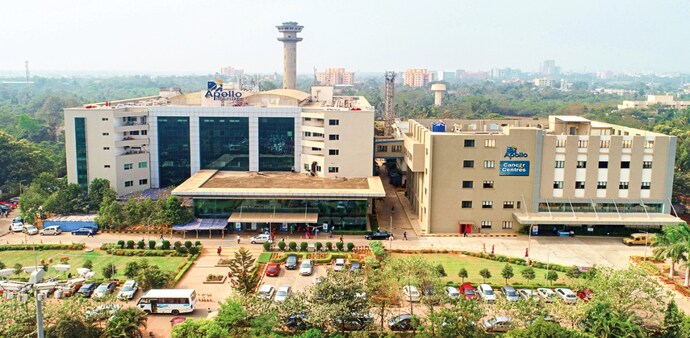
Apollo Hospitals, another major hospital chain, already has a decent presence in Tier II and III cities, with nearly 30% of its capacity outside metro hubs. It is undertaking a major expansion, adding 4,372 beds over the next three–four years. New Apollo hospitals are planned in Gurugram and Pune, with expansions in Mysuru. Over the next few years, the chain is planning to build hospitals in Varanasi and Lucknow as well.
Advertisement
“The total project cost exceeds Rs 8,000 crore, with Rs 1,000 crore already spent and Rs 6,000 crore to be deployed, funded largely through internal accruals. The strong margins and steady occupancy of 67% across 8,000+ beds reflect Apollo’s ability to scale up with operational excellence and clinical depth,” says Dr Suneeta Reddy, Managing Director, Apollo Hospitals. Some of the earmarked amount has been spent in acquiring land and in initial project development.
The latest leading hospital chain to make an acquisition beyond the big metros is Manipal Hospitals, which has signed definitive agreements to acquire Pune-based Sahyadri Hospitals from the Ontario Teachers’ Pension Plan, a global investment manager. The transaction will raise Manipal’s total bed capacity to around 12,000 and take its network to 49 hospitals nationwide and brings 11 hospitals across Pune, Nashik, Ahilya Nagar, and Karad into the fold, strengthening Manipal’s presence in Maharashtra. “With the support of stakeholders like Temasek and other investors, we are continuing to expand our operations and extend care to more patients,” says Dilip Jose, Managing Director and CEO, Manipal Health Enterprises.
Parallelly, it has over 1,400 beds under development across projects in Karnataka, Maharashtra and Chhattisgarh. “We continue to be keen on opportunities in Kerala, Telangana and the NCR,” says Jose. Manipal is also exploring the possibility of strengthening its presence in Eastern India.
Advertisement
Fortis Healthcare, too, is in the race for a geographic recalibration. Apart from adding 2,000 beds through brownfield expansion, which includes new towers in Noida, Faridabad and Gurugram, it’s expanding in Punjab—integrating the Jalandhar-based Shrimann Superspecialty Hospital. “We have established a presence in Ludhiana, Amritsar, Mohali, and now Jalandhar,” says Dr Ashutosh Raghuvanshi, MD & CEO, Fortis Healthcare. “These locations show demand for tertiary care. The availability of organised healthcare infrastructure remains limited.”
Rather than building from scratch, many hospital groups are balancing greenfield projects with brownfield expansions and acquisitions. It’s a strategy that brings speed and scale—especially in smaller cities, where acquiring land or building a brand from the ground up can be slow.
Aster DM Healthcare is also exploring non-metro markets. Founder and Chairman Dr Azad Moopen believes these regions now make business sense. “Rising disposable incomes and expanding health insurance coverage are making them viable,” he says. The group is adding 3,300 beds across India—2,100 through organic expansion and the rest via its recent merger with Quality Care India Ltd (QCIL). The combined entity will have 38 hospitals across 27 cities.
As Jose of Manipal puts it, “Smaller towns don’t necessarily have lower paying capacity. It’s just that bigger cities attracted more attention earlier and were easier to operate in. Today, smaller cities offer a viable ecosystem for efficiently run hospitals.”
Advertisement
The India Hospitals Sector Update by ratings agency CareEdge Ratings, released in June 2025, notes that India’s corporate hospital chains are set to add 10,000–12,000 beds over the next three–five years, driven by improved profitability, stronger balance sheets and rising demand in emerging healthcare hubs.
A Rising Burden
One of the big reason hospitals are scaling up and increasing capacity is the sharp rise in chronic diseases. The surge is closely linked to the growing incidence of non-communicable diseases (NCDs) such as heart disease, diabetes, cancer and chronic respiratory conditions.
According to the World Health Organization (WHO), NCDs are the leading cause of mortality in India, with cardiovascular diseases alone responsible for approximately 28% of all deaths.
Hospital groups say the rising burden is directly influencing expansion plans.
“The rise in NCDs, combined with longer life expectancy and growing affordability, is driving demand for specialised care,” says Jose.
Fortis Healthcare is also focusing on specialised services. “There is consistent growth in patient volumes, especially for cancer and cardiac ailments,” says Dr Raghuvanshi. Oncology now contributes approximately 15.5% of the group’s revenue.
Advertisement
“We are seeing steady demand for cardiac, oncology, neuro and orthopaedic care,” says Dr Reddy of Apollo.
Dr Moopen also sees the same trend. “NCDs now account for nearly 60% of total deaths in India,” he says. “We are building capacity to address this demand.”
With India’s population ageing fast and insurance penetration rising, the demand for advanced care is expected to grow steadily.
Tech-Led Services
As private hospitals push into smaller towns, their growth is not only defined by new buildings or additional beds. Much of the real change is happening through screens, sensors and apps. Digital tools—telemedicine, remote monitoring and integrated patient platforms—are becoming essential to how hospitals operate, especially in Tier II and Tier III cities.
For Manipal Hospitals, the idea is clear. “Remote care, telemedicine and home monitoring allow us to reach patients in areas that may not have regular access to advanced medical care,” says Jose. Their expansion follows a dual model—physical and virtual—that includes the ability to follow patients home, avoiding readmissions.
Fortis Healthcare is thinking along similar lines. “We are using digital tools to link smaller centres with specialists in larger cities,” says Raghuvanshi.
Apollo Hospitals, which has had a head start in telemedicine, continues to scale up its tech-driven services through Apollo 24/7. “With over a million teleconsults annually, it integrates diagnostics, pharmacy and specialist access on a single platform,” says Reddy. Apollo TeleHealth has also built one of India’s most extensive rural digital health networks.
On the other hand, Aster’s ‘Aster Health’ app enables online consultations and appointment booking and will soon integrate pharmacy and other services. The group is implementing Cloud-based electronic health records and adopting AI-led diagnostics. Aster@Home combines physiotherapy, nursing, diagnostics and remote monitoring for chronic conditions.
Tech allows hospitals to manage more patients with fewer resources and build systems where follow-up and continuity of care aren’t dependent on geography.
Private Capital’s Role
Medical tourism has already been rising in India, further propelling expansion by hospital chains. India continues to attract patients from Bangladesh, the Middle East, Africa and Southeast Asia, drawn by affordable, high-quality care in areas such as cardiac surgery, oncology, orthopaedics and fertility.
A market valued at $21 billion in 2024 is projected to grow to $70.9 billion by 2033, at a CAGR of 13.8%, according to IMARC Group, a market research company.
The healthcare industry in India, valued around $372 billion in 2022, is projected to reach over $610 billion by 2026, according to estimates from the Indian Brand Equity Foundation (IBEF), a trust established by the Department of Commerce. The private hospital sector’s growth is being bankrolled by a steady stream of private equity (PE) investments.
Why? India offers a compelling mix: a large population, growing demand for specialised care and rising affordability driven by expanding insurance coverage. “The burden of chronic illnesses continues to rise, and so does the need for infrastructure that can manage long-term, complex care. Investors—particularly those with a long-term view—are paying attention,” says Arup Mitra, Professor of Economics at South Asian University (SAU), New Delhi.
However, in its India Pharmaceuticals and Healthcare Services, June 2025 report, Tausif Shaikh, India Analyst—Pharma and Healthcare, notes that investor attention remains concentrated on Apollo Hospitals and Max Healthcare, with limited interest in smaller players.
The past few years have seen some of the largest PE moves in Indian healthcare. In April 2023, Singapore-based Temasek increased its stake in Manipal Health to 59%, a transaction estimated at $2 billion.
Later, in October, Blackstone consolidated its position by investing around Rs 6,000 crore, acquiring shares across hospital assets. Furthermore, a February 2024, a consortium of Mubadala, Novo Holdings, and CalPERS took an 8% minority stake in Manipal for $400 million.
Self-Financing
This investment boom isn’t only fuelled by external capital. Hospital chains are also showing financial discipline and internal strength. Apollo Hospitals is funding most of its Rs 8,000 crore expansion through internal accruals.
Fortis Healthcare is following a similar approach. It is financing its current expansion largely through internal accruals, without any immediate plans for raising equity or debt—though it remains open to capital infusion if needed for a large deal. In December 2024, Fortis raised Rs 1,550 crore via non-convertible debentures, which helped consolidate its stake in Agilus Diagnostics, but core hospital growth is internally funded.
At Aster, better cash flows following the QCIL merger have freed up capital to support its ongoing growth. This blend of private equity capital and internal financial strength is enabling the sector’s current expansion wave—through both new hospitals and strategic acquisitions.
Government health insurance schemes like Ayushman Bharat and the National Digital Health Mission are also acting as strong enablers by increasing coverage and formalising care pathways.
Yet, some constraints remain. Land acquisition, regulatory bottlenecks, and staffing shortages continue to challenge expansion in certain geographies.
“To sustain this momentum, policy clarity and long-term enablers are essential. Expanding insurance penetration and investing in skilling workforce will be critical to build a future-ready healthcare system that truly serves all of India,” adds Reddy.
As India’s private healthcare sector undergoes a fundamental shift—fuelled by demand, increasing NCDs, and buoyed by tech interventions and robust investments, it will be interesting to see how sustainable the growth is. The future lies in building an inclusive and smart system.
@neetu_csharma
Read more!