
How L&T’s green businesses became crucial growth drivers
L&T's green businesses generate a little over half the company's revenue
Krishna Gopalan
- Jun 9, 2026,
- Updated Jun 9, 2026 2:07 PM IST
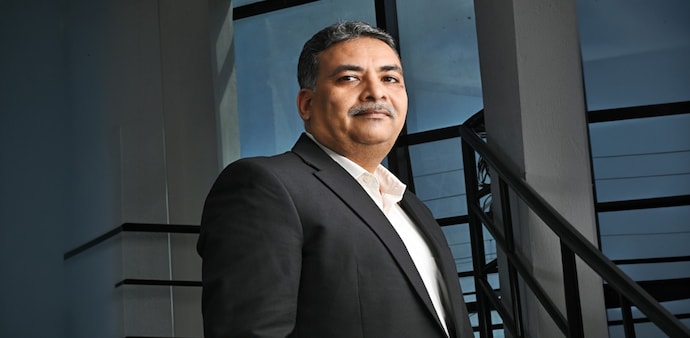
Wanting to do something for the community is nothing new at Larsen & Toubro (L&T). Santosh Kumar Singh, its Chief Sustainability Officer, says the company’s first community health centre was set up in 1967. The number has grown to over ten today. “In the 1990s, the first Construction Skill Training Institute was established. Again, it was in the direction of improving the availability of skilled manpower and making more youth employable in the construction sector,” is how he describes it.
Advertisement
It has been recognised as the Most Sustainable Company in Infrastructure in the category of Sectoral Excellence in Manufacturing in this year’s BT India’s Most Sustainable Companies.
When there are multiple business verticals, the concept of sustainability evolves and matures over time. Steps taken at a certain point in time tend to produce a much larger impact later. Sustainability reporting started at L&T in 2008, but it was not till a decade later that it moved to integrated reporting. “That’s when financial performance started connecting with the impact on the environment and society,” says Singh. One important moment was in 2021 when the company set a target for both carbon neutrality and water neutrality. “In many cases, what we did was purely voluntary.”
Advertisement
Working across businesses and geographies means sustainability, too, takes on a very different meaning. Singh makes the point that L&T is doing it not just for its own operation but also for what it delivers to its clients and customers. “That means most of the real impact is felt outside the organisation,” he says.
That could be in the supply chain or what L&T delivers through an infrastructure project. “If we are developing a green energy business that has the potential to decarbonise the chain. At Kandla, for instance, we will be producing green ammonia to be supplied to Itochu (a Japanese company), which then is used as a sustainable marine fuel,” elaborates Singh. A couple of years ago, L&T identified a set of businesses, which later came to be known as green businesses, that included areas like clean mobility and recycling. They have now grown to a point where these businesses alone generate a little over half of the company’s revenue. “That’s the part on L&T’s multiplier potential, where we do it not just for ourselves but for others as well.”
Advertisement
At L&T’s scale, a conversation on sustainability would include large international projects or the bullet train in India, sewage treatment plants (STP), among others. Singh elaborates on the STP project in Mumbai, where L&T is constructing a 360 million litres per day plant at Bandra’s reclamation area. Again, Mumbai’s coast is known to be highly polluted. “From L&T’s point of view, we have our own water R&D facility at Kanchipuram (in Tamil Nadu), and that gives us a lot of expertise,” says Singh. The company is already involved in the National Mission for Clean Ganga (Namami Gange), to execute projects at scale around STPs and underground sewerage networks, to prevent untreated water from being discharged into the rivers.
In markets like West Asia, a lot of work is done on renewable energy, more specifically around solar. In India, it has been a part of the Omkareshwar floating solar project in Madhya Pradesh. “For solar to take off in a big way, it has to be with storage, and that could be either battery or pump,” says Singh.
Complexity comes with each project, and he cites the case of hydel in the Himalayas, where the ecosystem is fragile and prone to landslides. “Getting it right here is critical, and the region has had a history of projects not taking off. Plus, the terrain is tricky, where a geology-based tech approach is needed. Typically, you design all this for at least fifty years,” he explains.
Advertisement
Sustainability comes with an innovation component as well. Last year, L&T had a Rs 500 crore ESG bond issuance deal, marking the first instance of an Indian company taking that route.
@krishnagopalan
Wanting to do something for the community is nothing new at Larsen & Toubro (L&T). Santosh Kumar Singh, its Chief Sustainability Officer, says the company’s first community health centre was set up in 1967. The number has grown to over ten today. “In the 1990s, the first Construction Skill Training Institute was established. Again, it was in the direction of improving the availability of skilled manpower and making more youth employable in the construction sector,” is how he describes it.
Advertisement
It has been recognised as the Most Sustainable Company in Infrastructure in the category of Sectoral Excellence in Manufacturing in this year’s BT India’s Most Sustainable Companies.
When there are multiple business verticals, the concept of sustainability evolves and matures over time. Steps taken at a certain point in time tend to produce a much larger impact later. Sustainability reporting started at L&T in 2008, but it was not till a decade later that it moved to integrated reporting. “That’s when financial performance started connecting with the impact on the environment and society,” says Singh. One important moment was in 2021 when the company set a target for both carbon neutrality and water neutrality. “In many cases, what we did was purely voluntary.”
Advertisement
Working across businesses and geographies means sustainability, too, takes on a very different meaning. Singh makes the point that L&T is doing it not just for its own operation but also for what it delivers to its clients and customers. “That means most of the real impact is felt outside the organisation,” he says.
That could be in the supply chain or what L&T delivers through an infrastructure project. “If we are developing a green energy business that has the potential to decarbonise the chain. At Kandla, for instance, we will be producing green ammonia to be supplied to Itochu (a Japanese company), which then is used as a sustainable marine fuel,” elaborates Singh. A couple of years ago, L&T identified a set of businesses, which later came to be known as green businesses, that included areas like clean mobility and recycling. They have now grown to a point where these businesses alone generate a little over half of the company’s revenue. “That’s the part on L&T’s multiplier potential, where we do it not just for ourselves but for others as well.”
Advertisement
At L&T’s scale, a conversation on sustainability would include large international projects or the bullet train in India, sewage treatment plants (STP), among others. Singh elaborates on the STP project in Mumbai, where L&T is constructing a 360 million litres per day plant at Bandra’s reclamation area. Again, Mumbai’s coast is known to be highly polluted. “From L&T’s point of view, we have our own water R&D facility at Kanchipuram (in Tamil Nadu), and that gives us a lot of expertise,” says Singh. The company is already involved in the National Mission for Clean Ganga (Namami Gange), to execute projects at scale around STPs and underground sewerage networks, to prevent untreated water from being discharged into the rivers.
In markets like West Asia, a lot of work is done on renewable energy, more specifically around solar. In India, it has been a part of the Omkareshwar floating solar project in Madhya Pradesh. “For solar to take off in a big way, it has to be with storage, and that could be either battery or pump,” says Singh.
Complexity comes with each project, and he cites the case of hydel in the Himalayas, where the ecosystem is fragile and prone to landslides. “Getting it right here is critical, and the region has had a history of projects not taking off. Plus, the terrain is tricky, where a geology-based tech approach is needed. Typically, you design all this for at least fifty years,” he explains.
Advertisement
Sustainability comes with an innovation component as well. Last year, L&T had a Rs 500 crore ESG bond issuance deal, marking the first instance of an Indian company taking that route.
@krishnagopalan
Read more!