
Jaquar Group, the Unlisted Manufacturing Giant
As many opt for asset-light business models, India's bath and light fittings major Jaquar Group continues to believe that manufacturing itself is its moat.
Chetan Bhutani
- Sep 2, 2026,
- Updated Sep 2, 2026 2:28 PM IST
For a company that generates over Rs 8,500 crore in annual revenue, commands nearly 60% of India’s bath fittings market, and operates across more than 55 countries, Jaquar Group is an unusual giant.
It has built a business of significant scale without the visibility that typically follows companies of its size—no stock market listing, no private equity backing, and little of the public attention that surrounds India’s better-known consumer brands.
Advertisement
The 65-year-old company has quietly built one of India’s largest manufacturing ecosystems for bath and lighting products, driven by a belief that factories, not outsourcing, create lasting competitive advantage. Privately held and family-run, Jaquar has chosen to fund its expansion largely through internal accruals, staying away from public markets while continuing to invest in production capabilities.
The philosphy manufacturing-first philosophy is now entering its biggest test.
Jaquar plans to invest Rs 800-1,000 crore over the next two years, expand its manufacturing footprint from 3.3 lakh square metre to 5.3 lakh square metre, add three new manufacturing facilities in Bhiwadi and Gujarat, and take its group turnover from Rs 7,548 crore in FY25 to Rs 8,703 crore in FY26. And its longer-term ambition is even more aggressive: targeting Rs 12,000 crore in revenue within the next two years.
Advertisement
At a time when several consumer-facing companies are moving towards asset-light business models, Jaquar continues to argue that manufacturing itself is its moat.
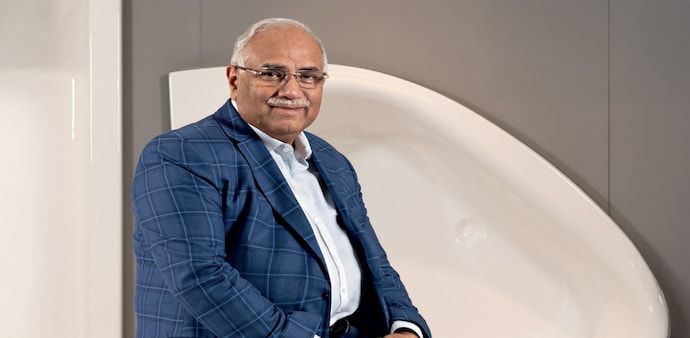
“We are a manufacturing company. We are not an outsourcing company,” says Rajesh Mehra, Director and Promoter, Jaquar Group. “If we can’t manufacture, we can't deliver.”
Betting on Capacity
Most successful consumer brands eventually begin outsourcing manufacturing while focusing on branding, distribution and customer acquisition. Jaquar has deliberately taken the opposite route.
Today, the company manufactures more than 52.9 million bath fittings, 4.8 million sanitaryware products, 28.4 million lighting products and 3.6 million complete bathroom solutions every year across eight manufacturing plants: seven in India and one in South Korea.
Three more manufacturing facilities are now under construction, taking the total network to eleven plants. For Mehra, capacity creation is not merely an expansion exercise. It is a prerequisite for growth.
Advertisement
“As a company, we have always put in the required amount of investments. It’s not a question of money or budget. It’s a question of meeting the requirement of the market,” he says.
The company believes India is entering a multi-year demand cycle driven by residential housing, commercial construction, hospitality and public infrastructure.
“The hospitality sector is very buoyant. Thousands of projects are coming up,” Mehra says.
He also points to airports, railway station redevelopment, institutional projects and government infrastructure spending as long-term demand drivers. “The government is still the biggest spender in India. The infrastructure transformation happening across the country is creating immense opportunities,” Mehra says.
That confidence finds support outside the company as well. In its latest rating rationale, India Ratings & Research (Ind-Ra) observed that Jaquar’s growth is being supported by continuous capacity expansions in the sanitaryware and lighting segments, and sustained strong brand recognition in the faucet segment.
Premiumisation Story
Manufacturing capacity alone, however, does not explain Jaquar’s confidence. The company believes India is undergoing a structural shift in consumption.
Advertisement
From luxury housing to premium automobiles, consumers are spending more on products that improve lifestyle rather than simply meeting functional needs.
“Houses today have become more expensive than Mercedes and BMW cars,” says Mehra. “Customers are no longer looking only at minimum price. Their entire thinking about living style and lifestyle has changed.”
According to him, nearly 30-40% of new construction now falls within premium or entry-luxury categories. Jaquar has quietly positioned itself across this spectrum.
With its range of offerings, Artize caters to luxury consumers, Jaquar serves the premium segment, and Essco targets value-conscious buyers. This three-brand strategy allows the group to participate across income categories without diluting individual brand identities.
The premiumisation trend is particularly significant because it shifts competition away from pricing towards quality, design, technology and customer experience.
For manufacturers with integrated production capabilities, that can translate into stronger margins and customer loyalty.
If bathrooms built Jaquar, lighting could define its next chapter. The category currently contributes around 8-10% of group revenue, or roughly Rs 700 crore, and management expects it to generate Rs 1,600- Rs 1,700 crore over the next three years. The expansion is backed by a new lighting manufacturing facility in Bhiwadi, which will increase production capacity substantially. Mehra believes the new capacity could position Jaquar among the world’s largest lighting manufacturers.
Advertisement
The Export Puzzle
Despite its size, Jaquar’s international business remains relatively modest.
The company is present across Europe, Africa, West Asia, and Asia-Pacific, but global markets currently contribute only around 5% of overall business. Management wants to double that contribution to 10% over the next two to three years.
According to Mehra, the biggest challenge in the early years was perception. “When we entered international markets, there was some reservation towards Indian products and Indian brands. That has changed significantly.”
Years of investments in customer relationships, service capabilities, and project references are now beginning to pay dividends.
Independent assessments point in the same direction.
India Ratings & Research noted that while exports contribute around 5% to the total revenue, the management has been making conscious and focused efforts to drive growth in overseas markets.
That perhaps represents Jaquar’s biggest opportunity. After establishing dominance at home, the next challenge is converting manufacturing scale into global scale.
Equally striking is what Jaquar has chosen not to do.
Despite its size, profitability, and expansion ambitions, Jaquar remains privately held.
@bhutanichetan
For a company that generates over Rs 8,500 crore in annual revenue, commands nearly 60% of India’s bath fittings market, and operates across more than 55 countries, Jaquar Group is an unusual giant.
It has built a business of significant scale without the visibility that typically follows companies of its size—no stock market listing, no private equity backing, and little of the public attention that surrounds India’s better-known consumer brands.
Advertisement
The 65-year-old company has quietly built one of India’s largest manufacturing ecosystems for bath and lighting products, driven by a belief that factories, not outsourcing, create lasting competitive advantage. Privately held and family-run, Jaquar has chosen to fund its expansion largely through internal accruals, staying away from public markets while continuing to invest in production capabilities.
The philosphy manufacturing-first philosophy is now entering its biggest test.
Jaquar plans to invest Rs 800-1,000 crore over the next two years, expand its manufacturing footprint from 3.3 lakh square metre to 5.3 lakh square metre, add three new manufacturing facilities in Bhiwadi and Gujarat, and take its group turnover from Rs 7,548 crore in FY25 to Rs 8,703 crore in FY26. And its longer-term ambition is even more aggressive: targeting Rs 12,000 crore in revenue within the next two years.
Advertisement
At a time when several consumer-facing companies are moving towards asset-light business models, Jaquar continues to argue that manufacturing itself is its moat.
“We are a manufacturing company. We are not an outsourcing company,” says Rajesh Mehra, Director and Promoter, Jaquar Group. “If we can’t manufacture, we can't deliver.”
Betting on Capacity
Most successful consumer brands eventually begin outsourcing manufacturing while focusing on branding, distribution and customer acquisition. Jaquar has deliberately taken the opposite route.
Today, the company manufactures more than 52.9 million bath fittings, 4.8 million sanitaryware products, 28.4 million lighting products and 3.6 million complete bathroom solutions every year across eight manufacturing plants: seven in India and one in South Korea.
Three more manufacturing facilities are now under construction, taking the total network to eleven plants. For Mehra, capacity creation is not merely an expansion exercise. It is a prerequisite for growth.
Advertisement
“As a company, we have always put in the required amount of investments. It’s not a question of money or budget. It’s a question of meeting the requirement of the market,” he says.
The company believes India is entering a multi-year demand cycle driven by residential housing, commercial construction, hospitality and public infrastructure.
“The hospitality sector is very buoyant. Thousands of projects are coming up,” Mehra says.
He also points to airports, railway station redevelopment, institutional projects and government infrastructure spending as long-term demand drivers. “The government is still the biggest spender in India. The infrastructure transformation happening across the country is creating immense opportunities,” Mehra says.
That confidence finds support outside the company as well. In its latest rating rationale, India Ratings & Research (Ind-Ra) observed that Jaquar’s growth is being supported by continuous capacity expansions in the sanitaryware and lighting segments, and sustained strong brand recognition in the faucet segment.
Premiumisation Story
Manufacturing capacity alone, however, does not explain Jaquar’s confidence. The company believes India is undergoing a structural shift in consumption.
Advertisement
From luxury housing to premium automobiles, consumers are spending more on products that improve lifestyle rather than simply meeting functional needs.
“Houses today have become more expensive than Mercedes and BMW cars,” says Mehra. “Customers are no longer looking only at minimum price. Their entire thinking about living style and lifestyle has changed.”
According to him, nearly 30-40% of new construction now falls within premium or entry-luxury categories. Jaquar has quietly positioned itself across this spectrum.
With its range of offerings, Artize caters to luxury consumers, Jaquar serves the premium segment, and Essco targets value-conscious buyers. This three-brand strategy allows the group to participate across income categories without diluting individual brand identities.
The premiumisation trend is particularly significant because it shifts competition away from pricing towards quality, design, technology and customer experience.
For manufacturers with integrated production capabilities, that can translate into stronger margins and customer loyalty.
If bathrooms built Jaquar, lighting could define its next chapter. The category currently contributes around 8-10% of group revenue, or roughly Rs 700 crore, and management expects it to generate Rs 1,600- Rs 1,700 crore over the next three years. The expansion is backed by a new lighting manufacturing facility in Bhiwadi, which will increase production capacity substantially. Mehra believes the new capacity could position Jaquar among the world’s largest lighting manufacturers.
Advertisement
The Export Puzzle
Despite its size, Jaquar’s international business remains relatively modest.
The company is present across Europe, Africa, West Asia, and Asia-Pacific, but global markets currently contribute only around 5% of overall business. Management wants to double that contribution to 10% over the next two to three years.
According to Mehra, the biggest challenge in the early years was perception. “When we entered international markets, there was some reservation towards Indian products and Indian brands. That has changed significantly.”
Years of investments in customer relationships, service capabilities, and project references are now beginning to pay dividends.
Independent assessments point in the same direction.
India Ratings & Research noted that while exports contribute around 5% to the total revenue, the management has been making conscious and focused efforts to drive growth in overseas markets.
That perhaps represents Jaquar’s biggest opportunity. After establishing dominance at home, the next challenge is converting manufacturing scale into global scale.
Equally striking is what Jaquar has chosen not to do.
Despite its size, profitability, and expansion ambitions, Jaquar remains privately held.
@bhutanichetan
Read more!