
Madhavkrishna Singhania is cementing success at JK Cement with a sharp focus on sustainability
Madhavkrishna Singhania is cementing success at JK Cement with a sharp focus on sustainability
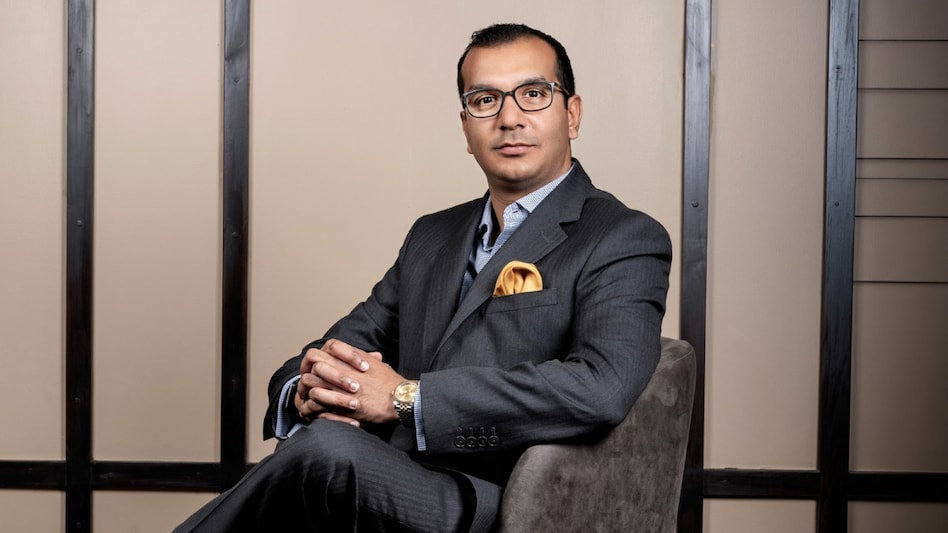
Madhavkrishna Singhania, Joint MD and CEO of JK Cement, is scaling up the grey cement business while building adjacent businesses. Sustainability remains a key focus.
Surabhi
- Mar 29, 2026,
- Updated Mar 29, 2026 9:28 AM IST
It’s been more than half a century since JK Cement began operations from Rajasthan’s Nimbahera in 1975 and over 40 years since it pioneered white cement in India. The company has gone through various reinventions over its long journey.
Madhavkrishna Singhania, Joint Managing Director and CEO of JK Cement, and Raghavpat Singhania, the Managing Director, are now scaling up the business and moving beyond cement to adjacencies such as paints and construction chemicals.
Advertisement
Madhavkrishna, 37, who was appointed the CEO of JK Cement in 2020 and made Joint MD and CEO last year, says the firm has a clear road map to expand the grey cement capacity to 50 million tonnes per annum (mtpa) by 2030. “Our transformation started around 2014 when we started massive expansion projects. That time, our grey cement capacity was about 10 mtpa,” says Singhania.
JK Cement had a grey cement capacity of 28.3 mtpa at the end of the third quarter of FY26. It recently started a 3 mtpa grey cement grinding unit in Buxar, Bihar, which will take its capacity to over 31 mtpa. What’s more, it gives the company access to the fast-growing Bihar market, which is seeing a massive infrastructure push, says Singhania.
Advertisement
JK Cement has also announced a 7 mtpa expansion in Bikaner. This includes an integrated unit in Jaisalmer, which has massive deposits of limestone and will probably become the cement hub of Rajasthan, says Singhania, a technocrat with a Bachelor’s degree in Electrical & Computer Engineering from Carnegie Mellon University, US. He also holds a Diploma in Family Business Management from IMD Business School Lausanne, Switzerland.
“The challenge with Jaisalmer is its location. To overcome this, we are setting up split grinding units in Bikaner in Rajasthan, as well as in Punjab, because they also consume ash, which is a waste generated from thermal power. This gives us a better footprint,” he says.
Along with expansion, keeping costs in check and expanding at the right capex per tonne is also essential. JK Cement is implementing several greenfield and brownfield projects and has added most of its capacity at an average of $70–75 a tonne. This is much lower, Singhania says, than acquisitions, which happen at about $120 per tonne. The replacement cost of setting up a greenfield plant is $90 per tonne and for brownfield projects it is $50–60. The expansion has improved efficiency. Now, just 2-3% of the company’s capacity is old, which ensures that power and fuel efficiencies are on a par or better than the industry average, says Singhania.
Advertisement
Apart from this, the company is optimistic about its adjacent businesses of construction chemicals and paints, which the company expects will account for at least 15–20% of its top line going forward, though grey cement will remain the core business.
JK Cement is already well-known in white cement, being the third-largest producer globally. “We are among the top three wall putty producers in the country. As a product, it is sold through the paint channel, and applied by the painter. With paint companies entering putty, the logical conclusion was to give the full solution and own a larger part of the wall,” says Singhania, explaining the decision to enter paints.
In December 2022, the company acquired a 60% stake in Acro Paints. At that time, Acro had a top line of Rs 60-70 crore. It eventually acquired 100% stake and it became a wholly owned subsidiary of JKMaxx Paints. This year, it expects net sales of about Rs 400 crore from the paints business, says Singhania.
The other adjacency is construction chemicals, which includes tile adhesives under the JKTYLO brand and waterproofing under the JK Profix brand. While earlier tiles required putting cement, with changes in the size of the tiles, specific cement-based adhesives are used now. So, it was a natural extension for JK Cement, says Singhania.
Advertisement
Last June, JK Cement acquired a 60% stake in Jammu & Kashmir-based Saifco Cements for Rs 150 crore, becoming the first major manufacturer to set up operations in Srinagar.
Singhania says apart from expansion, growing at the right pace is also essential, because cement is a balance sheet game. “We have to ensure that the net debt-to-Ebitda ratio on the balance sheet remains within two,” he says, adding that care must be taken to ensure that one is not caught by surprise in case of a sudden downcycle if supply outpaces demand.
Singhania credits the right team and building the JK Super Cement brand for the exceptional performance. He is upbeat about cement demand in the country on the back of massive capex and infrastructure push.
Sustainability is also a key focus for JK Cement and has kept it on the right cost curve. The company has taken steps to use more renewable energy and replace coal and traditional fuel. The initiatives started five to six years ago. Today, renewable sources meet 50-55% power needs. It is also using waste to replace coal or fuel and has about 15% thermal substitution rate. This means 15% of fuel has been replaced by burning waste which otherwise would have gone into a landfill.
Advertisement
Sustainability is an opportunity, says Singhania, because the more sustainable the company is, the more profitable it becomes. But it is also a challenge due to the very nature of the business. Cement is made through calcination of limestone, which self-produces carbon dioxide.
JK Cement is aiming to reduce emissions by 25% to 470 kilos per tonne by 2030 from about 600 kilos per tonne at present. Singhania says the company has done quite well so far and brought down emissions by 10-15%. While India aims to become net zero by 2070, Singhania hopes that more technology interventions will help the company find better solutions.
Ashutosh Murarka, Cement Analyst at Choice Institutional Equities, says JK Cement’s expansion plan is progressing as scheduled, with total capacity expected to scale up to over 36 million tonnes by FY27 from about 28.7 million tonnes as of December 2025. “This capacity build-out positions the company to capture incremental demand and strengthen its market presence,” he says.
The management continues to demonstrate a sharp focus on cost leadership and sustainability, with green power adoption rising meaningfully to 52% (versus 19% in FY20) and a clear road map to reach 75% by FY30. “This structural shift not only lowers energy costs but also enhances long-term margin resilience,” he says, adding that financial discipline remains a core pillar, with net debt/EBITDA well below 2x, reflecting a prudent capital allocation strategy even amid expansion.
Advertisement
In FY25, the company posted a standalone net profit of Rs 872 crore in FY25, up 4.7% up year-on-year from Rs 830.64 crore in FY24. Grey cement contributed 81% to its revenue mix and white cement, included value added products, the remaining 19%. JK Cement registered a 9% quarter-on-quarter rise in its consolidated net profit to Rs 174 crore in the third quarter of the fiscal. It has estimated a Rs 47.8 crore liability from the labour codes. Its consolidated Q3 net profit declined 9% on a year-on-year basis. Ebitda was Rs 558 crore.
Apart from being instrumental in the company’s capacity expansion projects, he is also a keen athlete and sportsman. Along with Raghavpat, he helped launch JKC Sports to build a sports ecosystem in the country.
With his focus on present expansions and getting a future-ready strategy in place, no wonder Singhania has been chosen as the winner in the cement category of Pillars of Progress in the BT-PwC India’s Best CEOs 2026 list.
@surabhi_prasad
It’s been more than half a century since JK Cement began operations from Rajasthan’s Nimbahera in 1975 and over 40 years since it pioneered white cement in India. The company has gone through various reinventions over its long journey.
Madhavkrishna Singhania, Joint Managing Director and CEO of JK Cement, and Raghavpat Singhania, the Managing Director, are now scaling up the business and moving beyond cement to adjacencies such as paints and construction chemicals.
Advertisement
Madhavkrishna, 37, who was appointed the CEO of JK Cement in 2020 and made Joint MD and CEO last year, says the firm has a clear road map to expand the grey cement capacity to 50 million tonnes per annum (mtpa) by 2030. “Our transformation started around 2014 when we started massive expansion projects. That time, our grey cement capacity was about 10 mtpa,” says Singhania.
JK Cement had a grey cement capacity of 28.3 mtpa at the end of the third quarter of FY26. It recently started a 3 mtpa grey cement grinding unit in Buxar, Bihar, which will take its capacity to over 31 mtpa. What’s more, it gives the company access to the fast-growing Bihar market, which is seeing a massive infrastructure push, says Singhania.
Advertisement
JK Cement has also announced a 7 mtpa expansion in Bikaner. This includes an integrated unit in Jaisalmer, which has massive deposits of limestone and will probably become the cement hub of Rajasthan, says Singhania, a technocrat with a Bachelor’s degree in Electrical & Computer Engineering from Carnegie Mellon University, US. He also holds a Diploma in Family Business Management from IMD Business School Lausanne, Switzerland.
“The challenge with Jaisalmer is its location. To overcome this, we are setting up split grinding units in Bikaner in Rajasthan, as well as in Punjab, because they also consume ash, which is a waste generated from thermal power. This gives us a better footprint,” he says.
Along with expansion, keeping costs in check and expanding at the right capex per tonne is also essential. JK Cement is implementing several greenfield and brownfield projects and has added most of its capacity at an average of $70–75 a tonne. This is much lower, Singhania says, than acquisitions, which happen at about $120 per tonne. The replacement cost of setting up a greenfield plant is $90 per tonne and for brownfield projects it is $50–60. The expansion has improved efficiency. Now, just 2-3% of the company’s capacity is old, which ensures that power and fuel efficiencies are on a par or better than the industry average, says Singhania.
Advertisement
Apart from this, the company is optimistic about its adjacent businesses of construction chemicals and paints, which the company expects will account for at least 15–20% of its top line going forward, though grey cement will remain the core business.
JK Cement is already well-known in white cement, being the third-largest producer globally. “We are among the top three wall putty producers in the country. As a product, it is sold through the paint channel, and applied by the painter. With paint companies entering putty, the logical conclusion was to give the full solution and own a larger part of the wall,” says Singhania, explaining the decision to enter paints.
In December 2022, the company acquired a 60% stake in Acro Paints. At that time, Acro had a top line of Rs 60-70 crore. It eventually acquired 100% stake and it became a wholly owned subsidiary of JKMaxx Paints. This year, it expects net sales of about Rs 400 crore from the paints business, says Singhania.
The other adjacency is construction chemicals, which includes tile adhesives under the JKTYLO brand and waterproofing under the JK Profix brand. While earlier tiles required putting cement, with changes in the size of the tiles, specific cement-based adhesives are used now. So, it was a natural extension for JK Cement, says Singhania.
Advertisement
Last June, JK Cement acquired a 60% stake in Jammu & Kashmir-based Saifco Cements for Rs 150 crore, becoming the first major manufacturer to set up operations in Srinagar.
Singhania says apart from expansion, growing at the right pace is also essential, because cement is a balance sheet game. “We have to ensure that the net debt-to-Ebitda ratio on the balance sheet remains within two,” he says, adding that care must be taken to ensure that one is not caught by surprise in case of a sudden downcycle if supply outpaces demand.
Singhania credits the right team and building the JK Super Cement brand for the exceptional performance. He is upbeat about cement demand in the country on the back of massive capex and infrastructure push.
Sustainability is also a key focus for JK Cement and has kept it on the right cost curve. The company has taken steps to use more renewable energy and replace coal and traditional fuel. The initiatives started five to six years ago. Today, renewable sources meet 50-55% power needs. It is also using waste to replace coal or fuel and has about 15% thermal substitution rate. This means 15% of fuel has been replaced by burning waste which otherwise would have gone into a landfill.
Advertisement
Sustainability is an opportunity, says Singhania, because the more sustainable the company is, the more profitable it becomes. But it is also a challenge due to the very nature of the business. Cement is made through calcination of limestone, which self-produces carbon dioxide.
JK Cement is aiming to reduce emissions by 25% to 470 kilos per tonne by 2030 from about 600 kilos per tonne at present. Singhania says the company has done quite well so far and brought down emissions by 10-15%. While India aims to become net zero by 2070, Singhania hopes that more technology interventions will help the company find better solutions.
Ashutosh Murarka, Cement Analyst at Choice Institutional Equities, says JK Cement’s expansion plan is progressing as scheduled, with total capacity expected to scale up to over 36 million tonnes by FY27 from about 28.7 million tonnes as of December 2025. “This capacity build-out positions the company to capture incremental demand and strengthen its market presence,” he says.
The management continues to demonstrate a sharp focus on cost leadership and sustainability, with green power adoption rising meaningfully to 52% (versus 19% in FY20) and a clear road map to reach 75% by FY30. “This structural shift not only lowers energy costs but also enhances long-term margin resilience,” he says, adding that financial discipline remains a core pillar, with net debt/EBITDA well below 2x, reflecting a prudent capital allocation strategy even amid expansion.
Advertisement
In FY25, the company posted a standalone net profit of Rs 872 crore in FY25, up 4.7% up year-on-year from Rs 830.64 crore in FY24. Grey cement contributed 81% to its revenue mix and white cement, included value added products, the remaining 19%. JK Cement registered a 9% quarter-on-quarter rise in its consolidated net profit to Rs 174 crore in the third quarter of the fiscal. It has estimated a Rs 47.8 crore liability from the labour codes. Its consolidated Q3 net profit declined 9% on a year-on-year basis. Ebitda was Rs 558 crore.
Apart from being instrumental in the company’s capacity expansion projects, he is also a keen athlete and sportsman. Along with Raghavpat, he helped launch JKC Sports to build a sports ecosystem in the country.
With his focus on present expansions and getting a future-ready strategy in place, no wonder Singhania has been chosen as the winner in the cement category of Pillars of Progress in the BT-PwC India’s Best CEOs 2026 list.
@surabhi_prasad
Read more!