
Policy uncertainty and delays in finalising power purchase agreements pose significant obstacles to power storage in India
Policy uncertainty and delays in finalising power purchase agreements pose significant obstacles to power storage in India
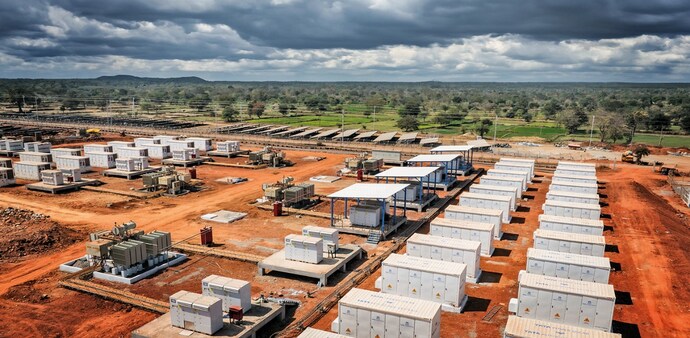
India is seeing a build-up of massive power storage facilities to meet peak demand. Despite a sharp decline in storage costs, policy uncertainty and delays in finalising power purchase agreements continue to pose significant obstacles
Richa Sharma
- Oct 23, 2025,
- Updated Nov 27, 2025 9:32 AM IST
In June, when Rajasthan invited bids to build a Battery Energy Storage System, or BESS, based on solar power, it attracted 50 offers, the most by any renewable energy and storage project in India. The project achieved the lowest tariff for any storage bids in the country.
Hey!
Already a subscriber? Sign In
THIS IS A PREMIUM STORY FROM BUSINESS TODAY.
Subscribe to Business Today Digital and continue enjoying India's premier business offering uninterrupted
only FOR
₹999 / Year
Unlimited Digital Access + Ad Lite Experience
Cancel Anytime
-
 Unlimited access to Business Today website
 -
 Exclusive insights on Corporate India's working, every quarter
 -
 Access to our special editions, features, and priceless archives
 -
 Get front-seat access to events such as BT Best Banks, Best CEOs and Mindrush
In June, when Rajasthan invited bids to build a Battery Energy Storage System, or BESS, based on solar power, it attracted 50 offers, the most by any renewable energy and storage project in India. The project achieved the lowest tariff for any storage bids in the country.
The project, to generate 1000 Mega Watt (MW) of power and offer 2000 Mega Watt hours (GWh) of storage capacity, will strengthen the reliability of the electricity grid and reinforce the availability of renewable energy during peak hour. The bids opened on October 7 with a record low tariff of Rs 1.77 lakh per hour, compared to previous low of Rs 2.21 lakh per hour.
Advertisement
Stockwell Solar Services Private Limited, Oswal Cables Limited, Micromax Informatics Ltd, yoga guru Baba Ramdev’s Patanjali Renewable Energy Ltd and RCRS Innovations Limited are among the lowest bidders.
The interest elicited by the tender wasn’t surprising given recent trends. It’s not just companies in the energy ecosystem that are bidding for battery storage projects, which have generated interest too from highway developers, wealth managers, miners, irrigation companies—and even a manufacturer of undergarments. The interest is not surprising given the recent trends. It’s not just companies in the energy ecosystem that are bidding. In fact, battery storage projects have generated interest from highway developers, wealth managers, miners, irrigation companies, and even a manufacturer of undergarments.
Advertisement
What is making everyone jump onto the battery storage bandwagon? A powerful draw is the country’s energy transition roadmap, which includes Rs 37,000 crore of Viability Gap Funding (VGF) by the government, to develop the BESS ecosystem by narrowing the gap between project costs and commercial viability. The goal is to a build robust BESS infrastructure to store excess solar, wind and even hydro power generated during non-peak hours to meet peak demand.
Aggressive bids by contractors have triggered a 75% dip in standalone BESS tariffs in the last two years. In comparison, energy storage system costs have dipped 40%, with a record drop in the price of lithium-ion batteries, the dominant storage medium. Tendered capacity of hybrid projects (renewable with storage) increased to over 49% in 2024 from 12% in 2021.
Advertisement
Does this mean there are no hurdles in India’s march to become a renewable energy powerhouse? Praveer Sinha, Chairman and Managing Director of Tata Power Company Ltd, says despite falling prices and government incentives, the growing pipeline of under-construction projects is raising concern that developers are quoting artificially low prices.
“Aggressive underbidding not only skews the auction but also places successful commissioning of projects in jeopardy. This is further complicated by delays in PPA signing and grid connections…,” Sinha told Business Today.
True, energy storage has many powerful arguments in its favour. India is blessed with plentiful sunlight during the day for generating solar power. Yet, meeting peak demand in afternoons and early evenings remains a challenge. A storage system reduces the cost of running the power grid and helps businesses avoid expensive disruptions due to power outages. Household consumers can use stored energy, especially that generated from low-cost renewable sources such as solar during the day, apart from wind, to reduce expenses on storing perishable foods and medicines. Battery storage systems can ensure round-the-clock availability of green energy at competitive tariffs. Projects are offering solar energy with six hours of peak power storage.
Advertisement
Financing Complexities
Even so, concerns loom over the booming storage market, which requires an investment of Rs 3.68 lakh crore between 2027 and 2032. The primary challenge is high capital costs and financing complexities of BESS projects despite the recent reductions in battery pack prices to around $55 per kilo Watt hour or kWh. Also, no big project has been commissioned that can lift confidence in imported China-made batteries for large-scale BESS projects in the hot and humid geographies of Gujarat, Tamil Nadu and Rajasthan.
Experts say standardised procurement frameworks, transparent tariff structures and well-defined dispatch guidelines are essential to provide developers the confidence to invest.
The government has released an advisory that all new solar projects will need to come with two hours of storage, sending a clear signal that the sector will keep growing. It has also announced two rounds of VGF—first with 30% capex and second with 16% capex and waiver of inter-state transmission charges for BESS projects (co-located with renewable energy plants) commissioned on or before June 30, 2028.
Advertisement
Tumbling Prices
BESS prices fell 22.3% from a 20 Mega Watt (MW) auction in New Delhi overseen by The Energy and Research Institute in September 2023 to Rs 3.72 lakh/MW/month in a 250MW sale in March 2024 by the Gujarat Urja Vikas Nigam Ltd.
They fell even further by 41.3% to Rs 2.19 lakh/MW/month in a 500MW auction in November 2024 by Rajasthan, supported by VGF and expected declines in battery costs, says Charith Konda, an energy specialist at the Institute for Energy Economics and Financial Analysis.
In fact, a graph of tendered capacity of standalone BESS projects exhibits a hockey stick trajectory—a long period of slow or flat growth followed by a sharp increase on the back of factors such as VGF. Solar energy projects co-located with storage are, meanwhile, growing at a steady pace.
“If you look at the capacities, 7GWh of BESS capacity was cancelled out of around 30GWh between 2018 and 2023, and this reduced to zero in 2025 (till now). This tells you what VGF can do to a sector,” says Debmalaya Sen, President of the India Energy Storage Alliance (IESA).
Advertisement
Costs are no longer just about cells. They include integration, software, safety systems and duties. While raw material price volatility in lithium, cobalt and nickel may cause short-term bumps, the bigger shift in India will come from economies of scale, localisation and innovative financing, say experts.
“Over the medium term, as PLI-backed giga factories come online and chemistries like sodium-ion and solid-state mature, we expect storage costs to decline another 20–30% by 2030. That will make storage not just viable, but inevitable, for India’s power systems,” says Vineet Mittal, Chairman of Avaada Group, a renewable energy company. PLI is short for production-linked incentives, or benefits offered by the government to boost domestic manufacturing and global competitiveness in select industries. Paced by government incentives and falling prices of battery packs, turnkey BESS costs tumbled 40% in 2024.
“With ongoing technological advancements, scaling of global supply chains, and process innovations, we expect BESS costs to decline further over the next decade by an estimated 30–40%. With further cost reductions, storage solutions are set to become the backbone of India’s clean energy transition, enabling predictable, reliable, and affordable green power for industrial, commercial, and government customers alike,” says Akshay Hiranandani, CEO, Serenetica.
The company is focused on large-scale deployment of BESS to complement solar and wind projects, providing firm, dispatchable power at scale.
China Dependence India’s battery storage journey is heavily dependent on Chinese manufacturers. The PLI Scheme announced by the government to promote local manufacturing is still nascent, with gaps in supply chain readiness, advanced technology adoption, and proven performance at scale.
Sinha says that while government initiatives exist to promote local manufacturing, the current policy emphasis is skewed toward electric mobility rather than BESS.
“Importing high-quality cells and battery management systems from established global players—while localising the assembly of racks (battery), energy management systems, and containerisation—offers a balanced solution that ensures performance reliability, cost optimisation and reduced exposure to Customs duties,” says Sinha. He adds that as India’s BESS market scales up, investments in advanced technologies, robust supply chains, and recycling infrastructure will be essential to reduce geopolitical risks, enhance energy security, and align with national priorities. The government has announced a PLI programme to support the manufacturing of 50GWh Advanced Chemistry Cell batteries with a budgeted outlay of Rs 18,100 crore.
Risk Analysis
IESA’s Debmalya points out that India does not have a long history of battery storage. “Just 0.5GWh is deployed. Another 1.2GWh is about to come out by the end of the year. How these batteries perform in the operational phase will need to be seen. Many of these players have worked on very competitive numbers. This happened with solar also. With all those low tariffs, half never got realised and the projects never came up,” he says.
The capacity expansion target and tariffs are encouraging, but how much actually get operational and sustained will be key in the coming years. “These are all Chinese cells. They give you a warranty on standard temperature and pressure. You will be installing those in a place where the average temperature is around 50 degrees, like Rajasthan and Gujarat, or maybe in the moist climate of Kerala and Tamil Nadu,” says Debmalya.
“Every assumption, everything that you have thought about, is on paper. How will they perform on the ground? No one knows,” he added. In this context, the long-term financial viability of BESS projects assumes significance. “The dominance of lithium-ion technology also poses lifecycle limitations, as most renewable PPAs in India are structured for 25-year horizons, whereas current battery technologies require major replacements within that timeframe—raising concerns around long-term viability and financial structuring,” warns Sinha.
“Lessons from the domestic content requirement (DCR) solar experience show that strong ‘Make in India’ mandates without adequate domestic capacity can drive up costs and create supply bottlenecks,” says Hiranandani.
To achieve India’s ambitious target of 400 GWh of energy storage by 2031-32, industry participants say policy must strike a balance between promoting domestic manufacturing through initiatives such as PLIs and enabling access to the most advanced global storage technologies.
@richajourno
Read more!