
Rajneesh Karnatak How the New-Age Bank’s AI Bet is Paying Off
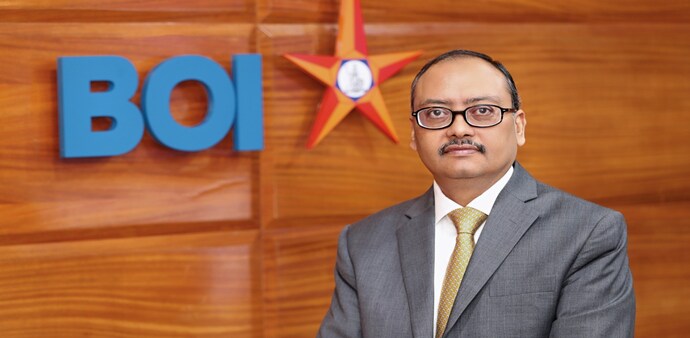
At the BT Best Banks Awards 2026, Rajneesh Karnatak, MD & CEO, Bank of India, was honoured as the Business Transformation Leader of the Year (PSB).
Krishna Gopalan
- Mar 8, 2026,
- Updated Mar 8, 2026 12:57 PM IST
It is never too late to make a change in any organisation, even if it has been around for over a century. Take Bank of India. The bank was founded in 1906 and remained private till 1969 when it was nationalised along with 13 others.
Hey!
Already a subscriber? Sign In
THIS IS A PREMIUM STORY FROM BUSINESS TODAY.
Subscribe to Business Today Digital and continue enjoying India's premier business offering uninterrupted
only FOR
₹999 / Year
Unlimited Digital Access + Ad Lite Experience
Cancel Anytime
-
 Unlimited access to Business Today website
 -
 Exclusive insights on Corporate India's working, every quarter
 -
 Access to our special editions, features, and priceless archives
 -
 Get front-seat access to events such as BT Best Banks, Best CEOs and Mindrush
It is never too late to make a change in any organisation, even if it has been around for over a century. Take Bank of India. The bank was founded in 1906 and remained private till 1969 when it was nationalised along with 13 others.
However, in the last few years, Bank of India has taken two big initiatives, Project Star NextTech (focus on enterprise technology and digital transformation) and Project Star Light (thrust on innovation and growth in human talent), with a clear objective of ushering in a transformation that will lead to improved operating efficiency, faster turnarounds and risk analytics plus scalable growth. The aim is to make the bank strong for a future that presents challenges and opportunities in equal measure.
Advertisement
Not surprisingly, Rajneesh Karnatak, MD & CEO, Bank of India, has been recognised as the business transformation leader of the year (PSB) in the BT-KPMG Survey of India’s Best Banks and NBFCs for efforts to strengthen business efficiency in Bank of India.
Taking the big steps
Karnatak’s initiatives on the digital side are not restricted to IT but also cover cybersecurity. At the earnings call for the third quarter of FY26, he outlined how automation is being used in many of the bank’s processes. “This is particularly on the credit side where sanctions are concerned, and also on monitoring and controls, whether it is transaction monitoring or other things,” he said. What stands out, among other things, is the way customisation and optimisation have led to a significant reduction in man-hours—around 50,000 in the first three quarters of the fiscal year.
Advertisement
Banking and digital are today mentioned in the same breath. At a time when everything in banking is around customer experience, going digital is non-negotiable. “From a strategic standpoint, the digital and technology-led transformation initiated by Bank of India was both timely and necessary. The banking landscape has changed rapidly, with customers shifting towards digital channels and competitors investing heavily in technology to drive scale and efficiency,” says Raj Gaikar, research analyst at Samco Securities. The approach to technology at large will depend on size and scale. “For a large public sector bank, improving operating leverage, reducing cost-to-income ratio and enhancing turnaround time were critical to protect margins and sustain growth,” he adds.
Project Star Light to help human resources prepare for strategic growth and new-age banking was initiated with the Boston Consulting Group.
Advertisement
Getting future-ready
In line with the emerging artificial intelligence (AI) story, Karnatak, at the earnings call, spoke of Star Aditya, a data lake project. “This is AI, machine learning, and generative AI, where a lot of use cases have already started flowing to our verticals, branches, zonal offices and even to the underwriting centres,” he explained. Karnatak specifically mentioned that 10% of the total operating expenses are on IT. “Our management is clearly into the IT system, and we want the experience of customers to improve through digital journeys. We will also improve our systems and procedures on the cybersecurity stack,” he said.
Samco Securities’ Gaikar thinks it is difficult to calculate direct financial returns (from investing in digital) for the bank in the short term. “However, improvement in asset quality, operating leverage and business growth momentum suggests that structural efficiencies are beginning to reflect in performance metrics. The transformation is not limited to customer-facing apps but extends to backend systems, data frameworks and process simplification,” he says. Key requirements over time will be execution discipline and sustained digital adoption. “This is to ensure the investment cycle translates into durable productivity and long-term shareholder value.”
The money spent on digital must be viewed as an investment that starts to bear fruit over time. A report on Bank of India by Geojit Investments, after the third quarter results for FY26, observed how the bank delivered a steady performance on the back of robust growth in domestic advances and improved asset quality. It emphasised domestic advances were expected to improve further, “supported by strategic initiatives targeting new customer segments, such as gig workers and solar projects, alongside digital product offerings.” The impact of a key business transformation is already being felt at Bank of India.
Advertisement
@krishnagopalan
Read more!